AI Was Supposed to Replace Radiologists. We Need More of Them.
A venture capitalist says the technology was right, but work does not disappear when it gets cheaper.
 Invest Like the Best with Patrick O'Shaughnessy · Everyone Is Still Undersizing the AI Market | Eric Vishria
Eric Vishria, a partner at the venture firm Benchmark, says radiology shows why predictions of mass unemployment from AI fail, even when they come from very smart people in tech.
In 2016, Geoff Hinton, the AI researcher, said, in Vishria's retelling, "We should stop training radiologists. Like AI is going to do it all better." Vishria says Hinton is orders of magnitude smarter than he is, and that he "could not have been more wrong."
The technology call, Vishria argues, was 100% correct. Computers should be able to read medical images better than people, and studies have since shown that to be true. The mistake was assuming that capability would translate directly into replacement.
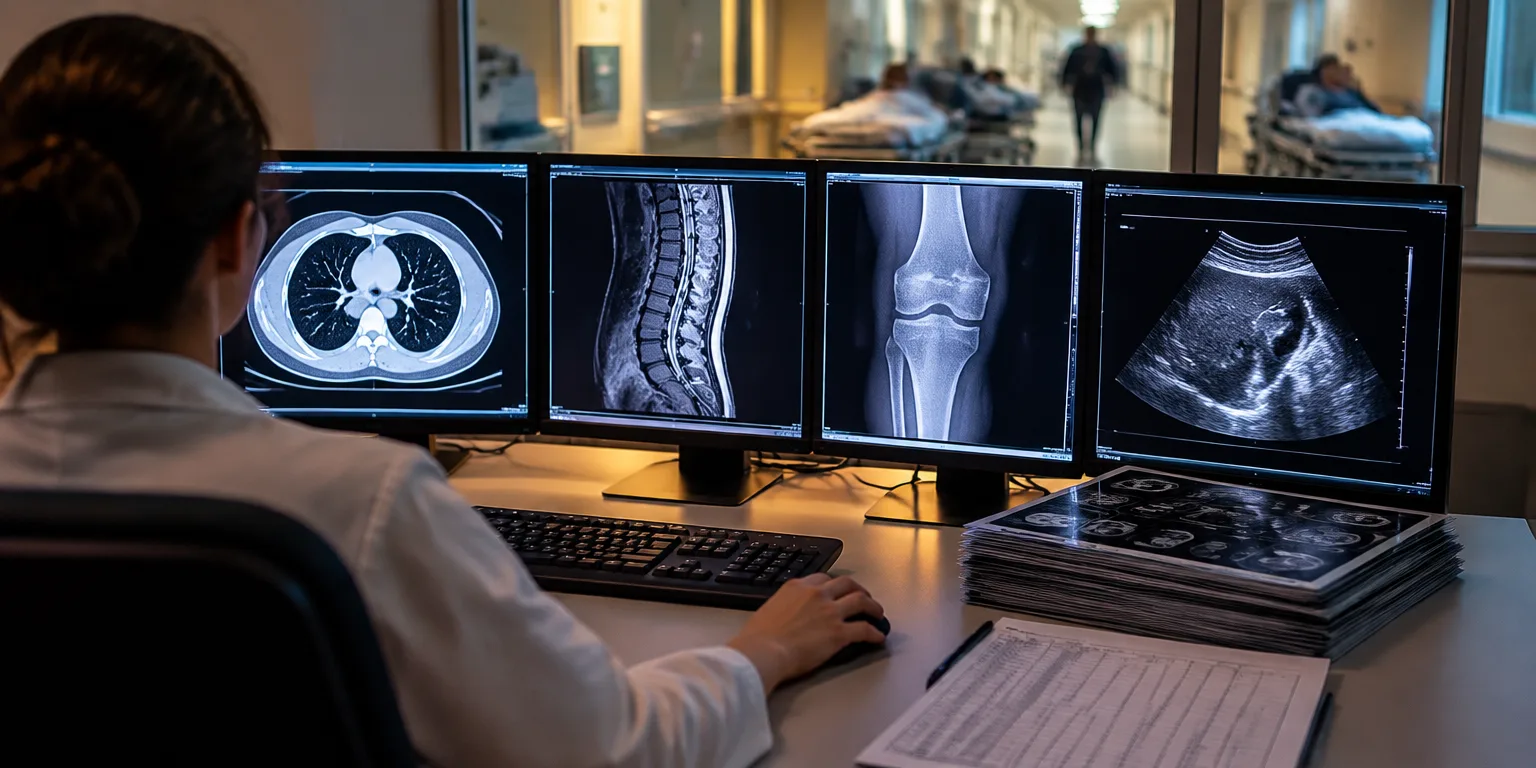
Vishria learned why through Benchmark's investment in New Lantern, a startup working on AI for radiology. The first problem, he says, is data. A typical radiologist reads 20 to 40 scans a day, spanning many imaging methods and parts of the body. An AI trained only on chest CTs, however good, helps with just one small slice of that work.
The second problem is how medicine actually works. Vishria notes the whole system is built around paying doctors for readouts, and around holding them responsible when something is missed. Liability, malpractice, and reimbursement do not disappear because software gets smarter.
So Vishria predicts a long co-pilot period, in which AI handles more pieces and radiologists check the work, with AI slowly reading more scans over time. In the meantime, he says, we need more radiologists, not fewer, because imaging keeps getting cheaper and easier to order, and when something gets cheaper people use more of it, so people get more scans than they used to. Economists call that the Jevons Paradox.
That, Vishria argues, is the lesson: smart people can have the right data and still reach the wrong conclusion because they do not think through real-world use.
Questions people ask
Did AI ever get as good as humans at reading scans?
Yes, in narrow tasks. In several studies, AI systems have matched or beaten radiologists at detecting specific problems, such as breast cancer on mammograms or lung nodules on chest CTs. The catch is that those wins are narrow, while a working radiologist handles dozens of different scan types and clinical contexts each day.
What is the Jevons Paradox?
It is the idea that making something cheaper or more efficient can increase total use of it, rather than reduce it. It is named for 19th century economist William Stanley Jevons, who noticed that more efficient steam engines led to more coal use, not less. Cheaper imaging leads to more imaging ordered.
Are radiologist jobs actually growing?
Yes. The United States has faced a persistent shortage of radiologists in recent years, with imaging volumes growing faster than the number of specialists. Industry surveys often cite rising scan volumes, longer turnaround pressures, and heavy recruiting demand as reasons.