AI Will Create Value, but Builders Won't Keep It
Like containerized shipping, artificial intelligence will transform the economy while leaving its builders with almost none of the profit.
Jerry Newman, the author of a September 2025 research essay, opens with a caution for anyone chasing the next revolution. He argues that a breakthrough can reorder everyday life without enriching the people who financed it, and can even leave the old leaders stronger. In his words: "Anyone who invests in the new, new thing must answer two questions. First, how much value will this innovation create? And second, who will capture it?"
His test case is the contrast between computers and containers. Newman asks, "Is generative AI more like the former or the latter? Will it be the basis of many future industrial fortunes or a net loser for the investment community as a whole, with a few zero-sum winners here and there?"
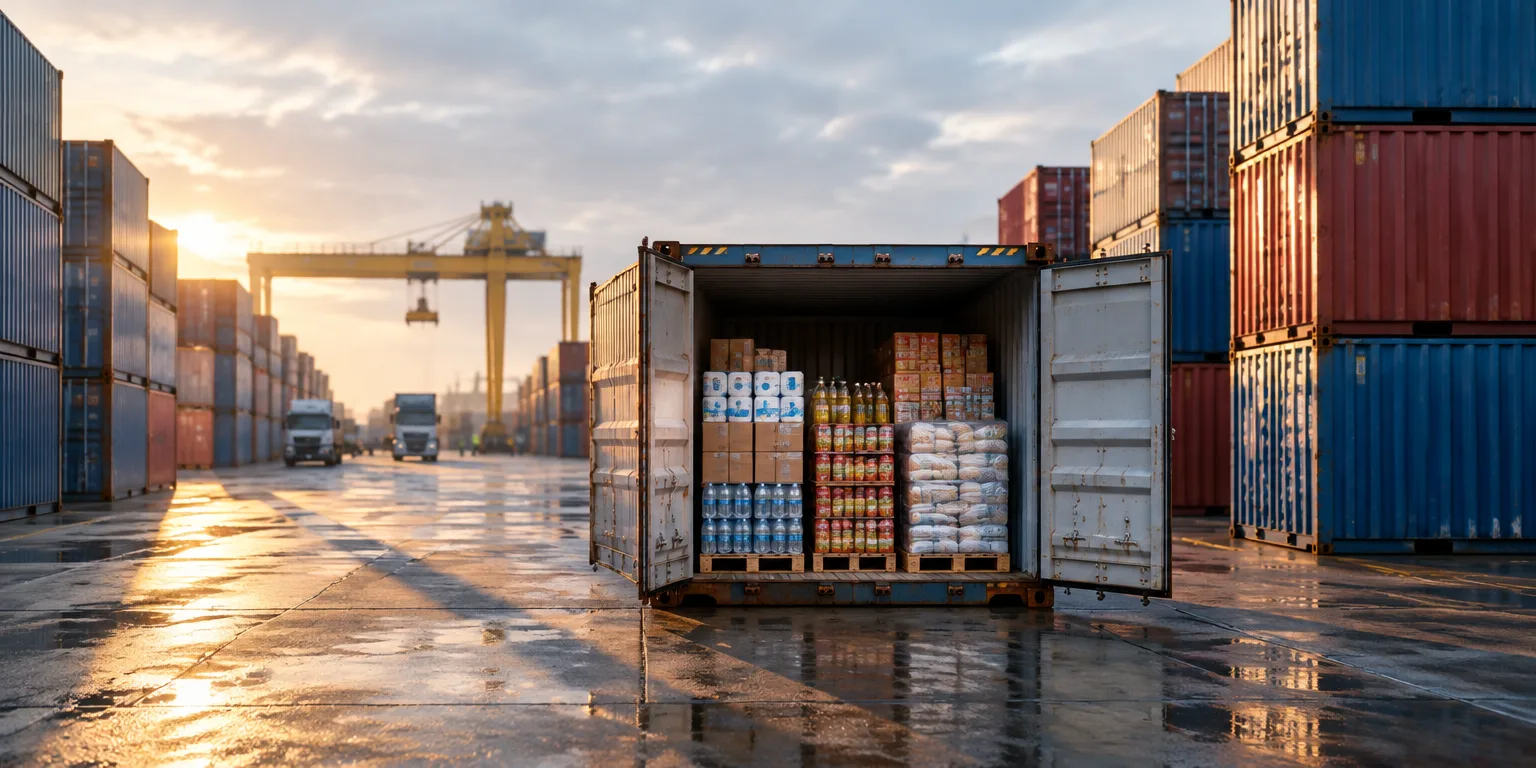
By the former, he means information and communication technology, the computing and internet wave that enriched young companies and left thousands of founders, employees, and backers wealthy. By the latter, he means shipping containerization, the steel box system that arrived fifteen years before the microprocessor. That revolution spread its value so thin, he argues, "that in the end, it made only a single founder temporarily rich and only a single investor a little bit richer."
Newman believes artificial intelligence belongs in the second category. "Like containerization, the introduction of AI did not lead to a period of protected profits for its innovators. It led to an immediate competitive free-for-all." Even granting that generative AI is revolutionary, he argues, "this particular tech is now already in an evolutionary stage. It will create a lot of value for the economy, and investors hope to capture some of it," but with perfect competition, builders cannot keep any surplus.
In his account, "most of the new value created by AI will be captured by consumers, who should see a wider variety of knowledge-intensive goods at reasonable prices and wider and more affordable access to services like medical care, education, and advice." He concludes: "For decades, the way to make money was to bet on what the new thing was. Now, you have to bet on the opportunities it opens up."
Questions people ask
Why didn't container shipping make its inventors rich if it changed the world?
No. In Newman's telling, containerization let freight move seamlessly between trucks, trains, and ships and helped enable globalization, but overbuilding, rate collapse, and consolidation wiped out profits for carriers. Only the customers, retailers and manufacturers who got cheap and predictable freight, kept the gains.
What is protected profit, and why does AI not have it?
He means that early on, no dominant company controls the technology, experimentation is cheap, and outsiders can tinker without permission. He points to garage computer builders in the 1970s as the model. With AI, he argues, the powerful models are owned by large tech companies, so experimentation happens only on their terms.
If I cannot profit from AI models, can I profit from AI apps?
They would face the same pricing pressure as the model makers. Newman argues that if an application becomes very valuable, the company that owns the underlying model can take the profit through higher prices or by copying the feature. Success for any one app, in his phrase, means defeat.