"All Men Are Created Equal" Was Meant for a Few, but Claimed by Everyone
Filmmaker Ken Burns argues the founders wrote for white men of property, and lost control of their words within days.
 The Rest Is History · Ken Burns on Why America Really Declared Independence
Filmmaker Ken Burns was explaining what the Declaration of Independence actually changed. The break with Britain was one thing, he argued, but the words did something larger.
His line was this: Jefferson's sentence "is a foot in the door and the door is never going to be closed again."
He means the second sentence of the Declaration, in Thomas Jefferson's words, "that all men are created equal." Most Americans, he notes, cannot name the 18 grievances against the king that follow it. They know that promise.
That promise was not the plan, in Burns's telling. The founders wanted what he describes as a classical republic, led by an elite of white men of property. Instead, by rooting their case in natural rights from Enlightenment thinking, they articulated human rights. That, he argues, makes it "the most consequential revolution in the history of the world."
Burns ranks it just after "I love you" as the most important sentence in English.
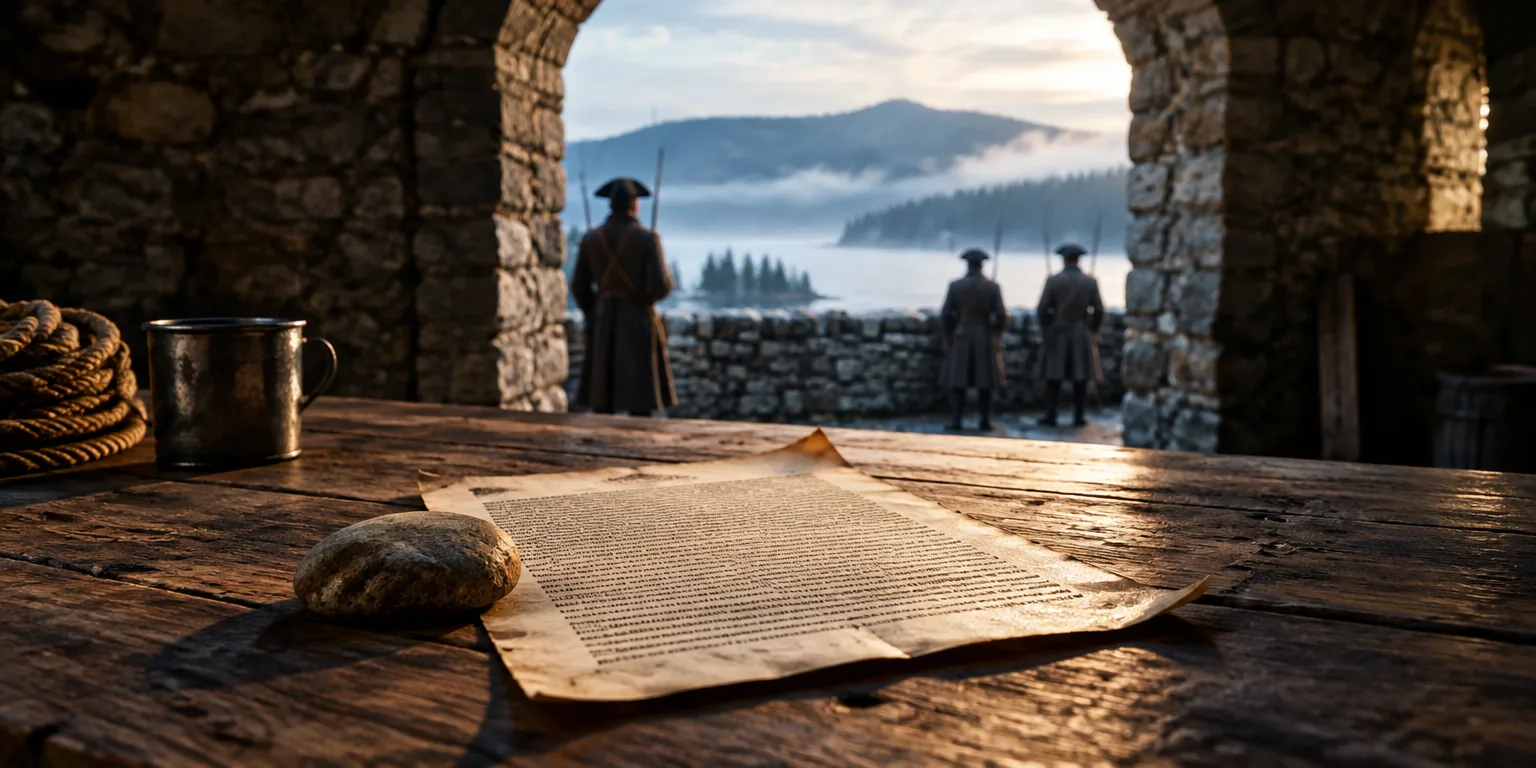
The takeover began within days. Burns points to Fort Ticonderoga in New York, where troops recovering from defeat and smallpox heard the Declaration read aloud. A free Black man there, Lemuel Haynes, soon wrote an essay called "Liberty Further Extended," applying its logic to slavery. As Burns puts it, "the cat was out of the bag."
From then on, he says, enslaved people, women, Native Americans, and poor men treated the Declaration as their document too. About 20,000 Black men fought in the war, roughly 15,000 for the British and 5,000 for the Americans, often making local choices about which side offered freedom. It still took 89 years, until 1865, to outlaw slavery and 144 years before women could vote. But Burns says there is a sense of inevitability once the argument moved from taxes and politics to natural rights.
He does not excuse the hypocrisy. Thomas Jefferson, the Virginian who wrote the Declaration, enslaved people and freed only a handful. George Washington, the commander of the Continental Army, freed the people he enslaved in his will, effective after his and his wife Martha's deaths. Burns says the sacrifice of Rebecca Tanner, a Mohegan mother from Connecticut who lost five sons fighting for the patriot cause, gets nothing like the remembrance given to the Sullivan family who lost four sons in World War II.
Questions people ask
Who was Lemuel Haynes?
Haynes was a free Black New Englander who served as a soldier in the Revolution and later became a prominent Congregational minister. His 1776 essay, 'Liberty Further Extended,' argued that slavery contradicted the principles Americans claimed to be fighting for. It was not published in his lifetime, but it circulated as a manuscript.
Why did more Black soldiers fight for the British than for the Americans?
Britain offered a clearer path to freedom early in the war, especially after Lord Dunmore, Virginia's royal governor, promised freedom in 1775 to enslaved people of rebels who joined him. The American side initially restricted Black enlistment, and Washington banned it in 1775 before reversing course. For many enslaved families, the choice depended on location and which army seemed more likely to deliver liberty.
Did Thomas Jefferson ever free the people he enslaved?
With few exceptions, no. Jefferson enslaved more than 600 people over his lifetime and freed only a handful, most of them members of the Hemings family, some in his will. Washington, by contrast, provided in his will for the freedom of the people he enslaved after his and his wife Martha's deaths.