Alone in His Palace, the Last Ming Emperor Rang a Bell No One Answered
After famine fed rebellion and Beijing's outer walls fell, a 16-year-old turned emperor found his ritual palace was no fortress.
 Dan Snow's History Hit · The Rise and Fall of the Ming Dynasty
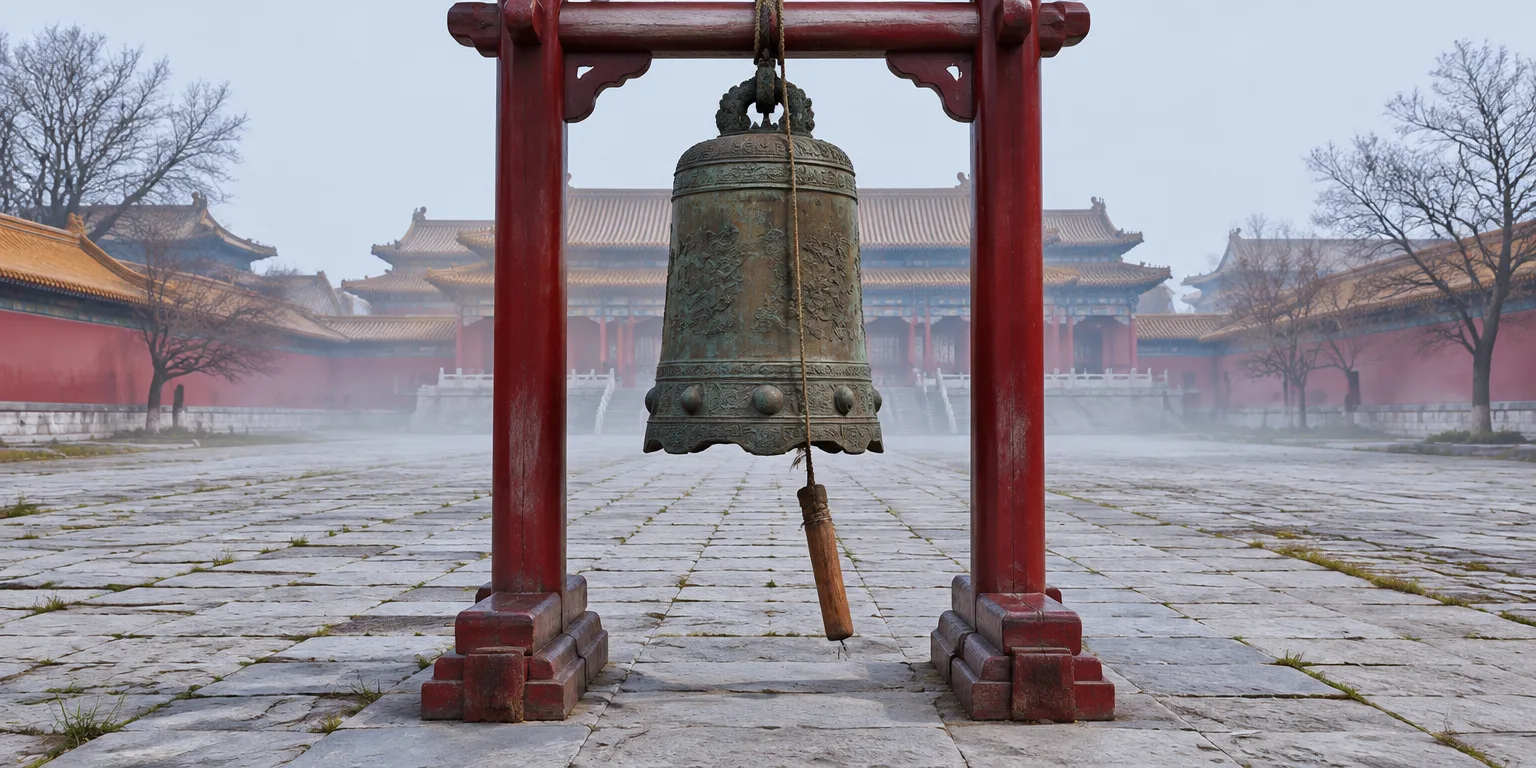
In the spring of 1644, with rebel soldiers pouring into Beijing, the Chongzhen Emperor rang a bell inside the Forbidden City to summon his officials and ask what to do next. Nobody came.
He was 16 when he had taken the throne in 1627, and he had tried to save his inheritance. He purged powerful figures at court, replaced officials, and tried to tighten control. But trouble arrived faster than he could answer it.
That was the end of nearly three centuries in power. Two forces outside the emperor's control had converged, and they would destroy his dynasty that April.
Inside China, a period of climate change known as the Little Ice Age had brought famines and wrecked local economies. The palace called the desperate hungry people bandits and rebels, but as historian Jeremiah Jenne puts it, they were "people who are so hungry they will do anything for their next meal, including following a charismatic figure who says, 'I will take you there.'" More uprisings demanded more soldiers and more conscription, which drove more men to join the rebel bands.
One of those leaders was Li Zicheng, who had carried mail for a living before becoming a rebel leader. He gathered an army, captured cities, swept across northern China, and in 1644 advanced on the capital itself. Beyond the Great Wall, a second threat had emerged from forested highlands in the northeast, in what is now the border country between China and North Korea. The Manchus had built their own rival state, which they called the Qing.
In Beijing, Chongzhen had almost no moves left. His coffers were bare, and his field armies had been broken and dispersed. His key commander, Wu Sangui, stayed far to the northeast watching the border against the Manchus, and stripping those garrisons to save the capital might open the gates to invasion.
When Li's army broke through Beijing's immense outer city walls, the inner palace offered no second line. As historian Jeremiah Jenne puts it, the Forbidden City "was meant to be forbidden, but not a fortress." Unlike a medieval city with a keep or castle to fall back on, after Beijing's outer defenses gave way, the emperor and his family had nowhere to retreat.
According to some versions, Chongzhen first tried to slip away from the palace and was restrained by his officials. Then came the bell that no one answered. In some accounts he left by a rear gate to kill himself. In more grotesque versions, he killed his own family so rebels could not seize them.
Either way, he left the palace and walked up the rise just behind it, in what had been the Imperial Gardens and is now Jingshan Park, once a refuge for Ming emperors. There, on that hill, he hanged himself from a tree. The rebels took firm control and proclaimed their own Shun dynasty, which would not last long.
Questions people ask
What was the Forbidden City?
It is the vast palace complex in central Beijing where Ming and later Qing emperors lived and ruled, closed to ordinary people. It was designed to display power and order through ritual and walls that kept people out, not to withstand a siege once the city's outer defenses had fallen.
Who were the Manchus?
They were the people from the forests and mountains of Manchuria, in today's northeast China and North Korea borderlands. They organized their own state called the Qing, broke through after the Ming collapsed in 1644, and then ruled China until 1912.
What happened right after the emperor died?
Li's Shun dynasty held Beijing only briefly. The Ming frontier general Wu Sangui, posted against the Manchus, made a deal that let Qing forces march through the pass. At Shanhaiguan in 1644 the Qing held back, let Li's rebels and Wu's men exhaust each other, then attacked and routed Li.