Amazon Barely Profits From Delivering Packages. It Profits From Its Sellers.
An 80-cent gadget can sell for $20 and still leave the seller with almost nothing, because Amazon collects on the fees and the clicks.
 Logically Answered · Amazon's $1 Trillion Empire...Now Just A Front For Temu | Logically Answered
Amazon's ad business is one of its most profitable parts. It earns money not by delivering boxes, but by charging the people who sell those boxes.
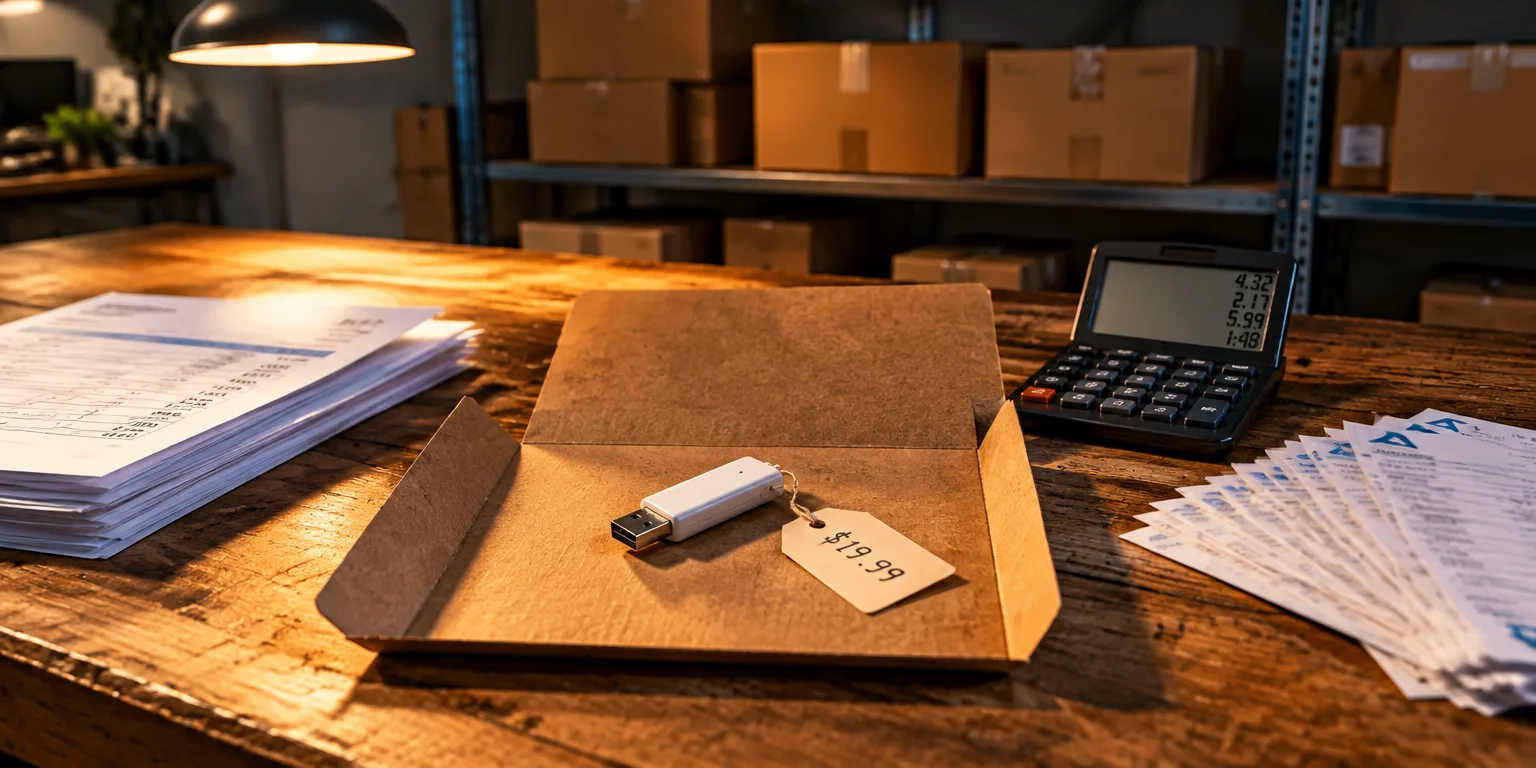
Start with a small gadget, like a USB dongle. A seller finds it on Alibaba or AliExpress for about 80 cents. He lists it on Amazon for $10 to $20, a 10 to 20 times markup. When you order, he never touches it. The supplier ships it directly, or through Amazon, and the seller acts as an invisible middleman.
That markup looks like free money until the tolls kick in. Shipping is usually included in the listed price, plus Amazon takes a referral fee, which is a cut of every sale, plus a seller fee. Together, those costs eat about half the selling price.
The other half mostly goes to getting noticed. To appear at the top of search results, the seller buys sponsored listings. Amazon charges by pay per click, meaning the seller pays every time a shopper clicks, whether or not that shopper buys. A click can cost 50 cents, or $2, $5, or even $10 for competitive items. The more sellers chase the same product, the higher the bid goes, and the higher the retail price has to go to cover it.
That is why Amazon can be huge in retail and thin in retail profit. In the first quarter of 2025, retail brought in $126.4 billion in revenue but less than $7 billion in income. Advertising brought in only $13.9 billion in revenue, but with margins of 75% to 80%, or about $11 billion in profit. That is close to what its cloud business earns, which makes the most profit of any Amazon unit.
Compare that to a physical store. In a store, about 80% of what you pay goes to the product itself, with a little for logistics and the retailer. In this kind of online selling, only about 10% goes to the product, and the rest goes to shipping, fees, and ads. You are not mainly paying for the gadget. You are paying for the race to sell it to you.
Questions people ask
What is an Amazon referral fee?
It is Amazon's commission on each item sold, usually around 8% to 15% depending on the category, with a minimum charge per item. It is separate from monthly subscription or per-item seller fees, and from shipping and storage fees. For a low-priced gadget, those combined cuts add up fast.
Why would sellers pay for clicks that do not turn into sales?
Because without paid placement, their listing is buried among hundreds of nearly identical products. A sponsored spot at the top of search brings traffic, and sellers bet that enough clicks will convert to purchases. When many sellers bid on the same keywords, Amazon's auction pushes the price per click higher.
Why is advertising so much more profitable than retail for Amazon?
Retail requires warehouses, workers, trucks, returns, and low prices to compete. Advertising is mostly software: an auction, a search page, and billing. Once that system is built, each extra ad costs Amazon almost nothing to show, which is why margins can reach 75% to 80%.