America Built 3,000 Factory-Made Homes, Then Abandoned the Idea
In Japan nearly all construction is now industrialized, with 15 percent of homes prefab steel, and almost half of Swedish building work relies on industrialized methods, while the U.S. share is 3 percent.
Ivan Rupnik was sitting in Harvard's design school archive library, researching factory-built housing for his doctoral dissertation, when an old journal article stopped him. It mentioned an American program called Operation Breakthrough that had built nearly 3,000 homes between 1971 and 1973. He had never heard of it, and he soon learned that few other people had either.
Rupnik is an architect who believes the answer to the housing shortage is to build more houses, and to build them the way factories build cars, in large numbers and on assembly lines. What he had found in those files was evidence that the United States had already tried it.
The idea had come from George Romney, the former Republican governor who was then the housing secretary under President Richard Nixon, and the father of Mitt Romney. When Romney announced Operation Breakthrough in 1969, he described it in simple economic terms. If the country quickly increased the supply of housing, prices would fall for everyone. He said America needed 26 million new houses within a decade, nearly triple the number from the decade before.
Romney argued that the obstacle was not factory technology, but rules that differed from town to town. Local building and zoning codes varied so much that no company would spend the money on machinery and plants if it could not sell the same house in many places. Operation Breakthrough would use Washington's huge purchasing strength to assure a large market, and use the projects to document the rules that got in the way. It chose nine sites around the country, including apartments for older residents in Kalamazoo, Michigan, resident-owned cooperatives beside a lake near Macon, Georgia, subsidized apartments in Memphis, plus 58 rental townhomes in central Seattle reserved for people using housing vouchers.
Then, in 1976, Congress shut the program down as too costly, saying the housing department should not be running demonstration projects. Operation Breakthrough was over within ten years of its start. Yet it left one large legacy, a national code that regulated the previously lawless trailer home business, a sector that now makes up one-tenth of single-family houses.
In Rupnik's reading, the deeper lesson was that the barriers to building fast were institutional, not technological. In Japan, nearly all construction is now industrialized, with 15 percent of homes prefabricated in steel, after officials visited the Breakthrough sites and studied its reports. In Sweden, almost half of building work relies on industrialized methods. In the United States, where the idea was tested, factory-built housing holds just 3 percent of the market.
After finishing his Ph.D., Rupnik started a company named MOD X with partners to advance factory-built housing. He could not shake that absurdity, so he and his partners persuaded the housing department to allow a fresh review of Operation Breakthrough, and ask how America might finally use its own invention.
Questions people ask
What does a factory-built house actually look like when it is made?
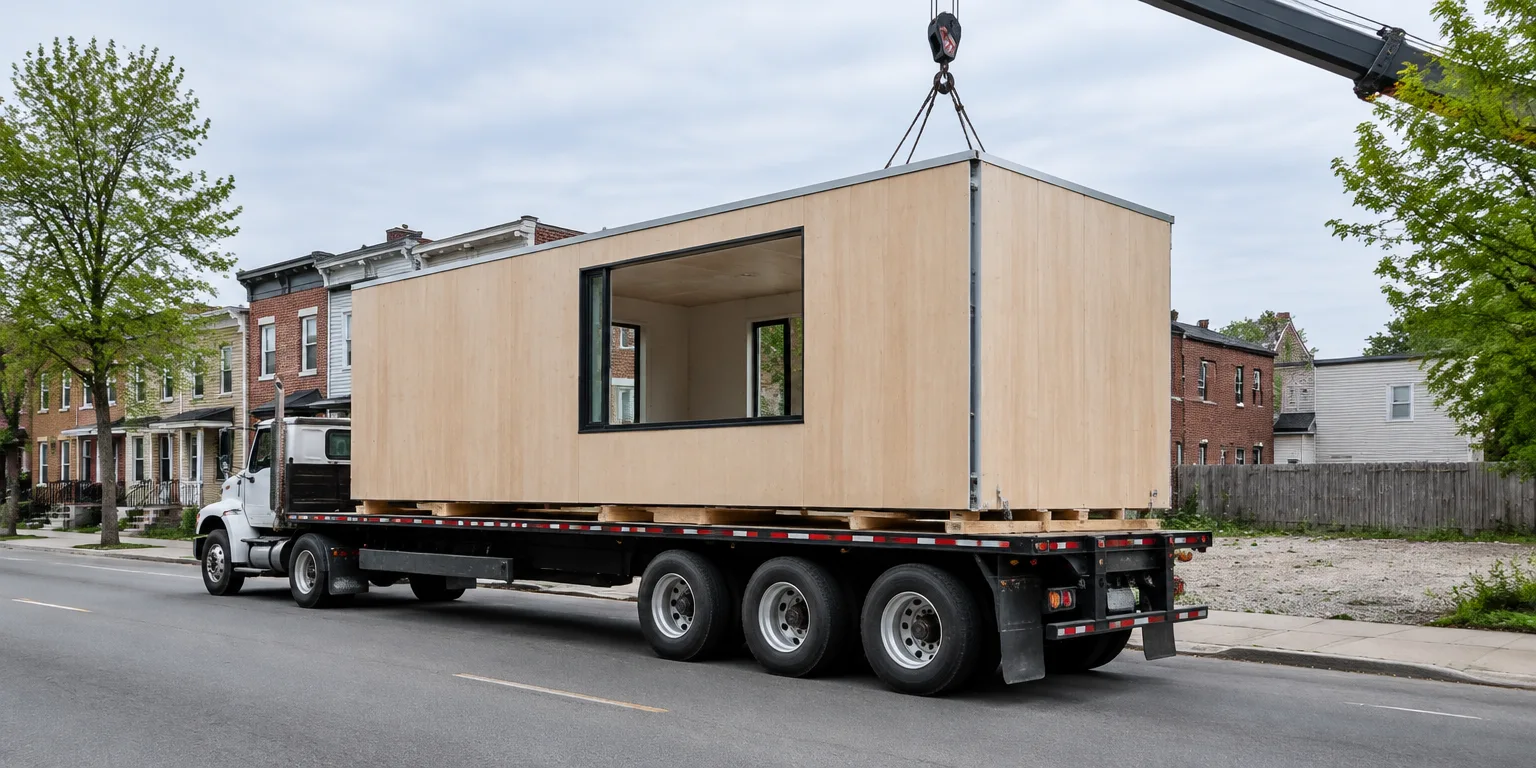
A house or apartment is built indoors in large sections, complete with walls, wiring, plumbing, and finishes, then trucked to the site and stacked by crane. Because work happens in a dry factory with the same crews and machines every day, builders can finish faster and with fewer weather delays than on an open lot.
Why is it so hard to build the same house in different American towns?
Local codes in the U.S. often dictate exact materials and methods, and every residential building needs its own permits and stop-and-go inspections. That makes it hard to use one factory design in many different towns.
What happened to the nearly 3,000 Breakthrough homes?
No one knows how many of the nearly 3,000 Breakthrough units still stand. One example that lasted more than 50 years is 58 townhouses in Seattle built for renters with housing vouchers.