America Can No Longer Hand Its Weapons to Carmakers in a Crisis
World War II was won with the largest factory base, but offshoring, job cuts, and an aging workforce left nothing to convert.
 The Way I Heard It with Mike Rowe · 502: Chris Power—The Other Hadrian's Wall
America won World War II because it had the largest manufacturing and logistics base in the world, not because it had the best tanks. That same method of winning, switching civilian factories to making weapons in a crisis, is now out of reach, says Chris Power, an Australian immigrant who founded the defense manufacturing company Hadrian.
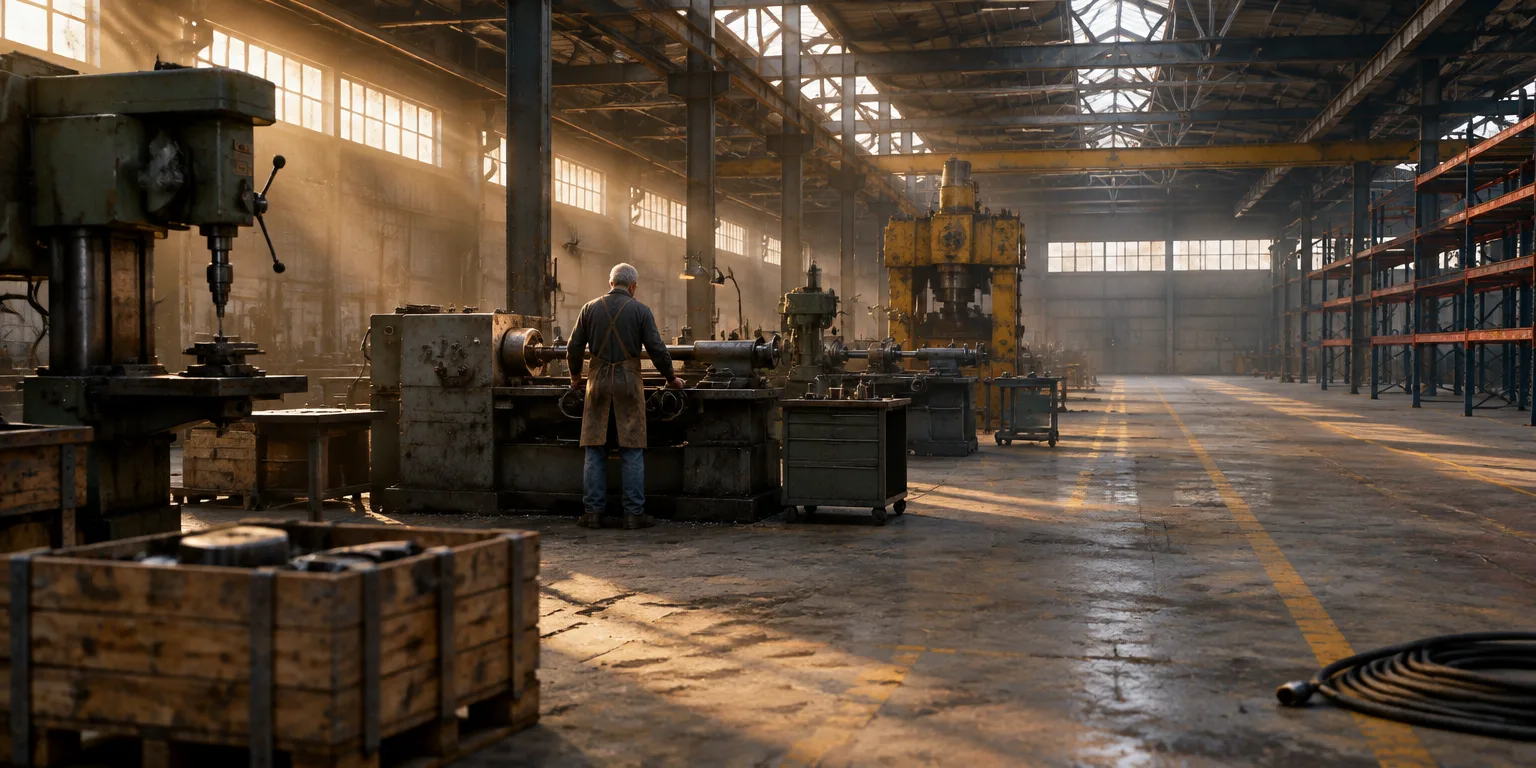
The trick was switching factories from making civilian goods to making weapons. A World War II bomber was simple enough that the government could hand it to Ford and the carmaker would figure it out, Power says. Commercial factories already had the machines, the workers, and the supply chains, and they could use commercial designs for the war effort.
That would not work today because weapons systems are far more complicated, Power says. He adds that advances in technology for munitions, ships, and other weapons drew on designs left over from the defense base built after the Cold War.
The second problem is that the spare capacity is gone, Power says. America offshored its commercial manufacturing, and he puts the loss in manufacturing jobs in the years following the Cold War at 63 percent, so there is no large civilian base left to convert.
The workforce behind that base has also aged out, with the average skilled manufacturing worker in his early 60s and almost no one coming behind him because the jobs disappeared for 40 years. At the same time, Power says, America became a finance, technology, and services culture that told kids in the 1980s and 1990s, in his words, "if you didn't have a four-year journalism degree, you weren't worth much of anything."
The result is that victory can no longer come from borrowing a car factory down the road. It would first require rebuilding factories, supply chains, and a workforce, which takes decades, not months.
Questions people ask
Did Ford really build bombers?
Yes. Ford's Willow Run plant near Detroit built B-24 Liberator bombers during World War II, at peak turning out one plane per hour. It was the most famous example of an automaker converting commercial mass production methods to aircraft.
Why does commercial factory capacity matter in a war?
It provides machines, suppliers, and trained workers that can be redirected. A car plant already has metalworking equipment, electricians, and parts vendors, so it can shift to tanks or planes faster than building a weapons factory from nothing. Without that base, a country must first build the factory before it can build the weapon.
Why does it matter if factory workers are in their early 60s?
Skilled factory work depends on years of hands-on experience with tolerances, materials, and machines. When those workers retire without apprentices behind them, that practical knowledge leaves with them. Replacing it requires both hiring young people and giving them years of supervised work.