America Has About Ten Times as Many Banks as Any Other Country
Banks were limited to one location, then to one state, until the 1980s and 1990s, and a deposit cap usually blocks the biggest mergers.
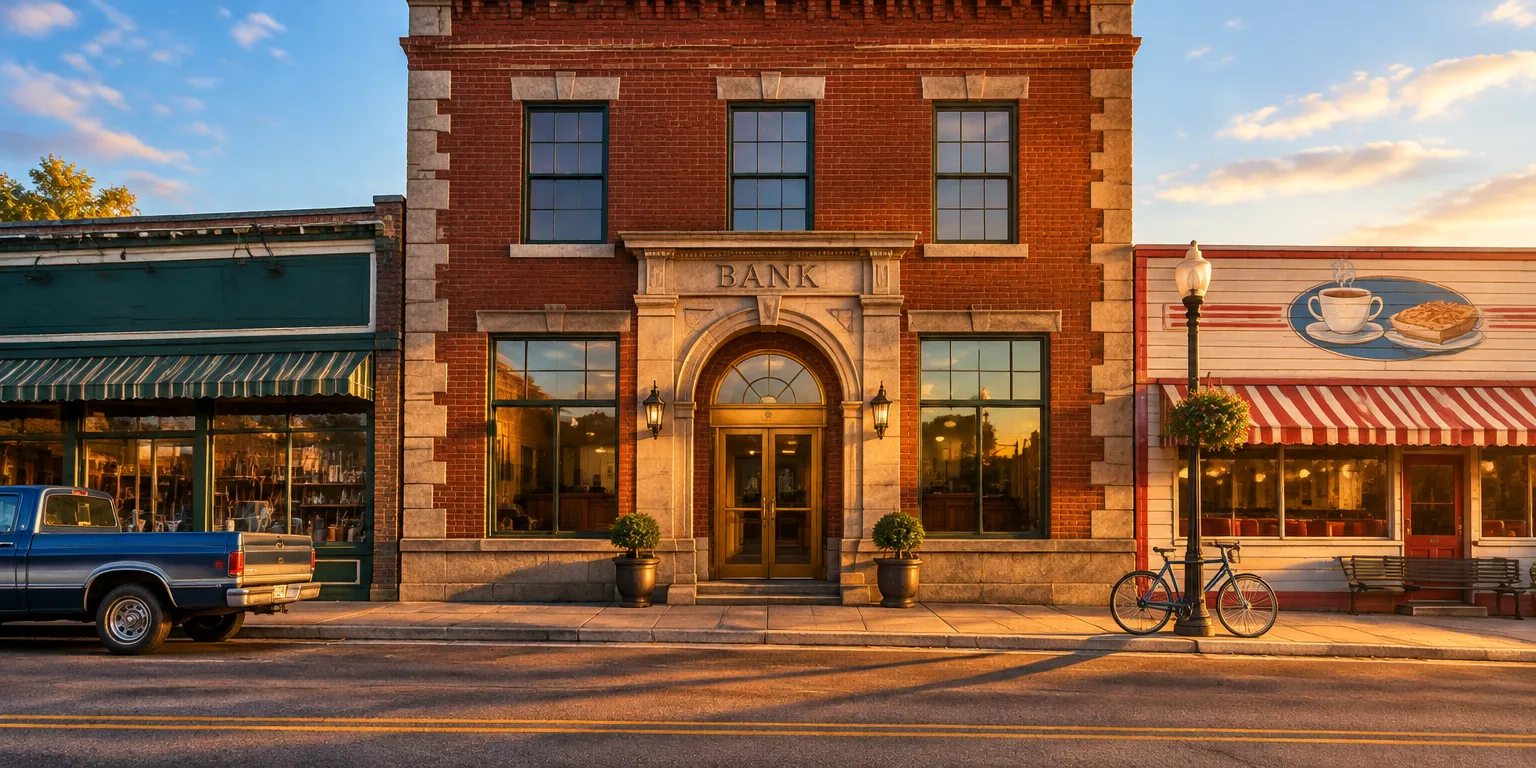
 PolyMatter · How America’s 4,488 Banks Work
Banks dot nearly every American town. There are well over 4,000 of them, plus 78,299 branches where you can deposit a check or shake a teller's hand.
Every other country trails far behind. Russia ranks next with 402 banks. The United Kingdom has 311. China, with more than four times the American population, has 193.
The reason is not that Americans love banks more. It is that American banks were not allowed to act like national businesses for most of the country's history.
Until the 20th century, a bank was generally allowed one self-contained location, with no branches. Even after branching became possible, a bank was typically limited to its home state. A bank in Ohio could not simply open an office in Indiana, let alone California.
Only since the 1980s and 1990s have banks been allowed to expand nationwide. That means the industry has had only roughly three to four decades to combine, close duplicates, and build the kind of coast to coast giants seen in other countries.
There is also a legal brake on getting bigger. Banks that hold more than a tenth of all deposits in the country are usually blocked from buying or merging with another bank.
In other words, America started with thousands of tiny, local banks because the rules kept banks local, and the clock on consolidation started recently. The 4,000 banks are what is left before consolidation has had time to run its course.
Questions people ask
Why did the U.S. keep banks so small for so long?
Americans historically feared concentrated financial power and wanted money controlled locally. State legislatures protected hometown banks from outside competition, and federal law largely left banking to the states. The system was designed to produce many small banks, not a few big ones.
What changed in the 1980s and 1990s?
States began allowing out-of-state banks to enter, and Congress finished the job with the Riegle-Neal Act of 1994, which permitted banks to branch across state lines. Once those walls fell, regional banks began buying neighbors and forming national chains like Chase and Bank of America. That merger wave is still playing out.
Will the number of banks keep falling?
Almost certainly, though slowly. The U.S. had more than 14,000 banks in the mid-1980s, so the drop to about 4,400 already reflects decades of mergers and failures. Small banks still survive by serving rural towns and local businesses, but the cost of technology and regulation pushes many to sell to larger rivals each year.