America's Mississippi Basin Has More Boat-Friendly Miles Than the Rest of the World Combined
Its very flat rivers link prime farmland to the Gulf, moving extra crops cheaply from the interior to the sea.
 Maxinomics · America Will Be the Last Superpower, Here’s Why
The watershed that drains into the Mississippi contains more river miles that are flat, free of rapids, and deep enough for boats than all other river systems on Earth combined.
That flatness is what makes a mile count. Elsewhere rapids end a river's usefulness, as on the Congo, where standing waves, rocks, and whirlpools stop boats 90 miles from the Atlantic. On the Mississippi, the same kind of flat water lets boats travel from the nation's interior to the ocean.
Land can also work against a country. The flat ground between Moscow and Warsaw is hard to defend, and Napoleon's French army, which included German troops, marched across it toward Moscow.
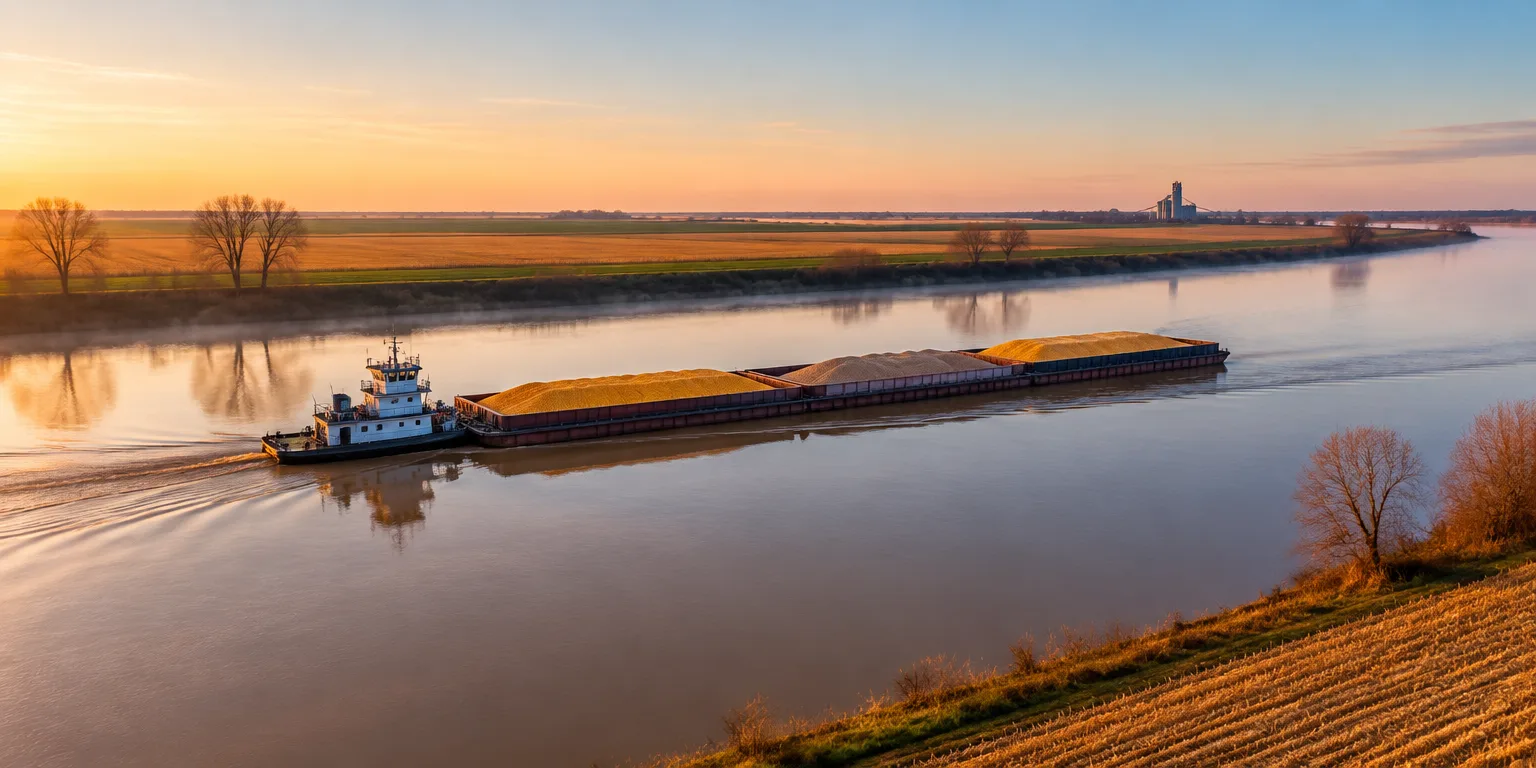
The Mississippi's flatness lets boats carry the food of the basin's farms to the Gulf. The basin holds exceptionally fertile farmland, all linked by very flat rivers that empty into the sheltered Gulf of Mexico. That connection moves extra crops out cheaply by water from the interior to the sea.
Questions people ask
What makes a river mile navigable?
Navigable means deep, wide, and calm enough for boats and barges to travel reliably, without rapids, waterfalls, or long dry seasons getting in the way. Engineers also count whether the channel stays usable year round and connects to useful places.
Why is the Mississippi so boat-friendly?
Much of the Mississippi system drops very gently over long distances, so the water moves slowly and steadily instead of crashing through rapids. It also drains the rainy middle of the country, so tributaries like the Missouri and Ohio feed it enough water to keep barges afloat.
Why does cheap river transport matter so much for food?
One barge can carry as much grain as more than a dozen railcars or scores of trucks, using far less fuel per ton. For bulky farm crops that are worth relatively little per pound, that low freight cost is the difference between profit and loss.