America's Top Generals Proposed Faking Attacks on Americans to Invade Cuba
The 1962 plan called for bombings, hijackings, and sinking refugee boats, all to be blamed on Fidel Castro.
 Johnny Harris · The American war machine, explained
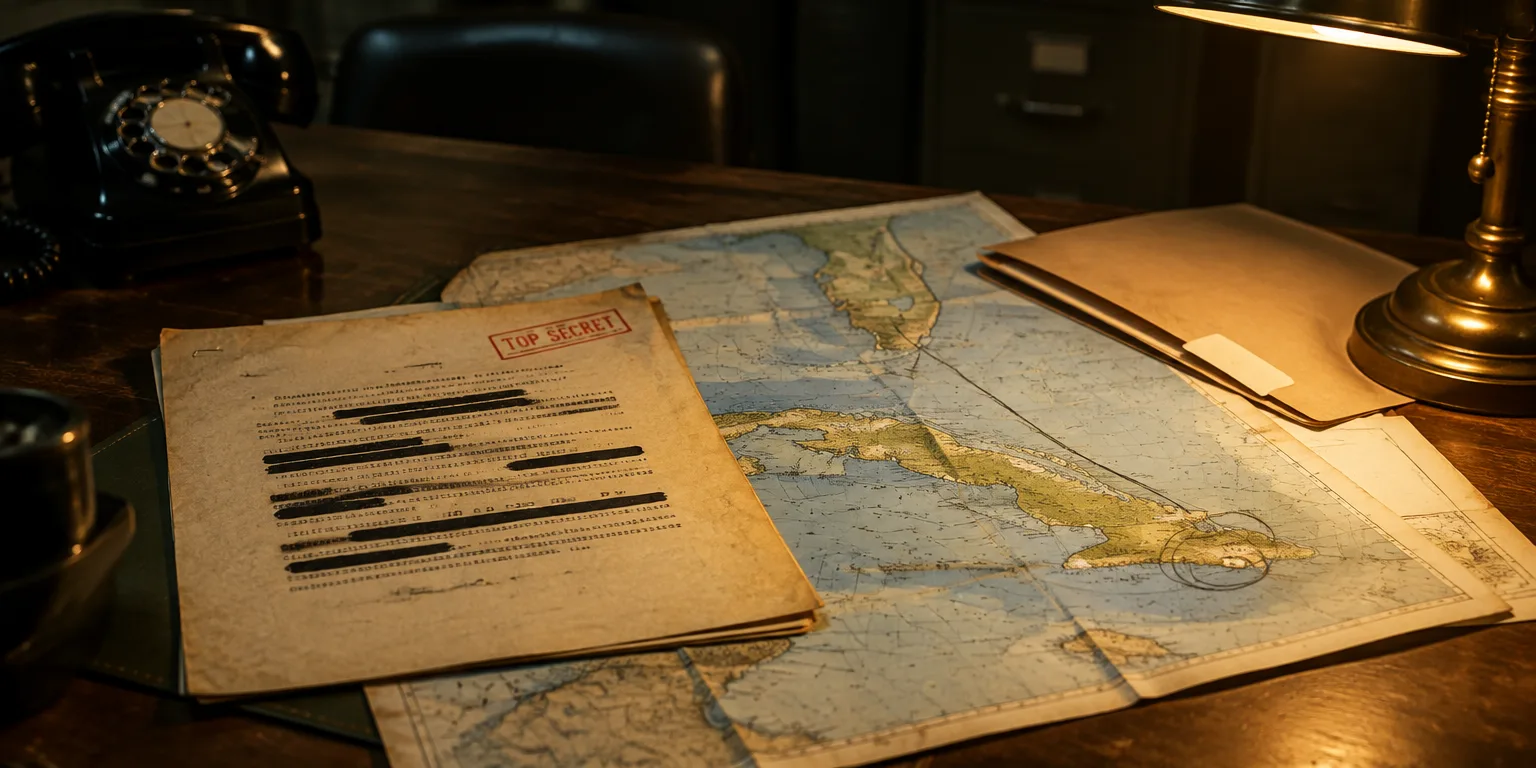
On March 13, 1962, the Joint Chiefs of Staff, the nation's top uniformed commanders, sent a secret memo to the defense secretary seeking approval from the president. They were asking for permission to attack Americans and blame it on someone else.
The memo proposed lobbing mortar shells into American military bases, hijacking civilian planes and boats, blowing up an American ship at the naval base at Guantanamo Bay in Cuba, and setting off small explosive charges at selected locations in the United States.
The plan, later known as Operation Northwoods, was a cover and deception scheme to stage fake Cuban attacks that would create public outrage and give Washington what the memo called a legitimate provocation for a full American invasion of Cuba.
The chiefs wanted a justification for war. After the failed Bay of Pigs invasion by CIA trained Cuban exiles in 1961 and a string of failed sabotage and assassination plots against Cuban leader Fidel Castro, they had concluded that only a direct American invasion could remove him. They also knew the public would not support an unprovoked war.
So they spelled out how to manufacture support. Around Guantanamo, the plan called for rumors spread on fake radio stations, staged riots, and friendly locals pretending to attack the base. It explicitly invoked Remember the Maine, the loss of a U.S. warship near Cuba in the 1890s that had helped justify an earlier American intervention, as a model for blowing up a ship and blaming Havana.
In American cities, the chiefs proposed a fake terrorist campaign in Miami or Washington, sinking boats carrying Cuban refugees, shooting at refugees, and exploding bombs. The memo said the plotters would go so far as wounding people and staging arrests with ready-made paperwork so newspapers would report casualties and stir national indignation. American pilots would fly planes painted to look Cuban, drop Soviet made bombs on cane fields, harass civilian aircraft, fake the hijacking or shooting down of an airliner, and stage the destruction of an American fighter over international waters by supposed Cuban jets. They wanted to move in a few months, before the Soviet Union locked in a defense pact with Cuba.
President John F. Kennedy turned the plan down. Operation Northwoods was never carried out, but the rift lingered. A month later the chiefs sent another memo insisting that only American military intervention could remove Castro before communism spread, and during the Cuban Missile Crisis the next year they again pushed to invade while Kennedy refused. Kennedy later denied the chairman, General Lyman Lemnitzer, another term, likely because of his role in the plan.
Had Nixon won in 1960, the plan might well have gone ahead.
Questions people ask
Did any of the fake attacks actually happen?
No. The plan was rejected by President John F. Kennedy before any part of it was carried out. It remained classified for decades and only became public when the Northwoods documents were declassified in the 1990s.
Who were the Joint Chiefs?
The Joint Chiefs of Staff are the top uniformed leaders of the Army, Navy, Air Force, Marines, and later other services, who advise the president. In 1962 the chairman was Army General Lyman Lemnitzer, a World War II and Korea veteran who strongly favored a hard line against Cuba.
Why was Washington so focused on Cuba?
Castro had led a revolution that put a communist government 90 miles from Florida and seized American owned property. After the Bay of Pigs invasion failed in three days in 1961, Washington tried sabotage, spies, and assassination plots against Castro, and when those failed, military leaders wanted a direct invasion.