America Should Not Try to Decisively Win the AI Race
Analyst Ben Thompson argues the current balance, with U.S. labs in front and China months behind, is safer and better for America than dominance.
 Invest Like the Best with Patrick O'Shaughnessy · Ben Thompson on Big Tech, China, and the AI Boom Running Out of Money - [Invest Like the Best, EP.487]
When Ben Thompson, a technology analyst who studies Big Tech, was asked what it would mean for the United States to win the race in artificial intelligence, he did not celebrate the idea.
“It would be very problematic for the U.S. to win,” he said.
Thompson argued that even in the most fantastical case, where AI gives America decisive military superiority and fixes other problems like manufacturing, a clear win creates its own danger. He said the logical response for China, in game theory terms, would be to blow up TSMC, the foundries in Taiwan that make most of the world’s most advanced computer chips. He said he has “a fundamental disconnect” with “a lot of the rhetoric coming out of Silicon Valley,” particularly from one AI lab, that America must achieve meaningful superiority for national security. That kind of superiority, he believes, would be very dangerous for the world.
His preferred outcome looks a lot like today. Thompson said “OpenAI and Anthropic are clearly on the frontier,” with Meta and Grok chasing them, while very capable and very smart Chinese labs copy and distill those leading models to “stay about six to nine months behind.” He called that a pretty good equilibrium, and one that is generally favorable to the United States.
He is skeptical that China can close that final gap and pull ahead, because getting to the leading edge is difficult. Thompson argued that “that last six to nine months is very difficult,” the stretch where small improvements take the most work, chips, and know-how.
Questions people ask
What is TSMC and why does it matter so much?
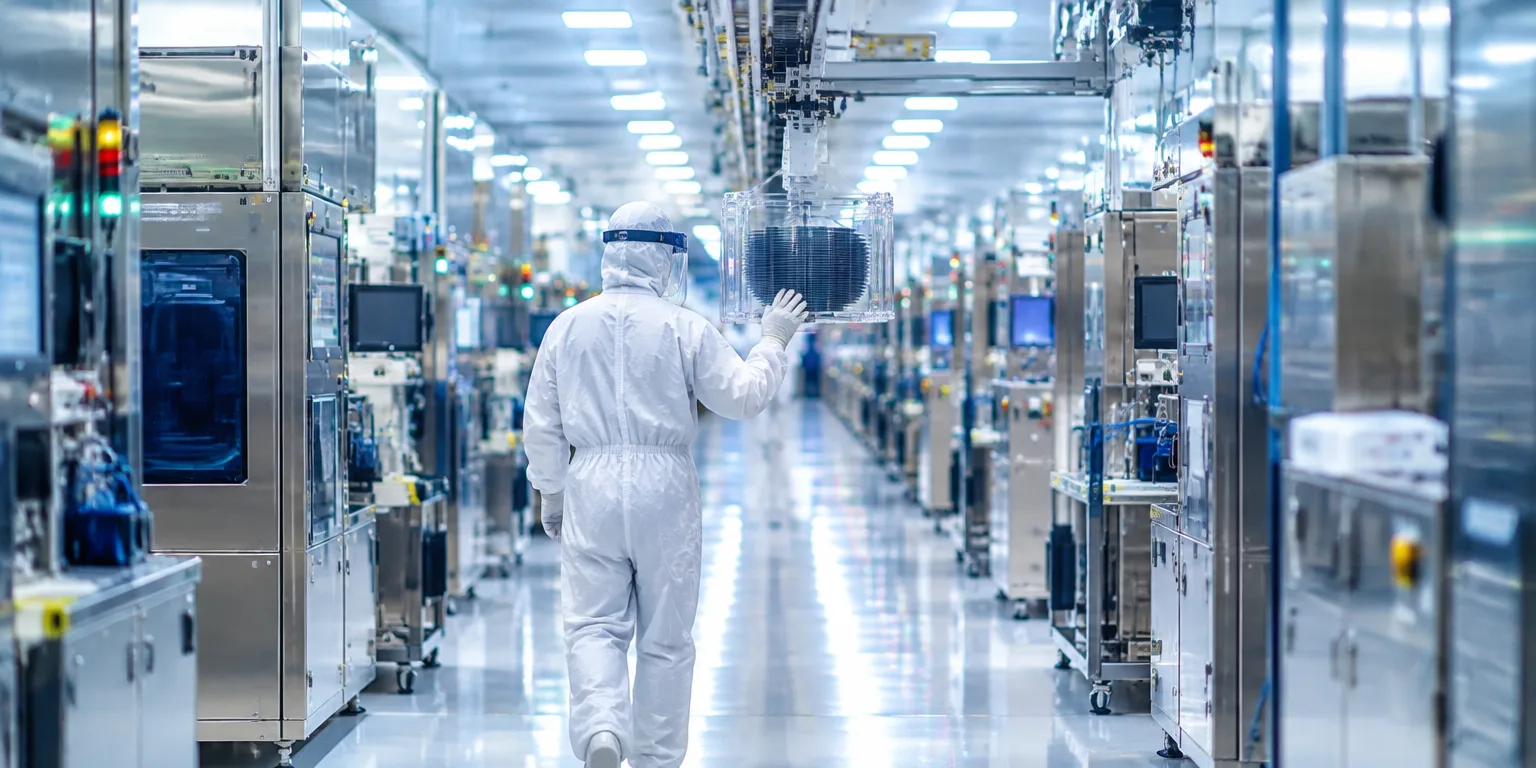
TSMC stands for Taiwan Semiconductor Manufacturing Company. It operates giant factories, called fabs, that make most of the world’s most advanced chips for companies like Apple and Nvidia. Because so much production sits in Taiwan, a conflict over the island could disrupt the global supply of electronics.
What does it mean for Chinese labs to distill U.S. models?
Distilling means training a smaller, cheaper model to imitate the answers of a larger, more powerful model. It lets a lab stay close to the frontier without paying the full cost of the original research and computing. Thompson argues Chinese labs use this method to remain six to nine months behind U.S. leaders.
Why would the last six to nine months be the hardest to close?
Early progress can come quickly by adding more data and computing power, but the final gains require solving harder problems in reliability, efficiency, and real-world use. Those steps demand scarce chips, top researchers, and expensive trial and error. That is why a small time gap can persist for a long time.