American Cities Likely Stopped Building Land Into the Sea Because the Law Made It Too Costly
In 37 major cities with records, reclamation slowed sharply after 1970, when federal permits began requiring years of environmental review.
 The Works in Progress Newsletter · Why San Francisco isn’t bigger
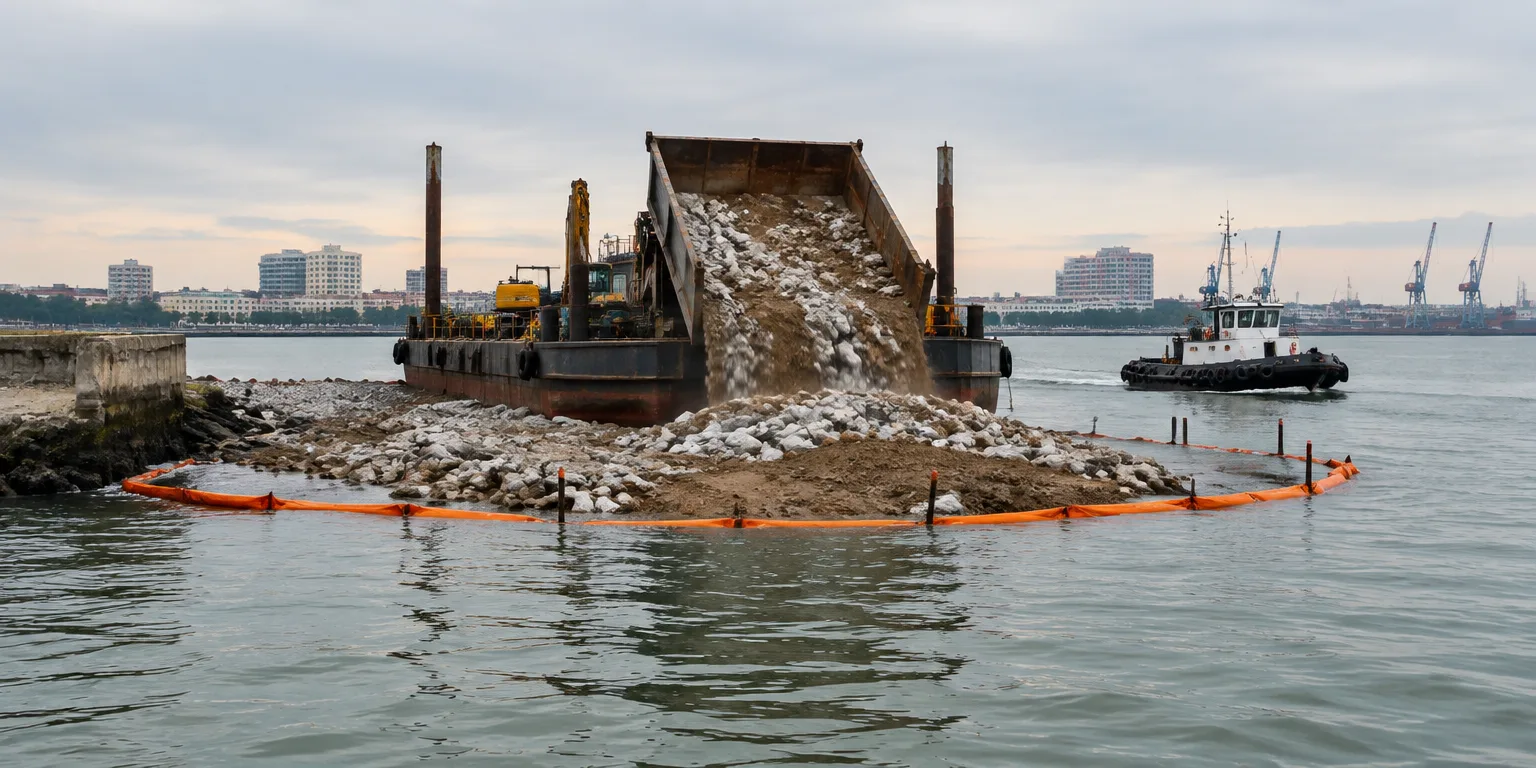
American cities used to grow outward into the water. Boston, San Francisco, New York, and Seattle all spread by dumping rock and dirt into shallow bays and harbors to make new land for homes, offices, and ports.
After Battery Park City in Manhattan was finished in 1976, the country has completed no other large fill project for city growth, apart from a few harbor enlargements for ports. The usual explanations do not fit. One is that the easy spots were used up, and the other is that cars and subways let cities grow inland instead.
The clue is timing. Among 37 American cities with good records, all added new waterfront land at a slower pace after 1970, and many stopped entirely. The pattern also appears in wetland records. Most of that loss was inland draining for farms, not city fill in harbors, but the aggregate trend is stark. Yearly wetland losses in the 1960s ran eight times the level of the 1990s and twenty times the level of the 2010s. A gradual shortage of shallow water would have produced a slow and patchy decline, not a simultaneous slowdown.
The best explanation, the essay argues, is the law. Starting in 1969, Washington passed a wave of environmental laws, including the National Environmental Policy Act of 1969, the Clean Water Act of 1972, the Endangered Species Act of 1973, the Marine Mammal Protection Act of 1972, and the Resource Conservation and Recovery Act of 1976.
For building new land, the Clean Water Act and the National Environmental Policy Act work together. The Clean Water Act requires federal approval for dropping dredged rock and dirt into waterways or wetlands, which covers the whole coast. Once federal approval is involved, the project must comply with the National Environmental Policy Act, which calls for an in-depth study of ecological damage and other options.
Decades of lawsuits have turned those reports into thousand-page documents that take years to produce. New York City's congestion pricing plan, which required no major construction, still ran to 900 pages, plus appendices totaling 3,000 pages. When harms are found, builders must pay for mitigation or can be blocked entirely. For reclamation, that means every project must complete a full impact statement or a shorter assessment with costly mitigation before it can get a permit.
Questions people ask
What is Battery Park City?
Battery Park City is a 92-acre neighborhood on the southwest tip of Manhattan, built on rock and dirt excavated for the World Trade Center and other projects. Completed in 1976, it added homes, offices, and parks along the Hudson River, and was the last large land-making project in an American city.
Why use wetland loss to measure city reclamation?
The essay uses overall wetland loss only as a timing clue. Most of that loss was inland draining for farms, not city fill in harbors, so the total does not measure city reclamation directly.
Does making land from the sea harm the environment?
Yes, filling can smother sea grasses, muddy the water, and change tides and currents. Supporters argue the damage can be limited by careful design and offset by restoring wetlands elsewhere, while critics say some habitats and species cannot be replaced once buried.