Amtrak trains are often late because freight trains go first
Amtrak owns a tiny fraction of the rails it uses, so its trains wait while freight goes first.
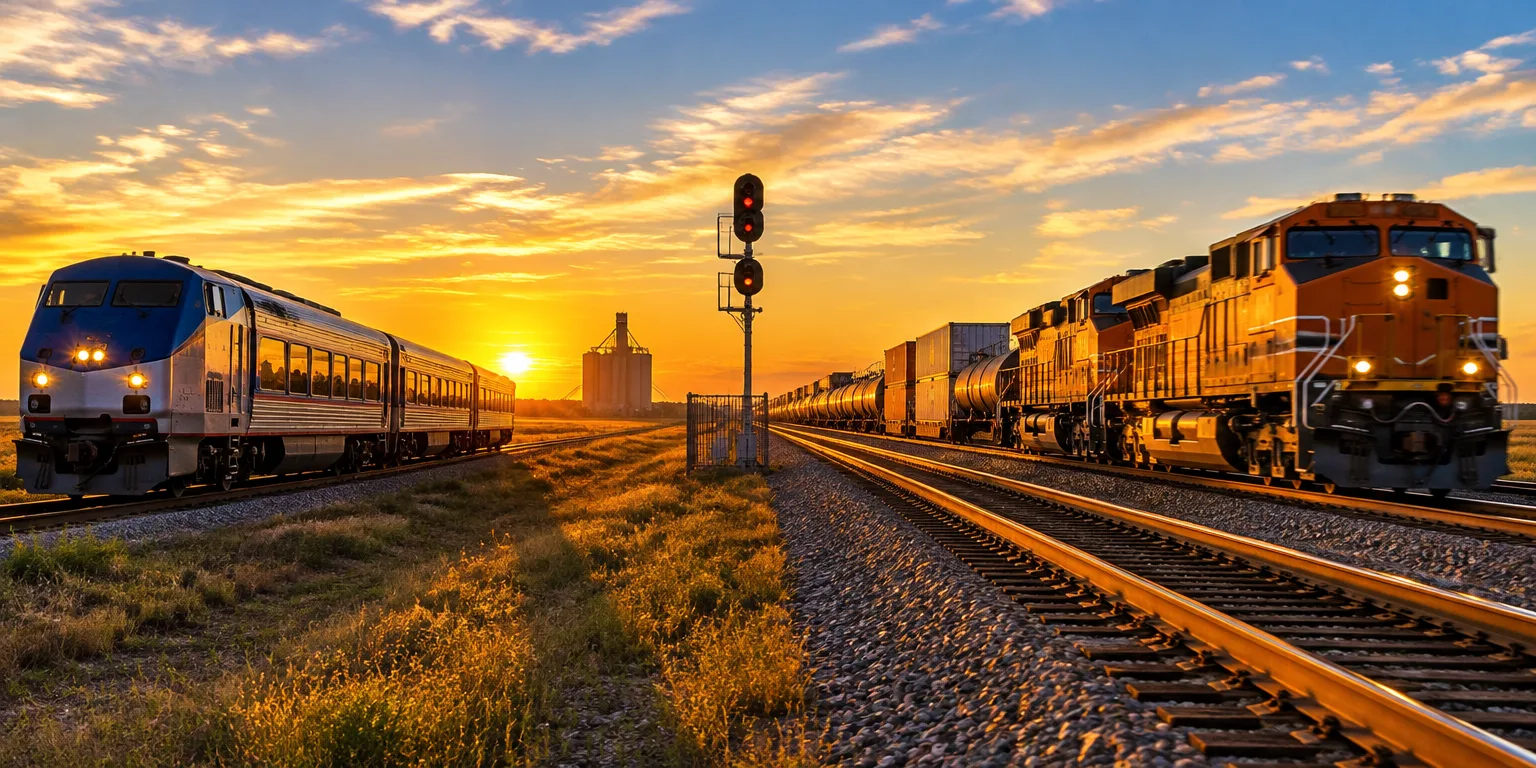
 Wendover Productions · Why Trains Suck in America
Ask Amtrak why its long-distance trains run late, and it points to freight trains.
Amtrak, the government-backed company that runs nearly all long-distance passenger trains in the United States, owns just 730 miles out of the 21,300 miles where its trains run. Everywhere else, it borrows rails owned by freight railroads.
Take the California Zephyr, the train that runs between Chicago and San Francisco. About half its route sits on track owned by the freight carrier Union Pacific, and the other half sits on track owned by freight carrier BNSF. Amtrak puts its own share of the delays on that route at just 1.4 percent, and says the other 98.6 percent is the fault of the companies that own the track.
Amtrak says those owners favor their own trains, so its trains often have to hold back while freight clears ahead. Since Amtrak cannot shift to competing tracks, the owners have little incentive to hurry passenger trains along.
Europe works the opposite way. In France, by contrast, one national railroad controls all the rails, so it can put passenger trains first by design. It also shares its tracks with far fewer freight trains.
Only 8 percent of freight in Europe moves by rail, compared with 38 percent in the United States.
Questions people ask
Isn't Amtrak supposed to get priority by law?
In theory, federal law gives Amtrak preference over freight, but in practice freight railroads control the dispatching on their own tracks and enforcement has been weak. That gap between the rule and reality is why passenger trains are routinely held up.
Is American freight rail actually good?
Yes. The U.S. moves coal, grain, chemicals, cars, and containers by rail over very long distances, often more cheaply than trucks can. That freight network is large, private, and profitable, which is why its owners are reluctant to reshape it around passengers.
Why doesn't Amtrak just build its own tracks?
Amtrak has estimated $151 billion to build high-speed tracks up to French standards in the Northeast Corridor. Much of the cost comes from rebuilding a corridor first laid in the 1800s through land that is now densely developed.