An 80-Cent Gadget Becomes an $8 to $16 Listing on Amazon
The giant markup looks like easy profit, but shipping, Amazon fees, and advertising eat most of it.
 Logically Answered · Amazon's $1 Trillion Empire...Now Just A Front For Temu | Logically Answered
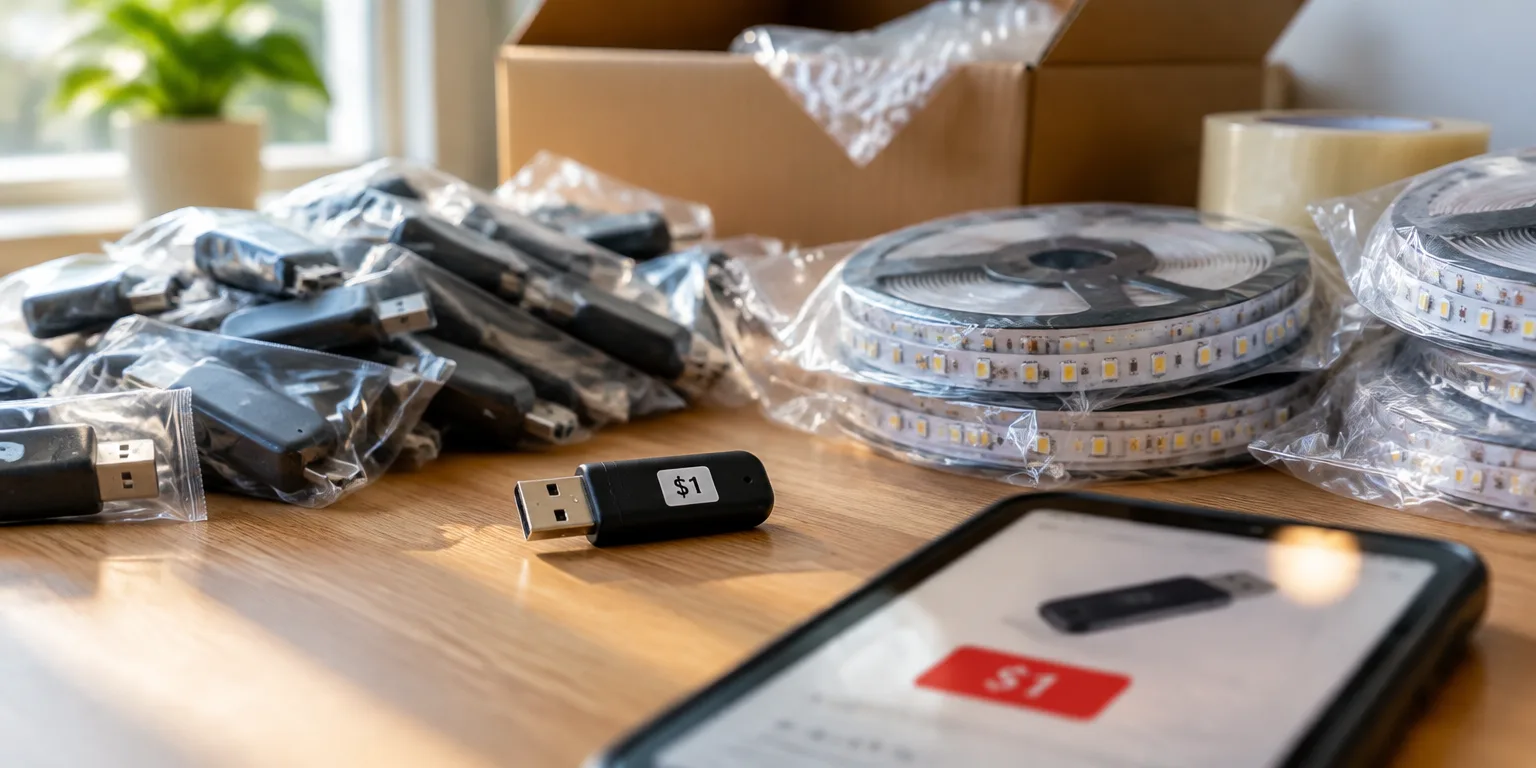
That $10 or $20 USB dongle on Amazon likely started as an item costing less than $1 on Alibaba, a Chinese wholesale site where factories sell goods in bulk. The seller lists it for 10 to 20 times what it cost. An 80-cent find at that markup would be $8 to $16. He does the same with glowing strip lights, wireless item trackers, small blenders, and phone holders. The photos can look premium, but many of these unbranded gadgets are faulty or stop working after a few months, says Hari, an Amazon critic, who has "almost stopped shopping on Amazon altogether."
The seller is a dropshipper, a go-between who sells goods he does not pack or ship. He spots a trending product, finds the cheapest version on Alibaba or AliExpress, and posts it on Amazon at a giant markup. The supplier ships it, or Amazon handles the fulfillment, and he collects the sale price.
That markup is not mostly profit. Shipping is usually baked into the listed price, and then Amazon takes a referral fee, which is a cut of each sale, plus a per-item seller fee. Hari estimates those logistics and Amazon charges account for about half the price.
The rest largely goes to getting noticed. With close to 2 million small and medium-size businesses selling on Amazon, about 70 percent of them operating independently, the same cheap fan or projector is offered by many sellers. To stand out, sellers buy ads, often on Amazon itself as sponsored listings, and also on Facebook and TikTok. Hari estimates that ad spending often accounts for about half the cost on its own.
Questions people ask
What exactly is Alibaba?
Alibaba is a business-to-business marketplace based in China where manufacturers sell in large quantities at very low unit prices. AliExpress is its sister site for smaller orders. Sellers can search by product, order samples, and then arrange bulk shipments.
What are Amazon's referral and seller fees?
It is a percentage Amazon charges on every item sold through its marketplace, typically around 8 to 15% depending on the category, plus a fixed per-item charge for individual sellers. Amazon also charges for storage, packing, and shipping if the seller uses its fulfillment network.
If margins are so thin, why do so many sellers still do it?
Because volume can still make it work, and the startup costs are low since there is no store or factory to build. The problem is competition: hundreds of sellers can list the same Alibaba find, so ad costs rise and only the listings that rank highest get most of the clicks.