An Agent in the JFK Motorcade Says He Moved the Pristine Bullet
Paul Landis says he pocketed the bullet from the limousine seat to keep it from being lost and left it by the president in the hospital. If true, the lone gunman account would no longer hold.
 Who Killed JFK? · Forensics
Paul Landis, a Secret Service agent assigned to help protect President John F. Kennedy, was riding on the outside of the car just behind the presidential limousine in Dallas when the fatal shot struck. He saw the president's head split open and recalled, "A mist of blood and flesh and brain matter flew into the air." He said he bent down to avoid being hit by it. The motorcade then sped under an overpass toward Parkland Memorial Hospital.
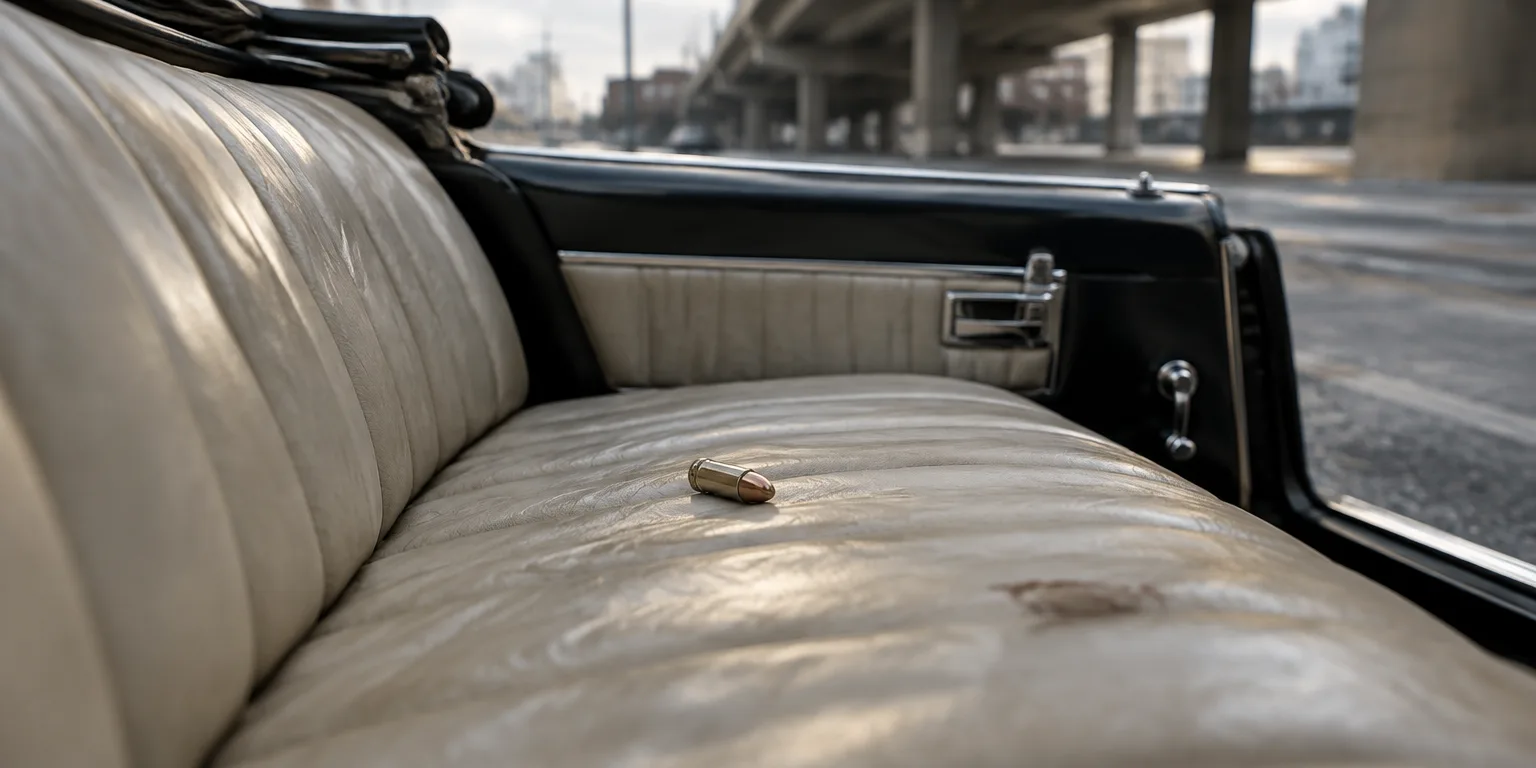
When the cars stopped, Landis ran to the presidential limousine. Jacqueline Kennedy had been seated toward the left side of the back seat, with a pool of blood beside her. As she stood up, Landis said, he spotted a nearly intact bullet just behind the place where she had been sitting.
That sighting matters because the official account depends on one bullet doing immense damage. The Warren Commission, the federal panel created in 1964 to investigate the assassination, concluded that three shots were fired and one missed. That left a single bullet to wound both Kennedy and Texas Gov. John Connally, who was riding in front of him. In September 2023, almost 60 years later, Landis said publicly for the first time that he had picked up that intact bullet himself.
The bullet showed only the marks of having been fired, Landis said, with no major deformity. With attention fixed on the president, and worried the bullet would disappear, he said he put it in his pocket to save it. Inside Trauma Room 1, jostled in the crush around the gurney until he was beside the president's feet, he took it out and set it down there.
If true, this explains where the bullet came from and undercuts the single-bullet theory. The official story had been that a maintenance worker found an intact bullet on a stretcher in a hospital corridor, overlooked until then by everyone in Dallas and at Parkland. Landis's account would explain how it reached the hospital and why it looked almost whole, but no independent source or record confirms his claim beyond his own word.
Critics of the single-bullet theory argue that this reading destroys it. The bullet Landis described could not have passed through two men and broken bone and still looked that way, and it could not have wounded Connally in front and then ended up in the rear seat unless it bounced backward. In their view, that would require at least a fourth shot, and therefore a second gunman, because Oswald was not believed able to fire that quickly with that rifle.
Asked why he had stayed silent, Landis said, "Nobody ever asked. Warren Commission never interviewed any of the other agents that were in the follow up car." He had kept the bullet to save it, and then he left it by the president's feet.
Questions people ask
What was the single-bullet theory?
It was the Warren Commission's solution to a counting problem. With one of three shots missing, investigators said a single bullet struck Kennedy in the back and then struck Connally, causing his chest, wrist, and thigh wounds. Without it, the wounds required more shots than one gunman was thought to have fired.
Why would one more shot mean a conspiracy?
The official conclusion was that three shots were fired and that Lee Harvey Oswald, firing a bolt action rifle from above and behind, acted alone. Tests found that rifle needed about 2.3 seconds between shots, so an extra hit points to a second gunman. Two gunmen means a conspiracy by definition.
What happened to the stretcher bullet?
It became Warren Commission Exhibit 399, often called the magic bullet because it was nearly intact after supposedly passing through two men and breaking bone. Ballistics analysts linked it to Oswald's rifle, which is why its origin on a hospital stretcher has been argued over for decades.