An AI spotted his cancer in seconds. Doctors took six months.
It took doctors six months to find his tumor. The chatbot needed seconds, then hit a paywall.
 Invest Like the Best with Patrick O'Shaughnessy · The Two Harvard Dropouts Who raised $800M to take on NVIDIA
Rob Urtz was scrolling through his old camera roll when ChatGPT learned to look at pictures. Urtz, a Harvard dropout, had been eager to try the new image upload, and he went looking for a test.
He stopped on a photo of his own back. Under the skin, a strange bump pushed outward. The picture had been taken before anyone knew what was wrong with him.
He asked the chatbot to pretend it was an expert doctor, and told it a patient had come in with that bump. What could it be, he asked.
The program replied that it could be a tumor, and that he should get an MRI right away and see a doctor. The exchange stuck with him because the delay in real life had been so long. What had taken his doctors about six months to pin down, the program had pointed to in seconds.
At the end of his sophomore year of high school, Urtz had been hurt at a martial arts tournament and woke up the next day unable to walk. Doctors first suspected a joint problem in his pelvis. He went through physical therapy and different scans without an answer.
Eventually an MRI revealed the bump on his back, and the diagnosis was stage-four bone cancer, meaning it had spread beyond where it started. He remembers doctors putting his chance of living at less than one in three. What followed was two years of chemotherapy, surgery, and learning to walk again.
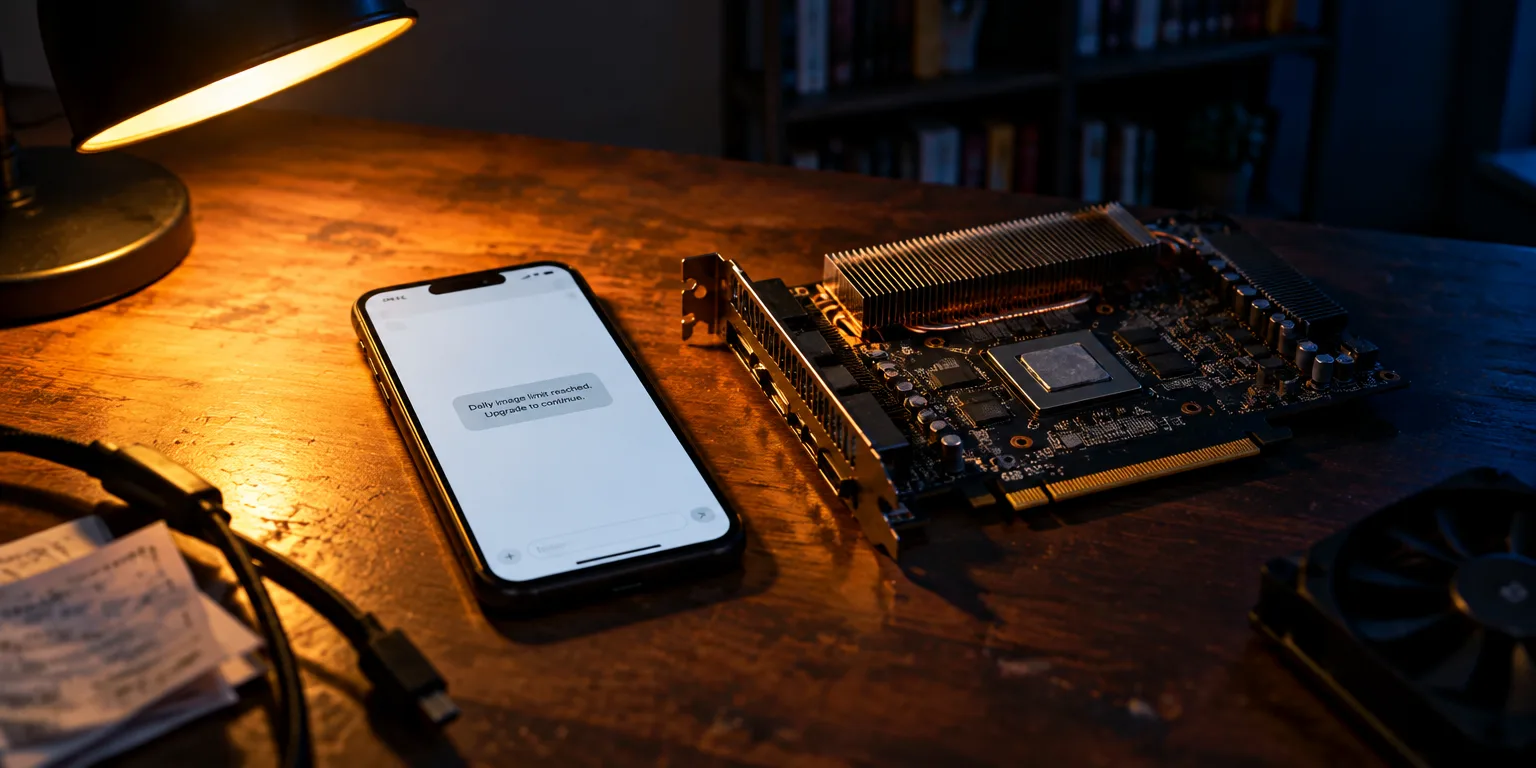
When the chatbot suggested a tumor, Urtz said he just sat still. When he went to show his parents, a message told him he was out of image credits for the day and would need a paid plan.
He took that limit as a personal sign. In his telling, there were not nearly enough computers to offer that kind of instant help to everyone. The GPUs, a type of chip first made for graphics, and TPUs, Google's AI chips, that handled these models had been created before ChatGPT and then adapted for work they were not originally made to do.
Years later, asked about the kindest thing anyone had done for him, Urtz pointed back to treatment. At 16, doctors asked him to choose between surgery, with better odds of living but a likely loss of walking, and radiation, which would let him walk but lower his odds. He chose surgery, then learned that too many of the removed tumor cells were still alive, so he needed a rare form of radiation. Only a few machines in the world could deliver it, and one was in Boston. He moved to Boston for months in a wheelchair, and both of his parents dropped everything and moved with him.
Questions people ask
What does stage-four bone cancer mean?
Stage four means the bone cancer has spread beyond where it started, often to the lungs or other bones. It is treated with a combination of strong chemotherapy, surgery to remove the tumor, and sometimes radiation, and survival odds are much lower than for cancer caught early.
What was new about the AI feature he tried?
GPT-4V was a 2023 version of OpenAI's GPT-4 that could accept images as well as text. For the first time, ordinary users could upload a photo and ask the model to describe it, read it, or in this case, give a possible medical explanation.
What is the chip company he went on to build?
Etched is the chip startup Urtz founded with Gavin Urtz and a cofounder named Chris after dropping out of Harvard. It has raised about $800 million to build specialized chips meant to serve AI models faster and more cheaply than general purpose graphics chips.