An Attorney Says Repair Costs Keep 500 Miles of Scaffolding Up in New York
A lawyer who walks Lower Manhattan says strict codes and high labor costs give owners reason to rent poles and seek extensions.
 Peter Santenello · New York City’s Hidden Corruption 🇺🇸
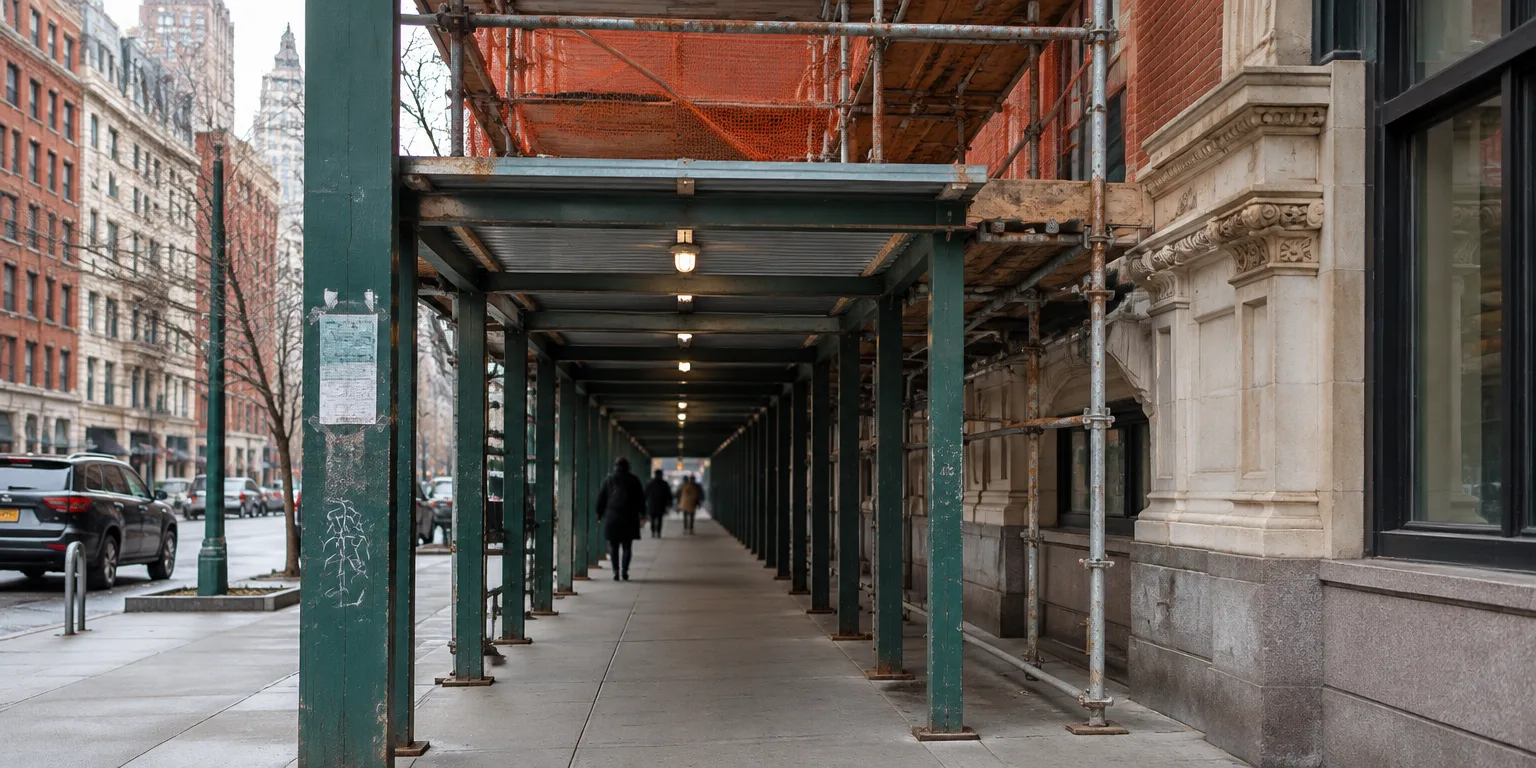
Walk a few blocks in Lower Manhattan and you will spend much of it under scaffolding and sidewalk covers put up to protect pedestrians in case something drops. Benjamin, a First Amendment attorney who specializes in anti-corruption law, says roughly 8,000 scaffolding jobs are underway across the city at the same time, totaling more than 500 miles, far more than any other municipality in the United States.
Benjamin offers a theory for why so much of it stays up. New York has heavily unionized labor, stringent building safety codes, and more frequent inspections than cities such as Chicago or Los Angeles, and those factors make facade and stonework repairs hugely expensive.
Benjamin describes the workaround this way: An inspector tells the owner of an older building that the facade must be repaired. Instead of paying hundreds of thousands of dollars for stonework, the owner puts up scaffolding. That brings temporary compliance because the sidewalk is protected.
Then, Benjamin says, the temporary period is extended. Owners ask for three months, then six months, then another six months. He says some scaffolding projects have lasted more than 10 years, and that paying a fraction of the repair cost for rented poles lets owners delay the full job for seven years or 10 years.
He walked the neighborhood to check, first for about three hours one evening and again during work hours the next morning, and says he did not see a single worker on any scaffolding project.
Benjamin repeats an unproven rumor that the people who do scaffolding contracting work exert political pressure at City Hall to keep extensions flexible, which would let contractors collect rental income while owners avoid larger repair bills. He presents it as rumor, not proof.
The rules look strict on paper but let owners delay repairs in practice.
Questions people ask
Why does New York inspect building fronts so often?
New York requires periodic facade checks for buildings taller than six stories under what is now called the Facade Inspection and Safety Program. The rule grew out of incidents in which pieces of aging masonry fell to the sidewalk. A licensed professional must examine the exterior walls and report whether the building is safe, needs repair, or is unsafe.
How long can an owner legally keep scaffolding up?
A permit for a sidewalk shed is supposed to be short term and tied to protecting the public while a building is repaired or built. In practice, owners can seek repeated renewals when work is delayed. The city has added higher fines and deadlines to push removal when no work is happening.
What makes facade work so expensive in New York?
Access is a big part of it. Crews must erect sidewalk protection, rigging, and sometimes full pipe scaffolding on a tight, busy street. Labor rates are high, materials must be hoisted, and work often has to be done in phases to keep stores and apartments open.