An Awake Patient Did Math While Surgeons Removed His Brain Tumor
The same lab uses artificial intelligence to turn silent brain signals into speech for people who cannot move or talk.
 The Joe Rogan Experience · #2553 - Andrew Huberman
Andrew Huberman, a neuroscientist and podcast host, stood close enough to watch his childhood friend operate, and to talk with the man on the table. The patient's skull had been removed, and a tumor was coming out of the front part of his brain piece by piece, onto a plate for testing. The patient was awake for all of it.
The surgeon was Eddie Chang, chair of neurosurgery at the University of California, San Francisco, a bioengineer and member of the National Academy who studies how the brain produces speech. He has known Huberman since they were seven, and he still calls him Andy. He had invited Huberman because the patient was devoted to jujitsu and wanted him there.
This is the central problem of removing a tumor that sits inside parts of the brain needed for speech and movement. The tumor does not look different from healthy tissue, but it feels different to the instruments of a highly trained surgeon. If the surgeon takes too little, a tumor that can kill remains. If he takes a quarter centimeter too much in the wrong place, the patient can lose the use of his hand completely.
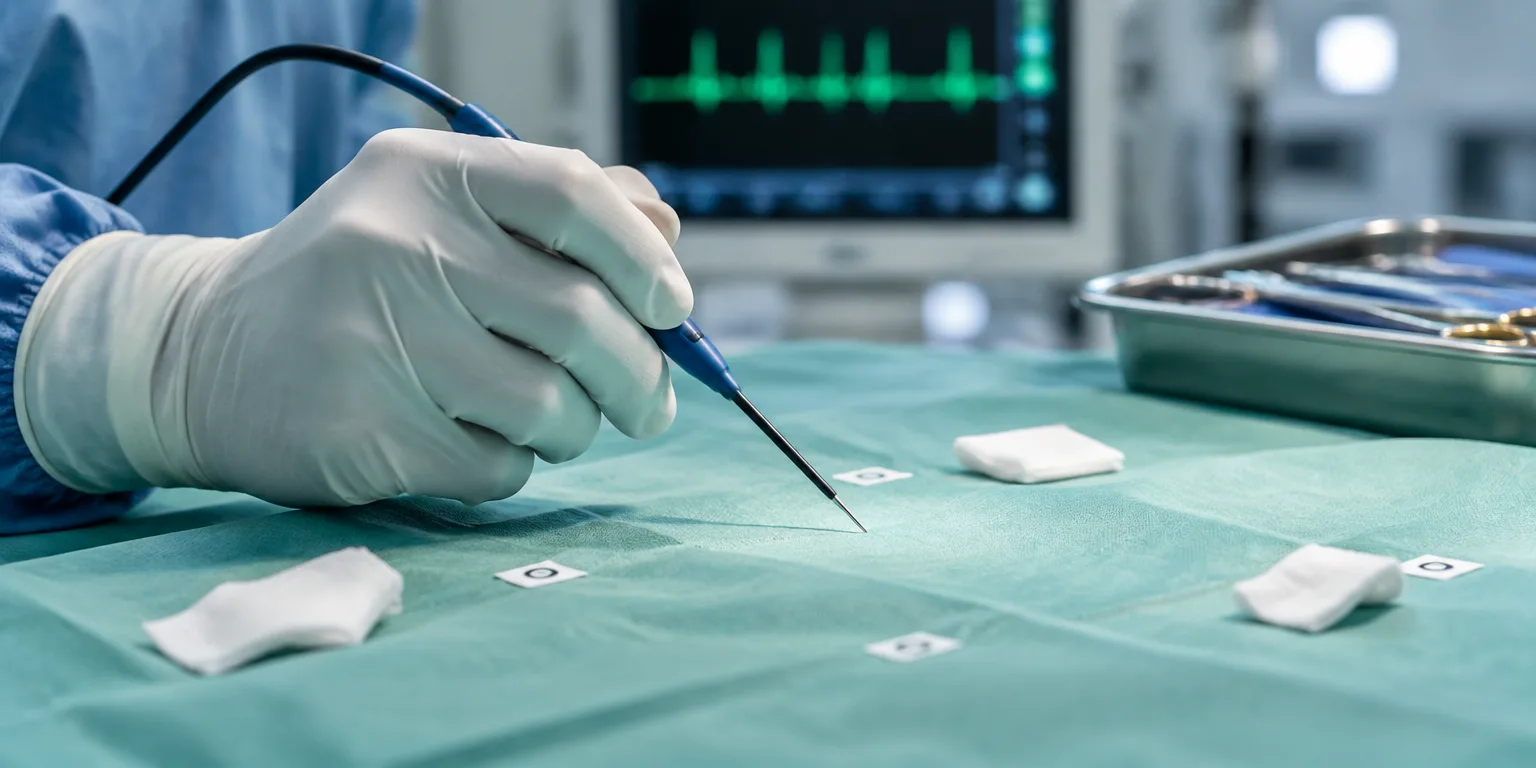
So Chang mapped as he worked. He touched a spot with a small electrical pulse, then waited to learn what happened. The patient reported what he felt, in his toe, in his face, in his hand. At other moments he solved math problems, because he had agreed to let the team study which areas help with mathematics while the brain was exposed.
The same mapping idea drives Chang's other work, on people with locked-in syndrome, who are fully paralyzed but conscious and could communicate only by blinking. His lab found early signals linked to getting ready to speak, as well as signals that drive speaking itself, and used bioengineering and artificial intelligence to decode them.
One patient, named Pancho, could only blink before. His first words through the system were "Hello" and "Doing well." Speech is an exhale shaped by the throat and tongue, and the system reads the brain instructions that would normally go to those muscles. The artificial intelligence learns his patterns, and patients now wheel around with a tablet beside them showing a face that speaks. The system works only after training on a person's attempts to speak, and it cannot read random thoughts.
Artificial intelligence is essential, Chang told Huberman, because surgeons cannot place unlimited sensors in the brain without destroying the tissue they want to save. The software combines a few signals to work out which word the brain was trying to say.
The man on the table is alive and thriving. The jujitsu patient, age 60, is now training most days of the week. Doctors removed the life-threatening tumor, and he is doing well. He has invited Huberman to come to jujitsu class.
Questions people ask
Why keep someone awake during brain surgery?
General anesthesia turns off consciousness and speech, so surgeons could not test what each spot does. With local numbing of the scalp and skull, the brain itself has no pain receptors, so the patient can stay comfortable while answering questions and moving his hand. The answers create a live map of what must be saved.
How does AI turn brain signals into speech?
The system records electrical activity from the surface of the brain when the person tries to speak, then a computer learns which patterns match which sounds or words. With training, it can predict intended speech from the preparation signals and play it through a speaker, often with an animated face. It does not read random thoughts, only trained attempts to speak.
How close did the tumor come to costing the patient his hand?
Very close. Chang said moving a quarter centimeter or less into the margin where stimulation produced a feeling in the hand would have meant complete loss of hand function. That is why the team stimulates, listens, and removes only tiny amounts at a time.