After Weeks of Ice Baths, a Caltech Professor Says His Road Rage Faded
He reports that painful plunges left him calmer in the water, and he believes that training carried over to a honking driver.
 Huberman Lab · Neuroscience of Emotions & Tools for Improving Emotion Regulation | Dr. Ralph Adolphs
Ralph Adolphs, a Caltech professor who studies emotion, had his turn signal on and a parking space in sight on a street in Pasadena. The lane beside him was open, so the driver behind him could easily move over.
Instead the car pulled right up behind him and leaned on the horn. He felt an immediate anger response, and then, he says, it went flat.
Adolphs traces that flat response to weeks of climbing into cold water. His account is that repeated practice trained his automatic nervous system, so calming down took less effort and spilled over from the ice to the street.
He had started after a former colleague, Justin Feinstein, who runs a float clinic, pointed him to videos of Wim Hof, a Dutch athlete known for cold water feats, swimming in a frozen lake. Adolphs said it looked interesting enough to try.
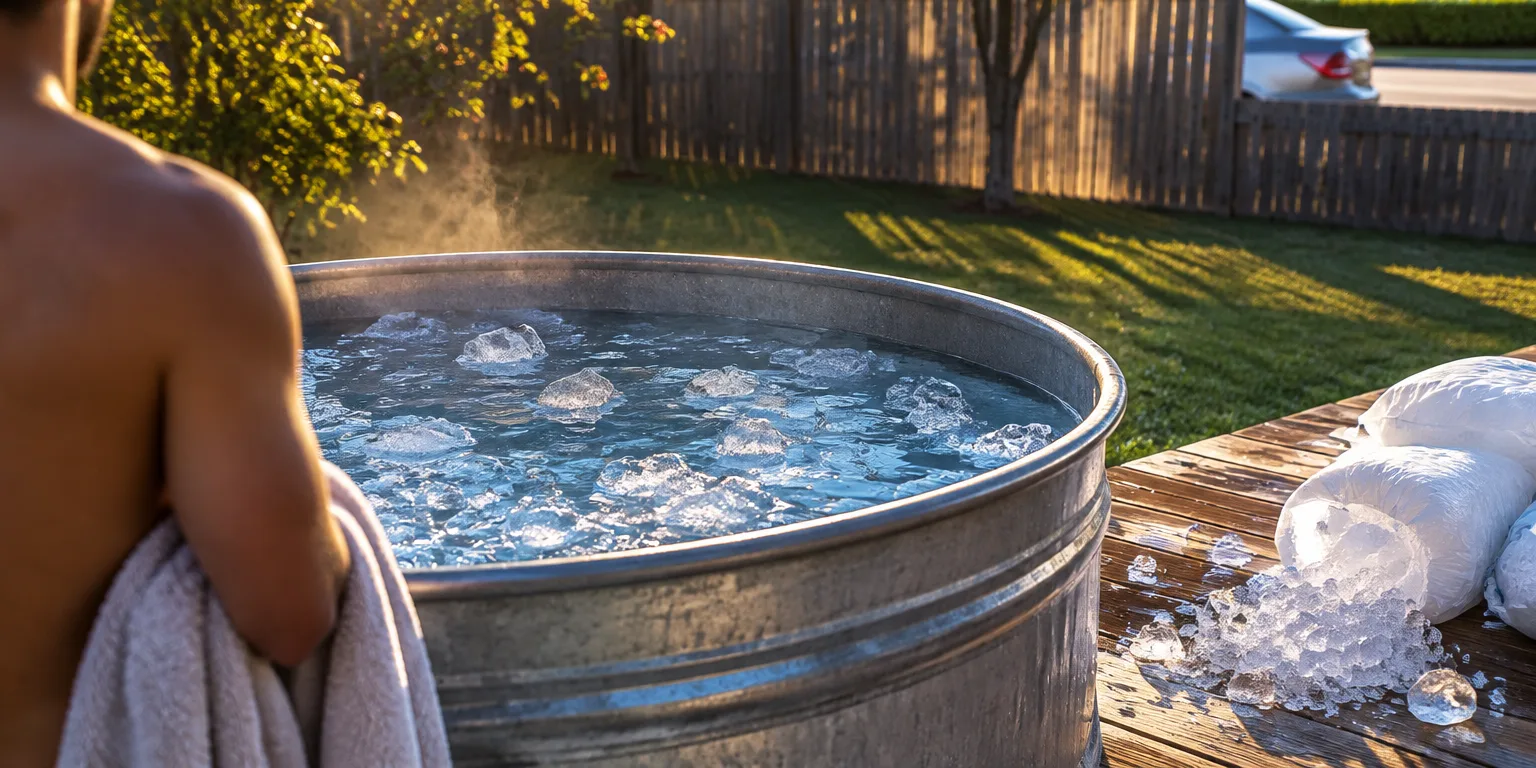
His wife bought an insulated horse watering trough online and set it up in the yard. Every week he hauled home 40 pound bags of ice, and the clerks at his ice supplier teased him about throwing a lot of parties.
The first week was, in his words, “terrible” and “super painful,” a “whole body cold pressure task.” The second week his breathing and heart rate still rose, but the rise was milder and eased with practice.
Across the following weeks, the pattern kept changing. Now he says he steps in and his heart rate goes down, his breathing goes down, and he feels “super relaxed.”
He calls the experience an “experiment of one” and says he is not claiming it as a published study. His idea is that steady practice can train control over the automatic nervous system, so regulation becomes, in his words, “smooth and effortless to some extent.”
Back on the street, with the car close behind him and the horn sounding, he says the control he had practiced in cold water seemed to carry over to the honking driver. The anger rose, then flattened, which he credits to the ice bath training.
Questions people ask
Who is Ralph Adolphs and what does he study?
Adolphs is a professor at Caltech who studies how the brain handles emotion. He describes emotions as functional states that steer behavior in response to challenges in the environment. His work brings together studies of animals and humans.
What does he mean by calling this an experiment of one?
He means it was a personal observation, not a controlled trial. He tracked a change in himself over weeks of ice baths and a later reaction while parking. He explicitly says he is not presenting it as a published study.
How did his response to the cold change over time?
Early plunges were painful and raised his breathing and heart rate. Over weeks that response eased, and later he reports entering the water with lower heart rate, slower breathing, and a relaxed feeling. He interprets that shift as regulation becoming more automatic.
What have researchers reported about cold exposure and stress responses?
In the discussion, deliberate cold exposure was described as reliably raising adrenaline and norepinephrine, while often leaving the stress hormone cortisol flat or lower afterward. Some papers were mentioned reporting greater resilience to later stressors. The findings were presented as early evidence, not proof of cause.