An Insanity Verdict Can Mean Lockup With No End Date
Patients say prison has an end date and less scrutiny, while a hospital commitment can stretch on for decades.
 Criminal · Not Criminally Responsible
When Makeda Brotman, the author who spent years tracing the case of Brian Bechtold, was asked whether being found mentally ill is the easy way out of a criminal charge, she said this case shows the opposite.
“It can actually be worse than prison because, mostly because of this terrible sense of limbo, that there’s no end to it,” she said.
What she meant, she explained, starts with arithmetic. Bechtold had shot his parents in their Maryland home in 1992. After evaluations found him not criminally responsible, he was sent to Clifton Perkins State Hospital. That hospital is the state’s sole high security center for forensic psychiatric care.
The average stay there was three years at the time. Brotman said patients who had committed similar crimes “were getting out in four or five years,” so Bechtold, who was following his psychiatrist’s orders, expected to be out in five or six years at most.
Instead, she said, the stay became indefinite and every small choice counted. After Bechtold declined to be hypnotized by a therapist who had been taking hypnosis lessons, his chart noted “Refused therapy,” which automatically sent him back from minimum to medium security. His medication was increased until he became incontinent and felt medicated into a stupor, and he began to fear ending up like the older men he saw slumped before the television in diapers for 20 years, which in Brotman’s account was “a fate worse than death.”
That is why, Brotman said, Bechtold decided to take a hostage and force a transfer to prison. Other patients who had served time told him that in prison daily choices carry no clinical meaning, so missing breakfast just means missing breakfast and does not become a symptom in a chart, and that a sentence of 10 or 20 years at least has an end. By the time Brotman met him in 2013, he had already spent more than two decades at Perkins.
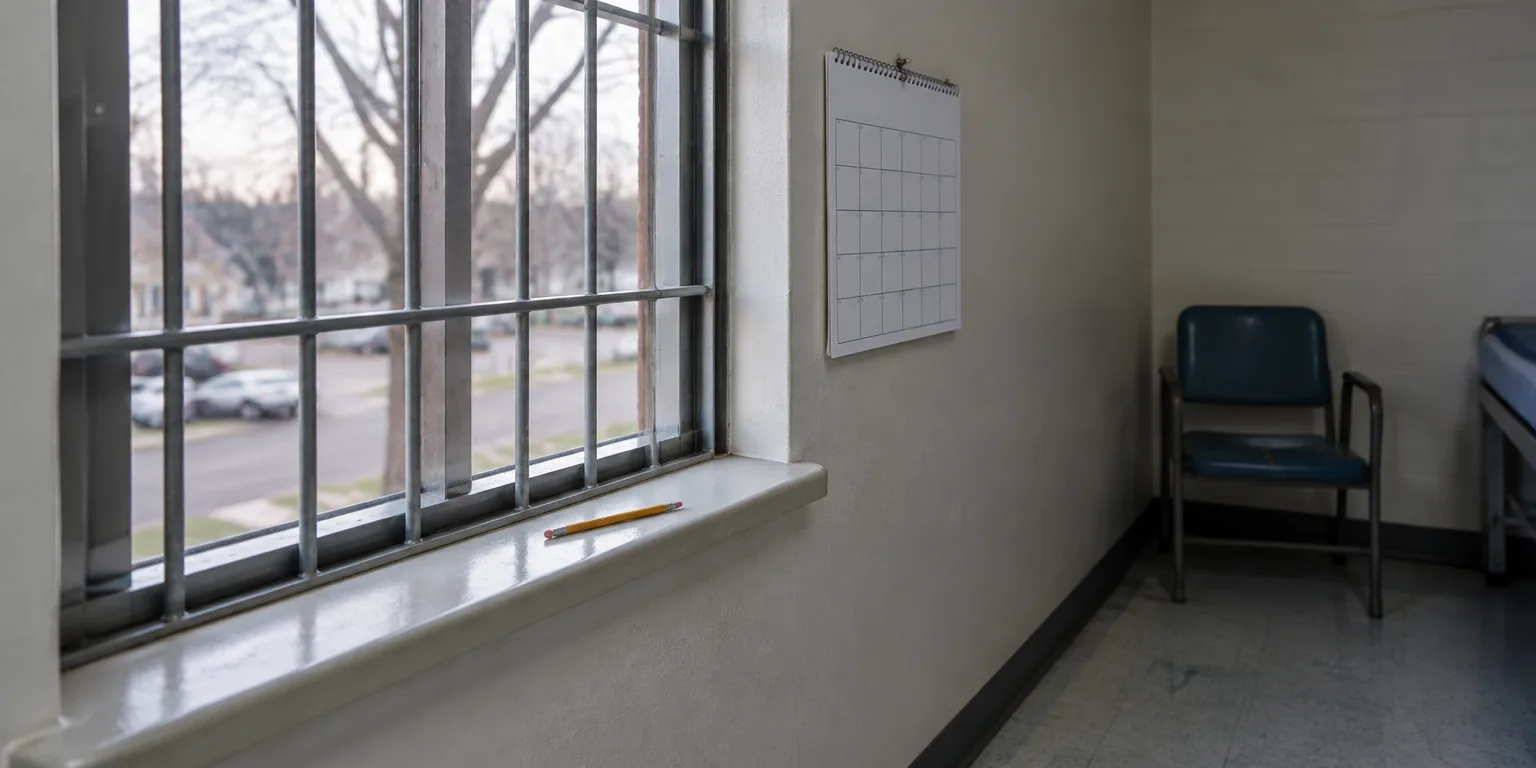
The courts kept him there. At his 2002 trial for the escape, staff testified that he had shown no violence in seven years, but the hospital’s clinical director called that proof of a hidden desperation. The judge refused to impose a prison term, saying it would reward him, and sent him back to Perkins with 13 years of probation. By spring 2016, held as an escape risk, he had not been outside in nearly a year, and his grievance was answered with the line, “Fresh air is not a human right.”
Doctors maintained that he remained ill and dangerous. Brotman said this reflects a broader pattern she has seen in such cases, in which judges feel they are not medical experts and defer to doctors rather than risk a release. But she argued that the deeper harm is the constant judgment, where staying in your room to read or keeping quiet in group therapy becomes evidence of illness. “You’re not being given your own agency,” she said. “You’re not being treated with dignity.”
Questions people ask
What does it mean to be found not criminally responsible?
Not criminally responsible means the court found the person committed the act but, because of severe mental illness, could not appreciate that it was criminal. Instead of a prison sentence with a fixed end date, the person is typically committed to a secure psychiatric hospital until doctors and a review board agree release is safe, which can mean months or decades.
Why does a hospital stay feel more endless than a prison sentence?
Prison sentences usually have a fixed length, minus good behavior credits, so a prisoner can count down to release. A forensic hospital commitment is reviewed periodically, often yearly, and continues as long as the patient is deemed mentally ill and dangerous, so there is no date to count toward.
Is an insanity finding always worse than prison?
No. Defense lawyers often seek it because it can lead to treatment rather than punishment and sometimes to earlier release. But for patients without strong family support or housing, as in Bechtold's case, evaluators may keep finding reasons to deny release, and the stay can exceed the prison time for the same crime.