An Invasion of Taiwan Would Likeliest Come in April or October, on One of 14 Beaches
The sea points to a D-Day style landing three times larger than Normandy, with little room for surprise and nowhere else to go.
 Wendover Productions · How Taiwan is Preparing to Get Invaded
Taiwan's greatest defense is not its army. It is the water around it.
Because there is no land route to the island, China cannot simply drive across a border the way Russia did into Ukraine. It would have to stage an amphibious assault, soldiers and vehicles coming ashore from landing craft to seize and hold a beachhead, a defended patch of beach that serves as the doorway for everything that follows. The model is D-Day, still the largest such landing ever attempted, involving roughly 150,000 troops on the attacking side.
China's version would have to be three times as large. Analysts estimate an invasion would require some 400,000 to 500,000 troops for a credible chance of taking the island, and gathering that many troops and ships on the mainland would take about a month. In 1944, the Allies could hide where they were going because radar and electronic surveillance were primitive. Today, satellites and sensors make a secret buildup of that size almost impossible to hide.
The sea itself then narrows the choices further. Landing craft swamp easily, troops arriving seasick cannot fight well, and aircraft need clear skies. Reinforcements must keep flowing for days or weeks, so China would need calm weather it can count on.
Taiwan rarely offers it. In winter, a seasonal northeast monsoon drives strong winds and rough seas through the strait for months. In summer, the seas calm but typhoon season begins, and typhoon paths can be forecast accurately only three to five days ahead, far short of the roughly two-week window an invasion would require. That leaves April and October as the two workable months, and Taiwan knows to mobilize when it sees a buildup pointing toward them.
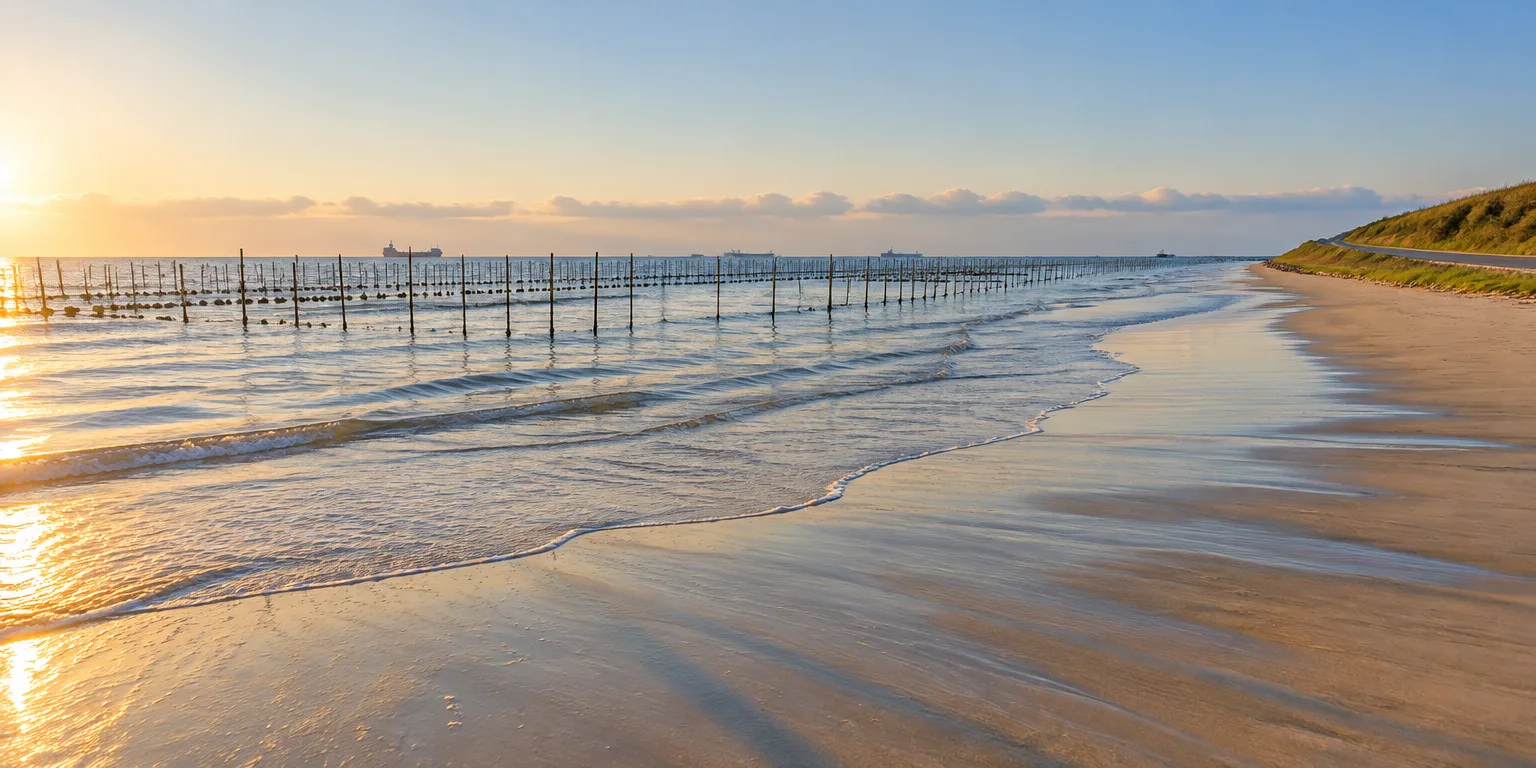
Even then, geography keeps helping. The 100 miles, or 160 kilometers, of open water give Taiwan an eight to 10 hour warning once ships set sail. When they arrive, most of the coast cannot be used. Much of the east is sheer cliffs. Much of the west is muddy wetlands that would trap vehicles, or shallow farm ponds for oysters, shrimp, and fish that force vehicles onto a few narrow, easily defended roads.
A usable beach must also meet three physical tests: the seabed offshore must drop steeply enough to let landing craft pull in near the shore, the sand itself must slope gently enough for trucks and tanks to climb, and the beach must be wide enough for a huge force. Analysts count just 14 places that qualify. China would have to come in the open, on schedule, to a beach Taiwan has already studied.
Questions people ask
Why can't China just invade by air, with paratroopers and missile strikes?
Airborne troops can seize an airport or bridge, but they land light, without tanks, artillery, and steady supplies of fuel and ammunition. To take and hold an island of 23 million people, China would still need to bring heavy forces and continuous resupply by sea, which means capturing a beach and then a port.
What would Taiwan do with those eight to 10 hours of warning?
Taiwan would launch aircraft and anti-ship missiles at the crossing fleet while moving ground troops to the likely beaches. The goal is not necessarily to stop every boat at the waterline, but to sink enough ships to push the landing force below the size it needs to break inland.
Are those 14 beaches heavily fortified with concrete bunkers?
No. Taiwan deliberately avoids permanent coastal forts because they would be destroyed by air and missile strikes before any landing. Instead it rehearses mobile defenses, moving troops, mines, and missiles to the threatened beaches during a crisis, and plans to keep fighting even if China gets ashore.