An investor found a hidden phrase in a philosopher's name
He had been searching for a word for things that grow stronger with time, and found it rearranged inside a nickname.
 We Study Billionaires - The Investor’s Podcast Network · RWH070: Hunting For Hidden Treasures w/ Christopher Begg
Christopher Begg, an investor who runs East Coast Asset Management and teaches investing at Columbia Business School, was spending three months with a dead philosopher.
It was one of his quarterly deep dives, when he studies a single subject from the ground up. This time it was Heraclitus, his favorite philosopher, a thinker known as Heraclitus the Obscure because he wrote in paradoxes that held more than one truth at a time. Begg was reading through fragments in different translations, and thinking about arches.
The arches were on his mind for a practical reason. Begg spends his days asking, in his words, "Why do some things keep gathering force as time passes through them, while others begin to die almost as soon as the novelty wears off?"
His shorthand for the things that endure is source built. By that he means built on the basic truths of how the world works and in line with nature. It is part of what he calls a 13.7 billion year thread through physics, chemistry, biology, and human history, and he sees it in cathedrals like the Sagrada Familia in Barcelona and St. Paul's Cathedral in London, and hunts for it in businesses.
Staring at the name Heraclitus the Obscure, he wondered if he was seeing something. The word arches was sitting inside the letters.
At first he thought it was a coincidence. Then he found the word the, and then the word built. He rearranged what was left, and it spelled source. Together, source built arches uses all of the letters in Heraclitus the Obscure except T, H, and E, leaving only the word the unused. He said, "I literally fell off my seat."
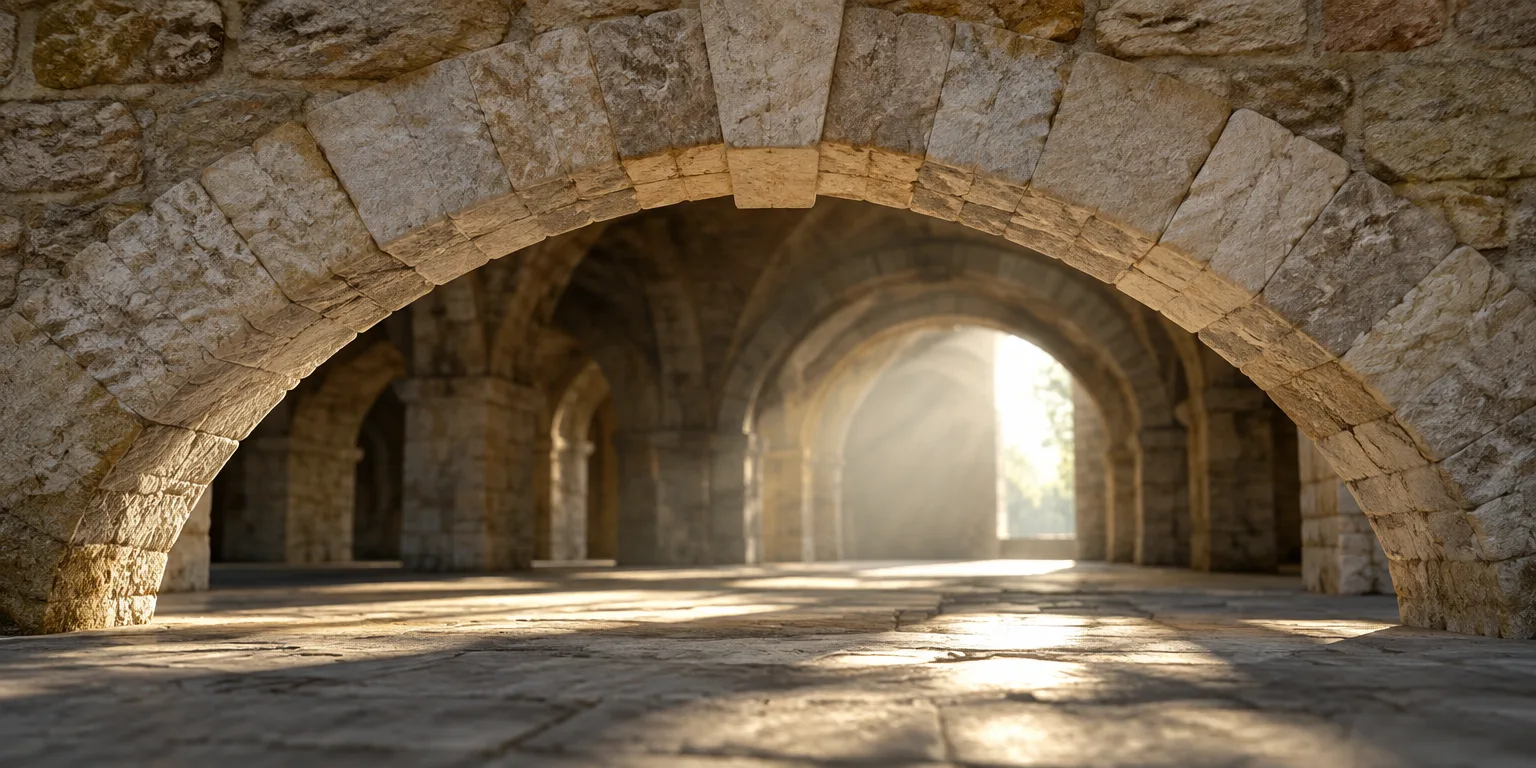
For Begg, the hidden phrase fit the idea perfectly. Leonardo da Vinci, in Begg's retelling, defined an arch as "two weaknesses brought together to create a strength." An arch lets things pass through, as a door or a bridge, and at its highest use arches joined together can form a dome. That dome like quality, where win-win structures align with the way things grow, is what he means when he calls a cathedral or a company source built.
Questions people ask
Who was Heraclitus?
Heraclitus lived in the ancient Greek city of Ephesus around 500 B.C. and is remembered for saying everything flows and changes. Only short fragments of his writing survive, often in riddles and paradoxes, which is why later readers called him the Obscure.
What makes the Sagrada Familia and St. Paul's Cathedral examples of endurance?
Both are large domed churches built to carry crowds for centuries, not decades. The Sagrada Familia, designed by Antoni Gaudi, has been under construction in Barcelona since 1882 and is still being finished. St. Paul's, designed by Christopher Wren, was completed in 1710 and survived the bombing of London in World War II.
How does an arch actually make two weaknesses strong?
An arch is built from wedge shaped stones that would fall on their own. Placed in a curve, they push against each other and carry weight down into the supports. Joined together, arches can form domes and bridges that span wide spaces and last for centuries.