An investor thinks people are not against AI, they feel left out
The investor who makes explainer videos says the public hears about lost jobs and water taken by data centers, not the quiet scientific gains she sees at work.
 Fortune Magazine · This Creator Investor On The Truth About The AI Gold Rush | Term Sheet
Claire Zhou, an investor at Lightspeed, the venture firm, who also makes videos explaining technology, describes herself as techno-optimistic by default, meaning she believes technology will mostly make life better. She grew up going to science fiction movies with her father, who collects movie props and keeps a Terminator head in his basement as a reminder of what happens if AI goes the Skynet route. Making videos for a general audience, she said, humbled her and pushed her beyond the bubble of Silicon Valley excitement.
As she put it, “A lot of people aren’t necessarily anti-tech. They just feel like they’ve been left out of the journey.”
Zhou argued that nobody has played translator for those viewers, so their only exposure to the AI story is doom and gloom about how the technology will take jobs. She described what psychologists call Maslow’s hierarchy of needs, the ladder from basics like water up through purpose and work, and argued that AI seems to be failing at every rung, with data centers taking water and software threatening jobs, so she does not fault people for feeling panic and anxiety.
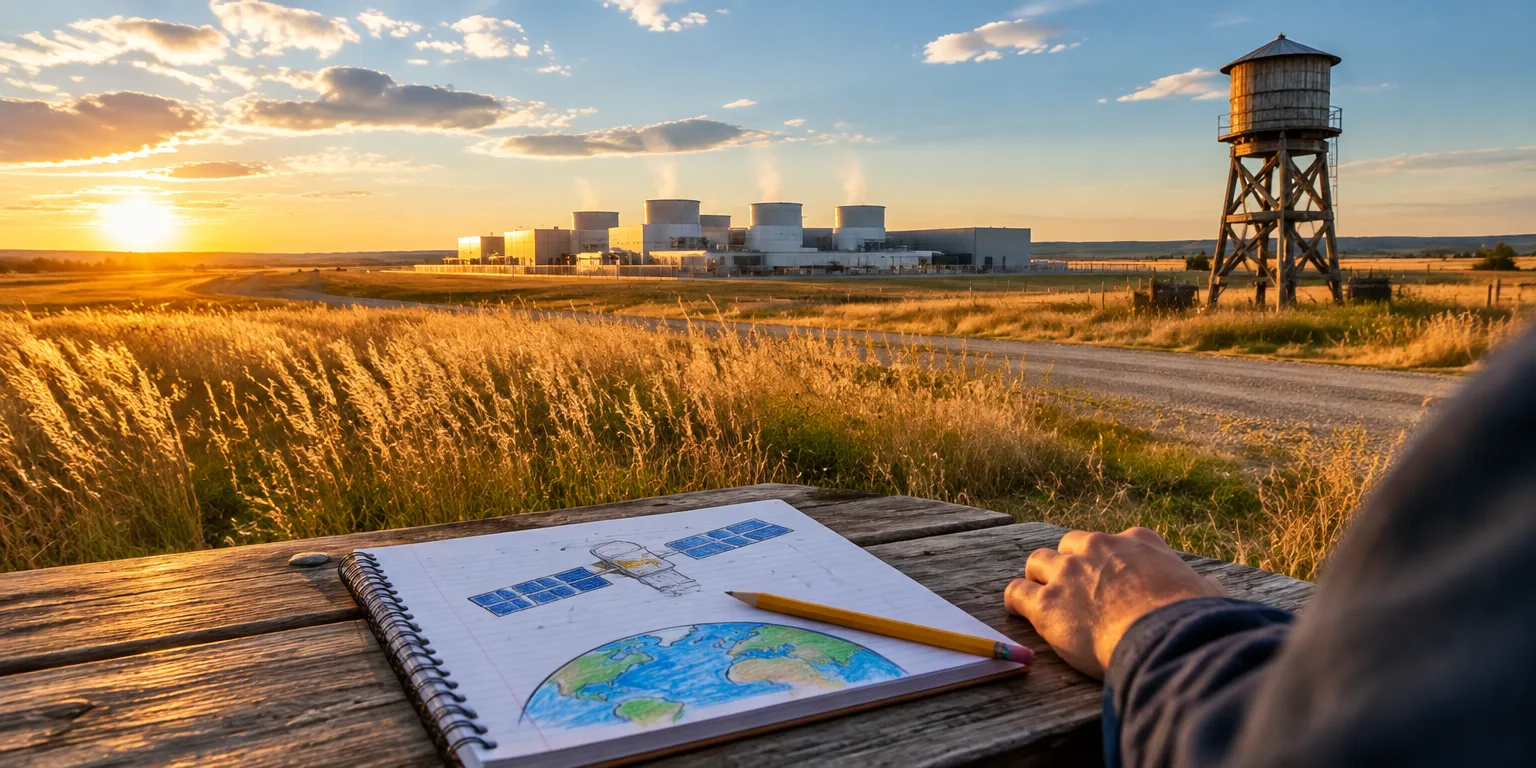
She said she sees a different side through her day job in venture capital, where founders and researchers are excited about AI for science, health care, and discovery, including ideas like orbital data centers in space that once sounded to her like a movie concept. The public hears mostly the most extreme, negative headlines, she said, and so misses the incremental, exciting change she has privileged access to at work.
Questions people ask
Do data centers really use a lot of water?
Yes. Most large data centers use water for cooling, either evaporated in cooling towers or circulated in chilled-water systems, plus additional water used to generate the electricity they consume. A single large facility can use millions of gallons per day, which is why projects in dry or residential areas often draw local opposition.
What is an orbital data center?
It is a proposed data center placed in orbit, where solar power is abundant and the cold of space could help with cooling. The idea is still experimental, with startups and research groups testing small payloads and power systems. Major hurdles remain around launch cost, maintenance, and transmitting data reliably.
Are most people actually anxious about AI?
Surveys suggest many are. Polls in the United States and Europe routinely find that majorities worry about AI taking jobs, spreading false information, or being used in ways they cannot control. Younger workers and students often report both heavy use of AI tools and high concern about what AI means for future employment.