An Old California Oil Field Has Saudi-Like Costs and Decades of Oil
Investor Ben Kelleran expects more than a billion recoverable barrels, and thinks the field is priced well below comparable reserves.
 Yet Another Value Podcast · Kontrarian Korner's Ben Kelleran on Sable Offshore $SOC
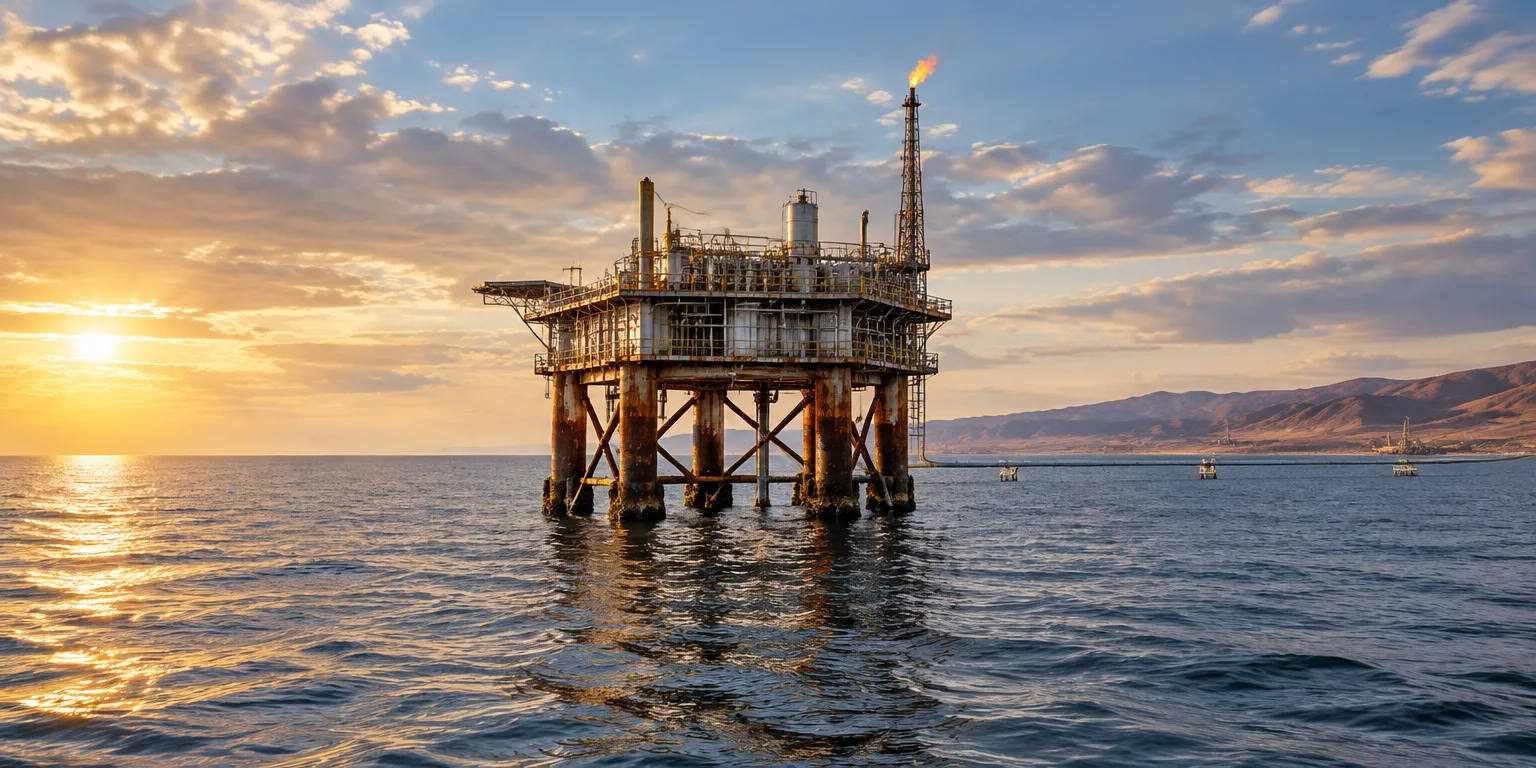
When host Andrew Walker asked investor Ben Kelleran what Sable Offshore is and why it is interesting, Kelleran pointed to the Santa Ynez unit, an offshore oil and gas field off the California coast. It is, he said, “the closest thing to Saudi economics in the U.S.,” meaning slow decline, decades of production, and very low operating costs.
Kelleran described it as the opposite of shale fields like those in the Permian Basin in Texas and New Mexico. Instead of wells that surge and then fade and need constant drilling, he said, the old offshore field should produce steadily for a long time. He put the reserve life at 50, 60, maybe 70 years.
When comparing value, he leaned on the reserve figures. As he recalled it, company materials put oil in place at about 15 billion barrels, with 646 million barrels listed as recoverable. Kelleran said he would take the over on one billion barrels of recoverable reserves, meaning he expects that figure to rise over time.
On value, Kelleran called it buying “Saudi economics in the US for about three to four maybe $5 a barrel in the ground.” He estimated that competitors, on a reserve basis, would carry valuations of $10 to $15 a barrel.
Walker pushed back that the stock may be priced like peers despite its binary risk. Kelleran acknowledged the single asset risk, including single points of failure like the pipeline problem in 2015 and the fact that the field is in California, which could warrant a discount. Kelleran argued there are “a lot of different moving pieces that will get simpler over the next 12 to 18 months as this thing comes online ramps production and the numbers start to speak for themselves.”
Questions people ask
Why is Saudi oil so cheap to produce?
Saudi fields are giant, onshore reservoirs with strong natural pressure, so oil flows easily and each well produces for decades. Lifting costs are often under $10 a barrel, compared with much higher costs for shale wells that need constant fracking and redrilling.
What does decline rate mean?
It is how fast an oil well's output falls after it starts producing. Shale wells can drop sharply in the first year, so companies must keep drilling, while old offshore platforms often decline only a few percent a year.
What is the difference between oil in place and recoverable reserves?
Oil in place is all the oil trapped in the rock, most of which can never be pumped out. Recoverable reserves are the share that engineers think can actually be produced with today's wells and prices, usually a small fraction of the total.