An Uncle Seized China's Throne, Then Built the Forbidden City
The usurper Prince Zhu Di seized the throne in 1402, then remade Beijing to prove that heaven was on his side.
 Dan Snow's History Hit · The Rise and Fall of the Ming Dynasty
In 1402, soldiers loyal to Prince Zhu Di reached the gates of Nanjing, broke into the imperial palace, and set it on fire. When the smoke cleared, the young emperor on China's throne was gone. Nobody knows what happened to him.
The missing ruler was Zhu Di's own nephew, the grandson and chosen heir of the founder of the Ming dynasty. Zhu Di was furious at being passed over, and he spent three brutal years fighting his nephew to take it.
Zhu Di was the most formidable of the founder's sons, a prince based in Beijing in charge of defending the northern border from Mongol attack. He marched his army south. He said the campaign would "rectify the court," claiming he would rescue the dynasty from corrupt advisers. The fighting ended only when his troops broke into Nanjing and burned the palace.
Zhu Di now faced the problem of turning a seizure of power into a right to rule. He took the throne under the name Yongle, moved the capital to Beijing, and began building on a scale meant to show vast cosmic power.
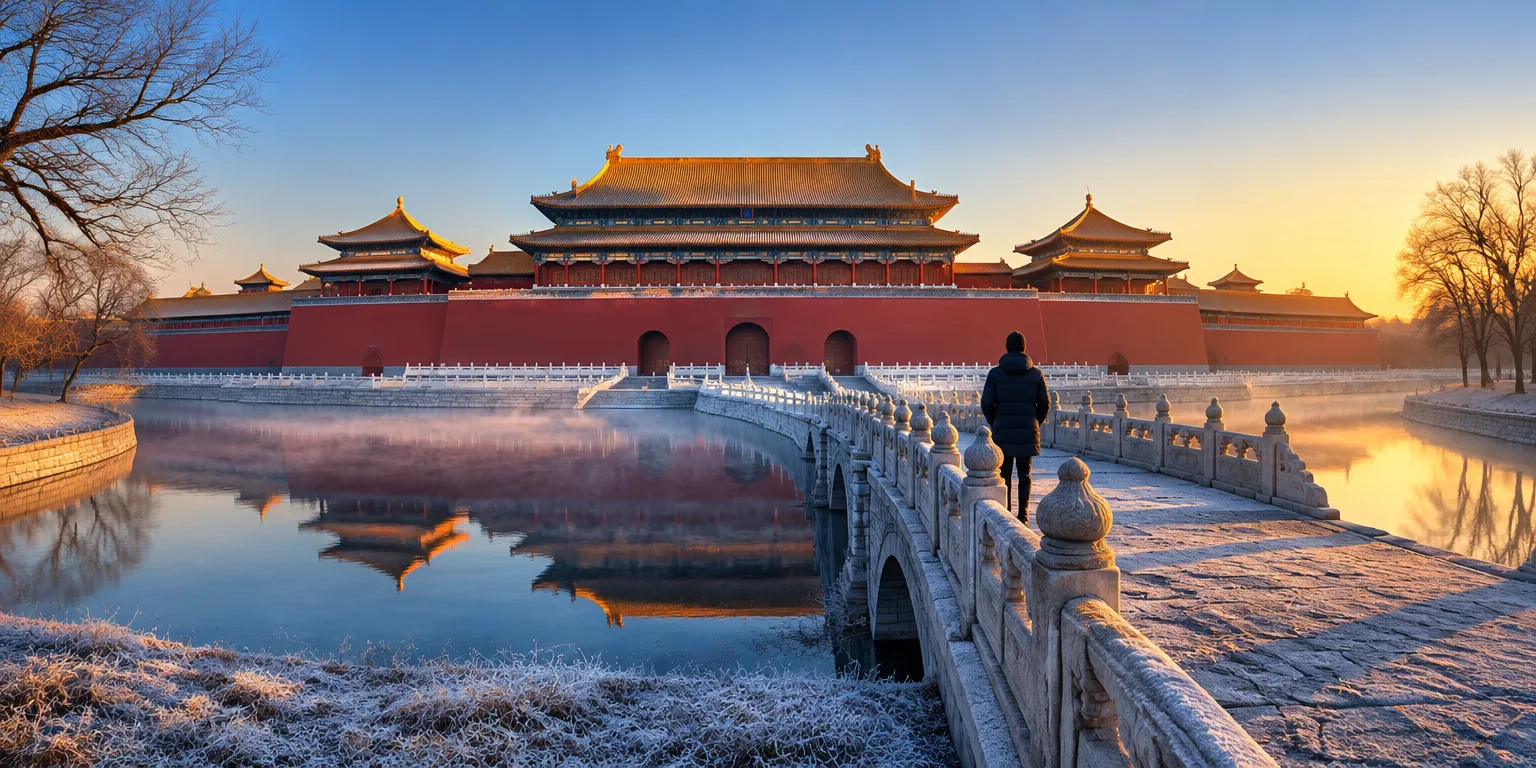
The centerpiece was a huge walled palace, the Forbidden City, the home and workplace of China's emperors that was closed to ordinary people. He also ordered the Temple of Heaven, an altar complex rather than a single temple. As historian Jeremiah Jenne, who studies Beijing's history, explains, the emperor went there once a year at the winter solstice for rituals lasting three or four days, purifying himself before the main ceremony to show he stood between heaven, earth, and man.
That display mattered because of an old Chinese political idea called the Mandate of Heaven. As Jenne explains it, heaven gives an emperor the right to rule but can also take it away if he fails. If someone overthrows you, that loss itself could be taken as proof the mandate had been withdrawn. Success, in other words, was evidence of legitimacy.
Jenne argues that Yongle did "more than almost any person other than perhaps Kublai Khan," the Mongol ruler who had made Beijing his capital, to create the Beijing seen today. The city walls that stood into the 20th century, the Forbidden City, and the Temple of Heaven were all built under him, and they backed his claim that heaven had given him the throne.
Questions people ask
What exactly was the Mandate of Heaven?
The Mandate of Heaven is an ancient Chinese idea that heaven grants an emperor the right to rule, but can withdraw it for misrule or neglect of ritual. Natural disasters, famines, or rebellions could be read as signs the mandate was slipping, and being overthrown suggested it had already gone.
What is the Forbidden City like?
The Forbidden City is a huge walled palace complex in central Beijing with nearly 1,000 buildings and almost 9,000 rooms. It served as the imperial home and government center for the Ming and Qing dynasties, and today it operates as the Palace Museum.
Why did Yongle move the capital to Beijing?
Beijing was Zhu Di's own power base, close to the northern frontier where his army was stationed. Moving the capital there put the emperor near the Mongol threat, honored his northern supporters, and let him build a new imperial center tied directly to his reign.