Ancient Egypt lasted 3,300 years, thanks in part to the Nile and the desert
It had steady floods for farming, a flat river for shipping, and desert on both sides to stop armies.
 Maxinomics · America Will Be the Last Superpower, Here’s Why
Imagine you could choose where to start civilization. Your choices are the six places where complex societies first arose on their own: the Olmec in Mexico, a coastal culture in Peru, Egypt on the Nile, Mesopotamia in the Middle East, the Indus in India, and the Yellow River in China.
Every group wanted the same three things: food to grow its population, fresh water for people and crops, and a natural barrier to slow invaders. Egypt won that contest.
First, it had the best river. The Nile flooded reliably enough to water crops year after year, without the kind of catastrophic floods that in other river valleys could wipe out 10% of the people. That steadiness made it easy to grow surplus food, and surplus food lets a population grow.
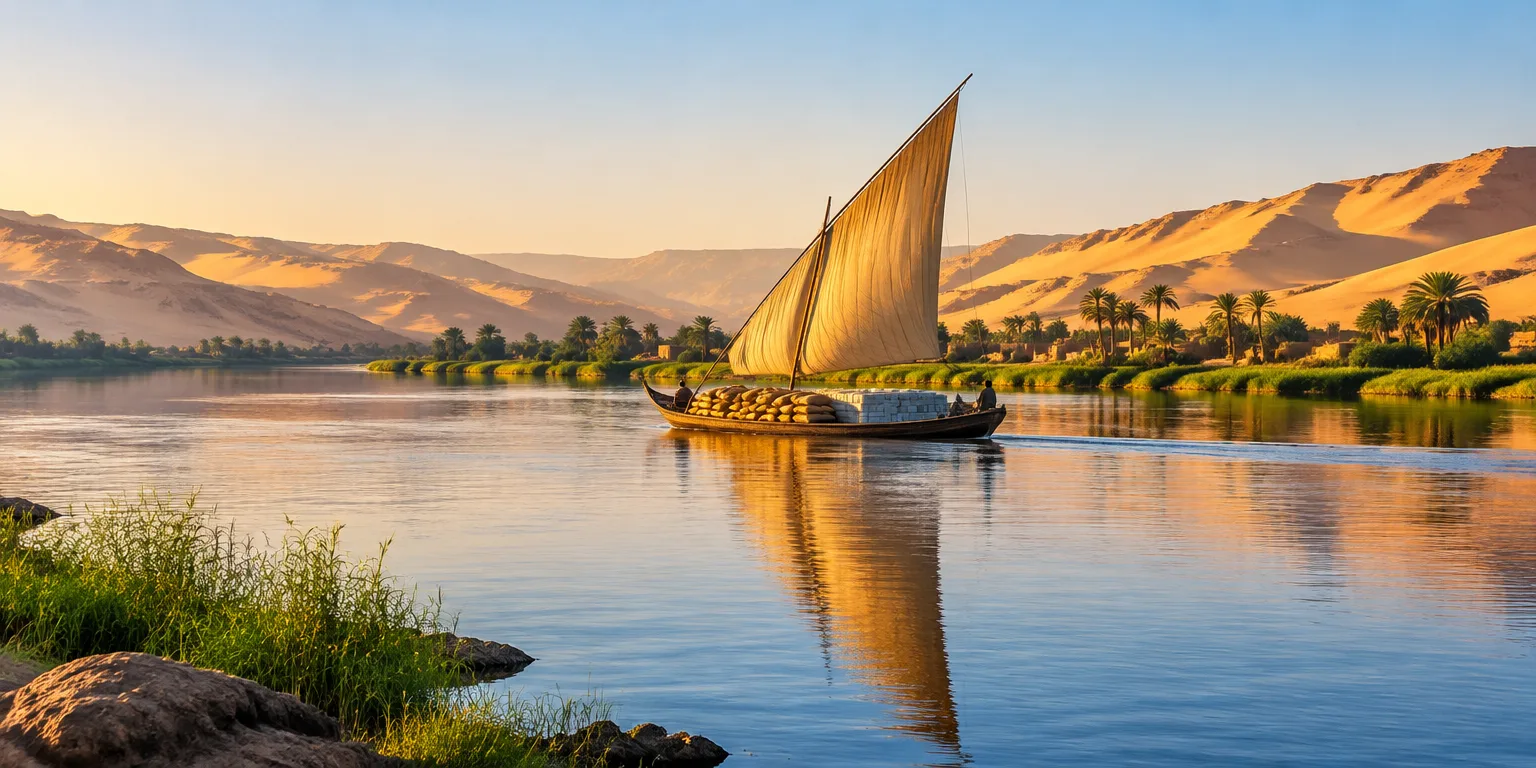
Second, the river was flat. Grain and stone could float downstream from the interior to the coast with little effort, tying the whole valley together.
Third, the people living along the river barely had to worry about invasion. Desert stretched out on both sides, and no army 4,000 years ago wanted to march across that much hot, waterless land. The desert did the work of walls and soldiers for free.
The payoff was time. Egyptians built 138 pyramids, a project that needs long stability. Egypt outlasted the other five early societies and stood for 3,300 years, the longest run of the six, until invasion finally knocked out the last of them.
Questions people ask
Why was the Nile more reliable than rivers like the Tigris and Euphrates?
The Nile's annual flood came from summer rains in the Ethiopian highlands and arrived on a fairly regular schedule and height. The Tigris and Euphrates depended on more variable winter rains and mountain snowmelt, so they could swing between destructive floods and low water that left canals dry.
How did Egyptians actually move goods on such a flat river?
They floated downstream with the current toward the Mediterranean and sailed back upstream using the prevailing north wind and sails. That two-way trip, current one way and wind the other, made bulk cargoes like grain and limestone blocks cheap to move without roads or draft animals.
What finally ended ancient Egypt after 3,300 years?
Egypt's later centuries brought foreign rule by Libyans, Nubians, Assyrians, and Persians, followed by Greeks under Alexander the Great and then Rome. In 30 B.C., after the defeat of Cleopatra VII and Mark Antony, Rome annexed Egypt and its long run as an independent pharaonic state ended.