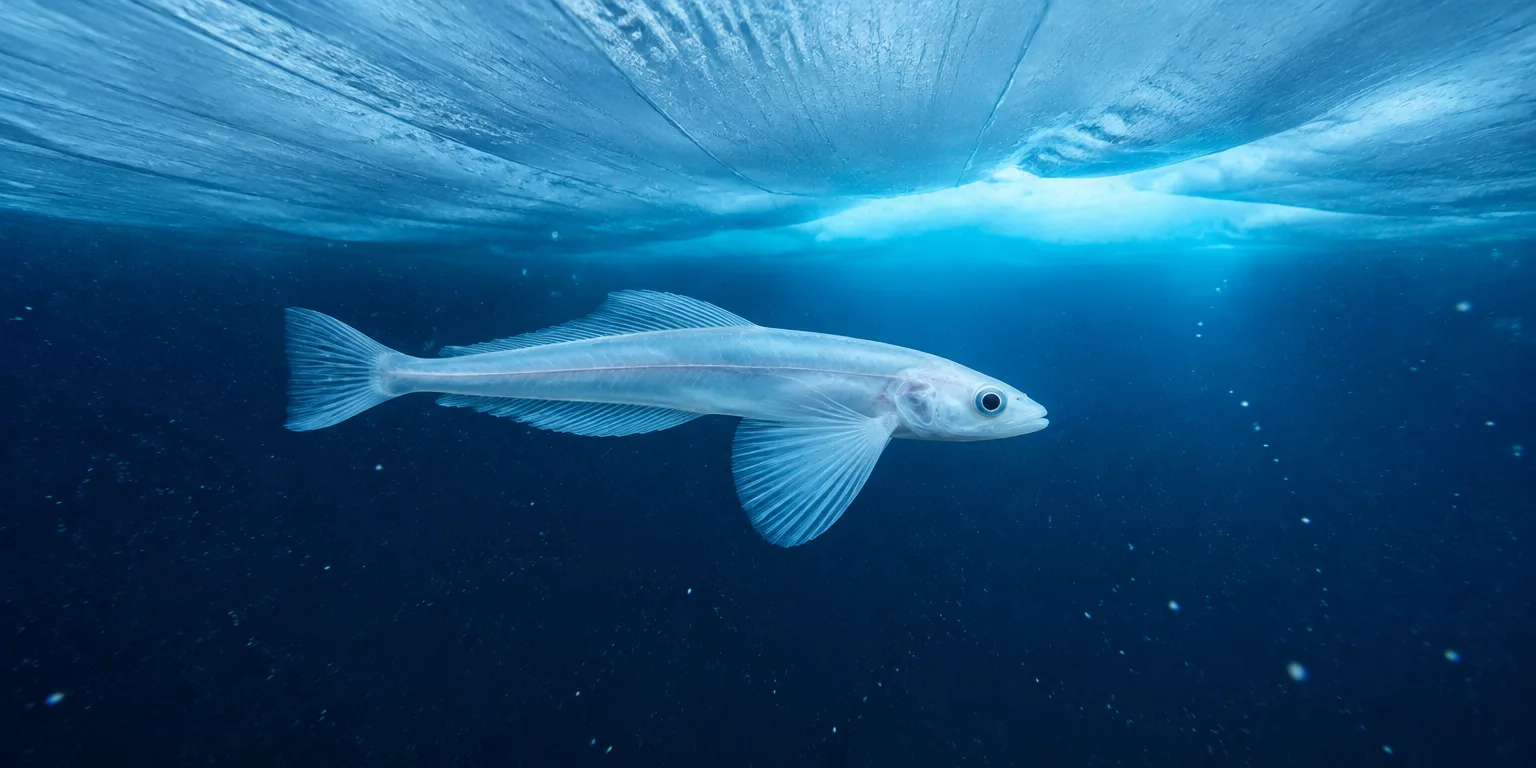
Antarctic Icefish Live Without Red Blood
Their blood lacks red cells and carries a natural antifreeze that works in subfreezing water.
 The Why Files · The Basement: Brad Olsen | Antarctica’s Forbidden Zones
Antarctic icefish make a living without what most fish depend on. They have no red blood cells and no hemoglobin, the protein that carries oxygen and gives blood its red color.
What they have instead works like antifreeze in a car. It helps keep ice crystals from taking over inside their bodies in water that stays below freezing.
The icefish live, thrive and breed in that subfreezing water under the ice. Traveler and author Brad Olsen, who visited Antarctica, recounted a report that a submersible sent far under an ice shelf had located breeding colonies.
Olsen put the distance under the shelf at about 100 miles, in a passing remark during the conversation. The account is his, not a checked measurement.
Olsen describes Antarctica as black, white and blue, without the trees, bushes and brown dirt familiar farther north.
Those colonies matter because icefish are a food base the penguins and seals depend on. Large breeding groups help feed much larger animals.
Questions people ask
How can water be colder than freezing and still be liquid?
Salt lowers the freezing point of water, so seawater does not freeze at 32 degrees like fresh water. Seawater there can stay liquid at about 28 degrees, below the 32-degree point where fresh water freezes.
How does antifreeze blood protect a fish?
They make special proteins, often called antifreeze glycoproteins, that attach to tiny ice crystals and keep them from growing larger. That limits damage to cells and tissues.
How do they get enough oxygen without red blood?
Cold water holds more dissolved oxygen, and icefish move a large volume of thin blood with big hearts and wide vessels. Those traits help them deliver enough oxygen without hemoglobin.