Anthropic's biolab is not making germs, it is checking AI's protein predictions
The company used AI to spot a gene-editing enzyme like CRISPR in DNA data, and now it needs bacteria and beakers to see if the computer was right.
 All-In with Chamath, Jason, Sacks & Friedberg · Anthropic IPO at Risk, Meta's Muse Pop, Token Prices Fall, Open Source Gains Share, Alignment Fails
The lab that sounds ominous is doing something much more ordinary. It is not making viruses or pathogens, said investor David Friedberg. It is testing whether artificial intelligence is any good at discovering new biology.
That ordinary work starts in software. According to Friedberg, Anthropic sent Claude agents through large amounts of DNA data to hunt for novel proteins that had never been studied, just by reading the genetic code. The system flagged something promising, an unstudied protein resembling gene-editing tools like CRISPR, molecular scissors that can cut and repair DNA to correct genetic defects and treat disease.
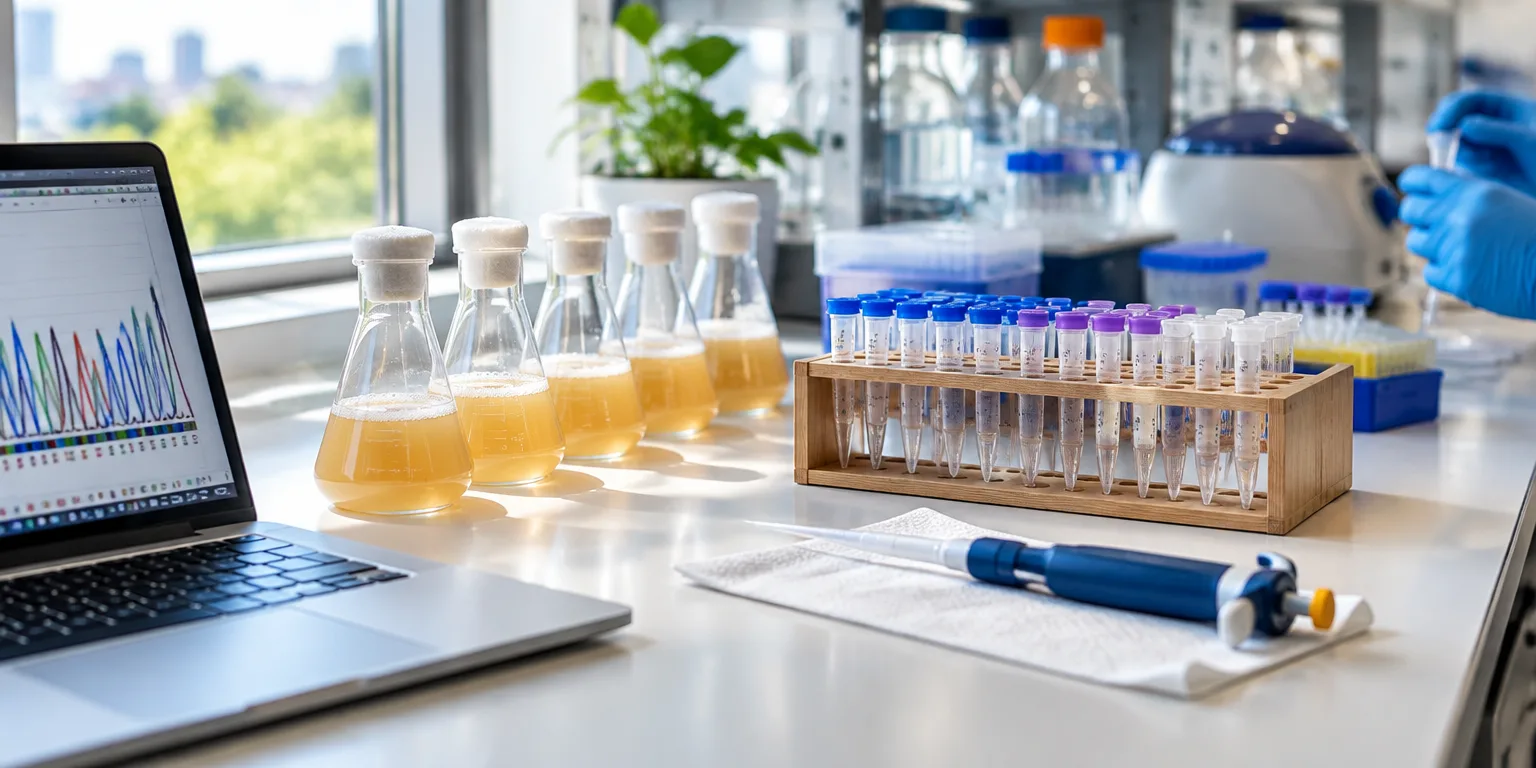
Friedberg said most of the work in this kind of laboratory involves taking DNA, putting it in bacteria so the bacteria manufacture the protein, and then testing whether it performs the expected job.
It is the same prove-it loop that made AlphaFold famous. That earlier AI predicted the three-dimensional shape of a protein from its genetic instructions, and researchers then had to make the protein and look at it to see if it folded the way the computer said it would. Anthropic is trying to do that for function.
That kind of protein discovery is the foundation of antibody discovery, which underlies most of today's drug industry. Friedberg said there are hundreds of labs in the Bay Area that can do this bench-top work. Those labs operate at low biosafety levels, known as BSL1 and BSL2, meaning they handle simple proteins and common bacteria with basic precautions. Gain-of-function research is different. It involves manipulating viruses to make them more dangerous.
Work like this could also look for an enzyme, a type of protein, that breaks down a molecule the body should get rid of. The fast experiments show whether the software's guesses about proteins are correct, and a correct guess may yield new therapeutic pathways.
Questions people ask
What do biosafety levels like BSL1 and BSL2 mean?
They are federal safety ratings for labs. BSL1 covers work with microbes that do not cause disease in healthy people, like ordinary lab strains of E. coli, and BSL2 covers moderate-risk germs handled with extra precautions. High-risk pathogen and gain-of-function work requires BSL3 or BSL4 labs with sealed rooms, airflow controls, and full protective gear.
What is a CRISPR enzyme, exactly?
It is a protein, first found in bacteria, that can be programmed to find a specific DNA sequence and cut it. Scientists use that cut to remove, repair, or replace faulty genes. A newly discovered enzyme that works like CRISPR could offer a better or more precise editing tool and open new paths to treatment.
Why use bacteria to make a human drug protein?
Bacteria are fast, cheap protein factories. Scientists insert the DNA instruction for the protein they want, and the bacteria read it and build the protein as they grow. The protein can then be purified and tested to see if it behaves the way the AI predicted.