Apartment pipes and wires can snap together on site
Factory-built units arrive almost finished, so the costly skilled work shifts from the jobsite to an automated plant.
 plantprefab.com · Plant Prefab Begins Construction on Cloud Apartments’ First 100% Affordable Housing Project in Los Angeles | Plant Prefab
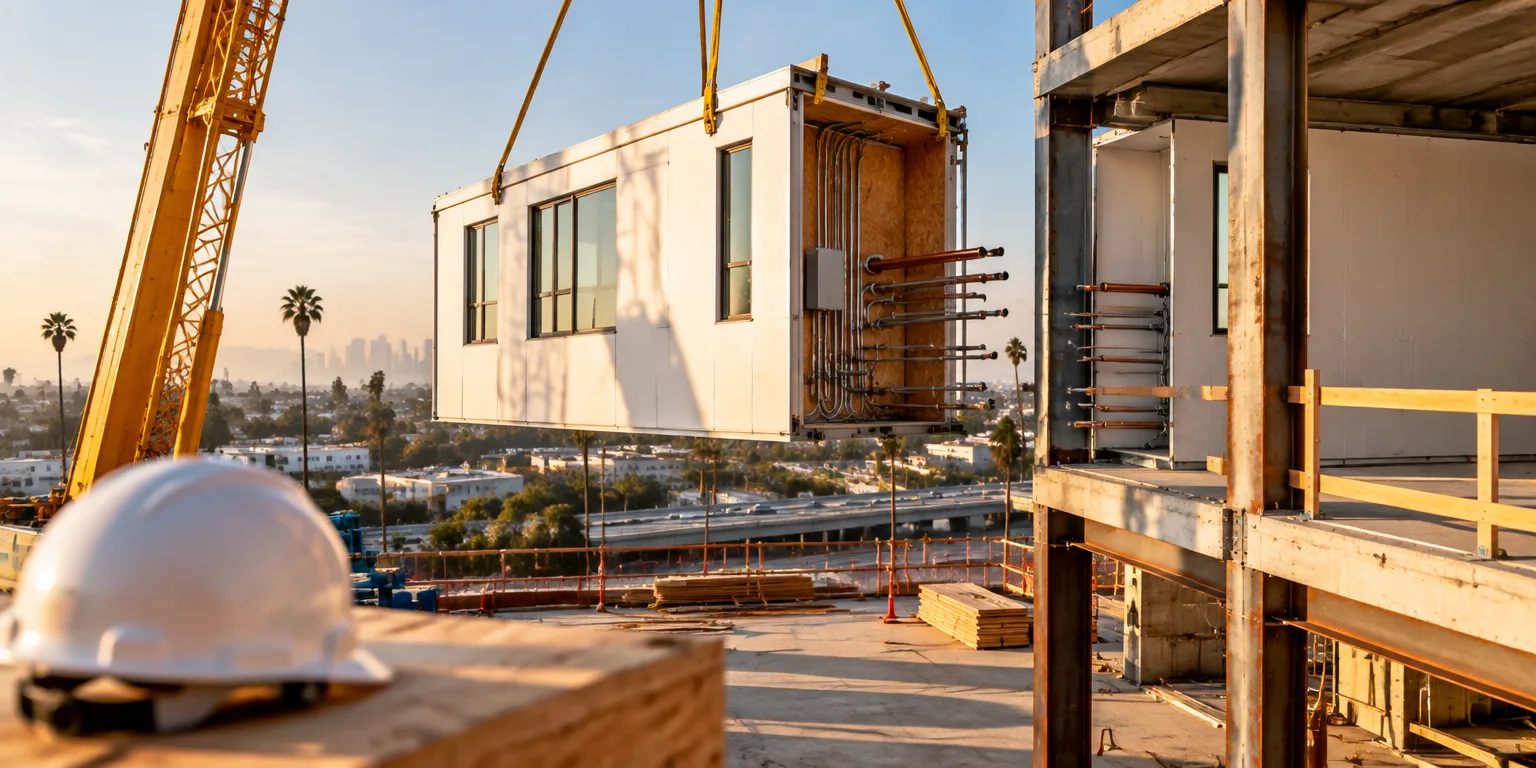
On a building site in Los Angeles, workers will soon set 60 new apartments into place for a project called Manhattan Place. Plant Prefab, the building technology company manufacturing the units, will complete 95% of the finish work in its factory south of Bakersfield. What is left includes joining the building systems together.
The connector is a patented system called CloudConnect, developed by Cloud Apartments, a company that designs modular apartments and started in 2021. It handles the mechanical, electrical, and plumbing connections, industry shorthand for heating and cooling, wiring and outlets, and water and drains. The announcement does not explain how the snap works; the name suggests quick joining, and nothing more is published about the mechanism.
That change matters because a developer must pay for costly local crews to do skilled work at the construction site. Plant Prefab says factory assembly cuts how much skilled work has to happen at the construction site, and Cloud Apartments says the snap system further lowers dependence on expensive workers hired nearby, while production in the purpose-built factory speeds up building and makes the flow of materials and work less uncertain.
The factory work happens at Plant Prefab's $40 million, 270,000-square-foot plant in Tejon Ranch, California, which the company describes as "the first facility in the nation" specifically designed to make both wall panels and boxlike housing modules at scale. Automated lines build the panels and finish the modules under one roof, which the company says allows better quality control and saves time, money, and materials compared with "traditional methods of offsite or on-site construction."
Curtis Wong, founder and chief executive of Cloud Apartments, calls Manhattan Place the company's first project and says it shows affordable housing in Los Angeles can pencil out without public subsidies, which he offers as evidence that its building approach can work.
Questions people ask
Does snap-together plumbing mean no plumbers or electricians are needed?
No. Licensed plumbers and electricians are still required, but less of their time is needed outdoors. Most of the wiring, piping, and fixtures are installed and tested in the factory, where one crew can work on many identical units, and the on-site crew mainly makes the final joined connections and passes inspection.
Are snap connections as safe and code compliant as conventional wiring and piping?
The connections still must meet the same state and local building codes and pass inspection as conventional plumbing and wiring. Factory-built housing is typically inspected both in the plant and after the modules are set and joined, so a snap connector is a different method of making an approved joint, not a way around approval.
How much money does the snap system actually save?
The companies have not disclosed a per-unit labor saving for Manhattan Place. Their broader claim is that the factory system can build housing 20 to 50 percent faster than site-based methods, with lower cost from less on-site skilled labor, faster schedules, and less wasted material. How much of that comes from the snap connectors alone is not broken out.