Apple Once Offered a Trip to Hawaii to Anyone Who Could Say What a Computer Was For
In 1979, even the company selling the personal computer did not claim to know what it was for.
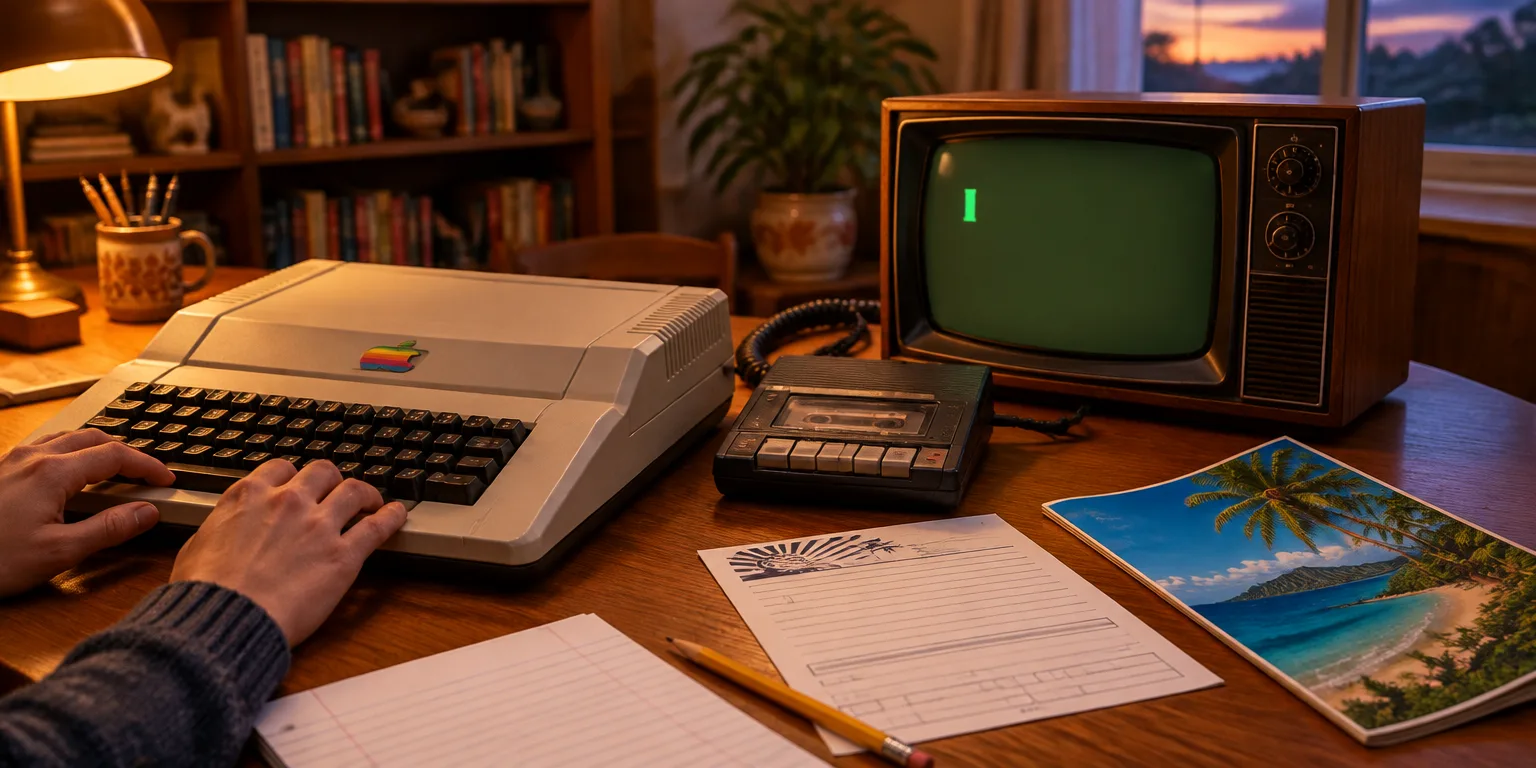
In an Apple ad from 1979, customers were told to stop at their local dealer to get a contest form.
On the desk at home sat a machine that hummed and blinked and promised something large, though no one could quite say what. Apple was not offering instructions. It was asking for them. In the words of Apple's 1979 contest ad, "We're looking for the most original use of an Apple since Adam."
The prize, according to Apple's 1979 contest ad, was "a one-week, all-expense-paid trip for two to Hawaii." To compete, an owner had to send back a short essay, under a thousand words, explaining a clever application the owner had discovered for the machine.
That invitation shows how uncertain the home computer still was. The company selling the device would not claim what it could accomplish. It asked buyers to report back what they were doing with theirs.
Even as Apple's Steve Jobs was promising investors that one day each home would contain one, a forecast that later events showed was a wild underestimate, others openly questioned whether anyone required such a thing.
IBM, HP, and DEC, the established computer makers, had no interest in the new device. Their customers were not asking for it, and nobody yet needed a computer at home.
So the small startups offering rival versions faced a strange problem. With no public demand to fill, the machines had to be talked into homes rather than simply picked off shelves.
The Hawaii contest was Apple's answer. If the maker could not define the machine, perhaps a customer, sitting at home with time and curiosity and a blank page, could write the definition.
Questions people ask
What did an early home computer actually do?
Early machines like the Apple II typically connected to a television for a screen and used cassette tapes for storage. You could type simple programs, play primitive games, balance a checkbook, or store recipes and mailing lists. By modern standards the memory and speed were tiny, so much of the appeal was tinkering itself.
What finally gave ordinary people a reason to buy one?
Practical software, especially the spreadsheet. VisiCalc, released in 1979, let small businesses run budgets and forecasts without a mainframe, and later word processing did the same for writing. Once people could see a specific job the machine did, stores no longer had to sell the idea from scratch.
Was Jobs right that every household would get one?
Yes, and then some. American homes went on to add not just desktop computers but laptops, tablets, smartphones, and game consoles, all descendants of the early PC. The prediction looks modest now because few people in the 1970s imagined computers shrinking, getting cheap, and connecting to each other.