Argue About Pizza to Get Better at Real Disagreements
Low stakes practice calms the body's alarm system and teaches groups that disagreement can be warm.
 The Curiosity Shop with Brené Brown and Adam Grant · Can Conflict Actually Make Our Relationships Stronger? with Priya Parker
Tech vice president Lionel Morey faced a problem conflict facilitator Priya Parker calls toxic politeness. He was hosting a three-day retreat for 5,000 leaders. The company was at a major decision point, and everyone knew there were deep differences but looked away or made a joke to keep the temperature cool.
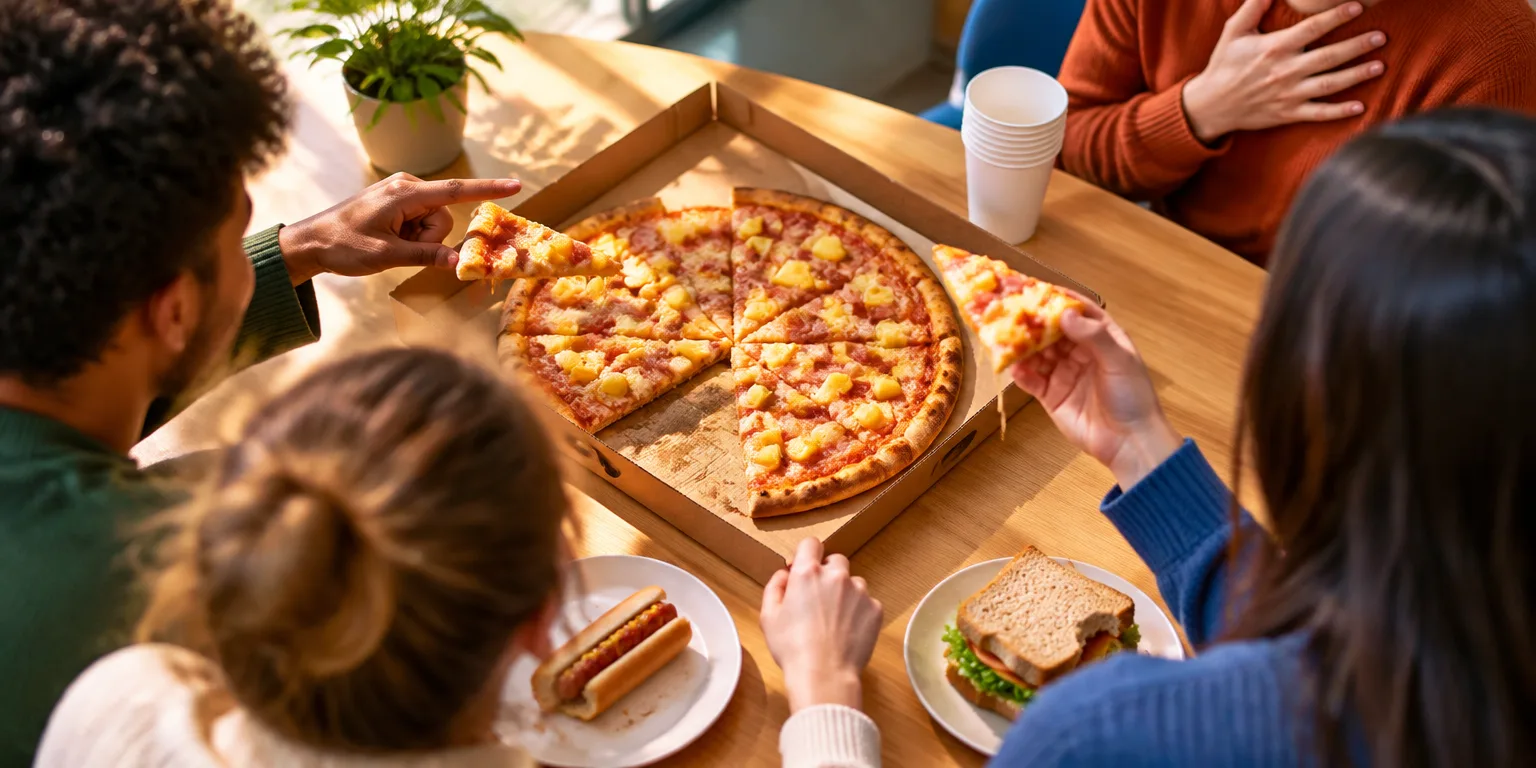
So Morey opened with what sounded like big debates. Projected on the screen was, “Pineapple on pizza, yes or no?” He told them to form groups of four and duke it out. Next came, “Is a hot dog a sandwich, yes or no?” Then, “What is the right time for lunch?”
People laughed, teased, and argued without watching for land mines. One person scrunched a nose at pineapple, another called it amazing, another said, “I’m Italian, I’m offended.” Over lunch timing, one insisted 11 a.m. was barely breakfast while another said eating before 2 p.m. would make him fall asleep.
Parker says they were practicing pro-social fighting, with warmth and humor, over strongly held opinions that did not matter. Her lesson, as Parker puts it, is “approach heat, add warmth.” By that she means face the tense moment, then keep it warm. Practicing silly debates builds readiness for serious ones, because the hardest part is often staying calm under tension, not finding the right argument.
That is why the setup matters. Organizational psychologist and author Adam Grant uses the same warm-up in his classroom with “Is cereal soup?” In his classroom, people come to see they can disagree and still find it funny. Parker adds that the first 5 percent of a meeting or class lays the norms for everything after. She quotes Prentis Hemphill, a body-focused practitioner who works with the body’s stress responses: “The most powerful body we have is a relaxed body.” Parker interviewed Hemphill for her book The Art of Fighting. Somatic relaxation plus friendly contact, she says, can help a group hold complexity.
To try it, start a meeting the same way. Pick one silly question, break into fours for five minutes, and keep it playful. As Grant puts it, “There is no fight that’s too small,” because arguing that a hot dog is definitely not a sandwich prepares you for the important conversations.
Questions people ask
Why would a silly argument change how my body reacts in a real one?
Much of the panic is physical, not intellectual. Your heart beats faster, your muscles tense, and you want to flee or snap, so you avoid raising the issue at all. Arguing playfully while laughing lets your nervous system learn that disagreement does not always mean danger.
How do I run this at the start of a meeting?
Pick one question with no real consequences, like pineapple on pizza or whether cereal is soup. Break into groups of three or four, give people three to five minutes to argue it out, and keep score by laughter, not winning. Then name the point: we can disagree here, so we can disagree about harder things.
Can I use this with my family or friends, not just coworkers?
Yes, if you keep the tone warm and the topic truly low stakes. The goal is shared laughter and noticing that the relationship survives disagreement. Stop if someone is genuinely upset, and do not use the game to sneak in a real complaint.