As recently as 2003, very few people from abroad visited Japan
For decades Americans saw Japan as an enemy, then a charity case, then an economic villain, and then as boring.
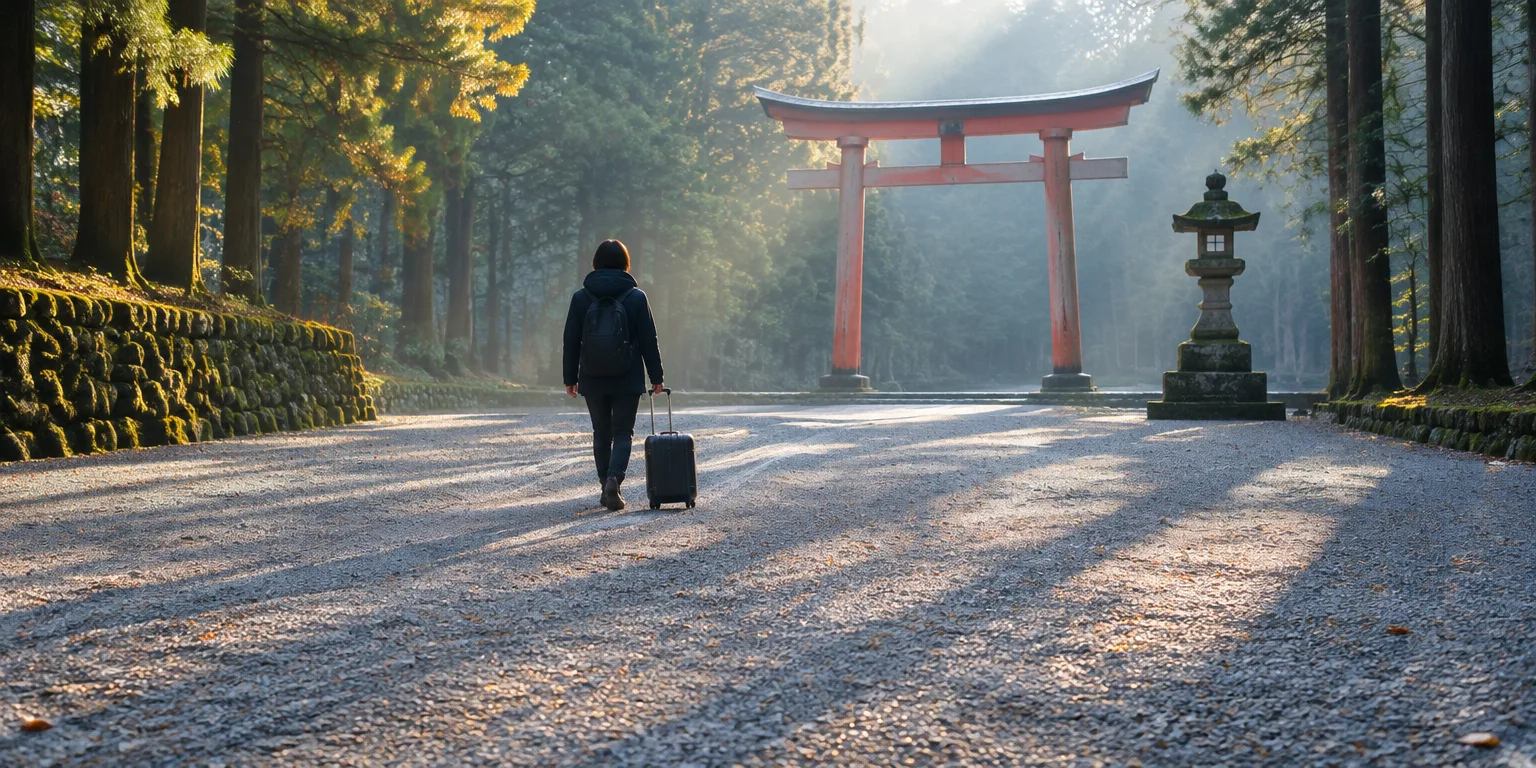
 Search Engine · Why’s everybody going to Japan?
In 2003, W. David Marx was settling into Tokyo, and if a friend got on a plane to see him, it felt like the event of the year. Marx put it this way: "Oh my God, someone has come to Japan."
Marx, the author of Amatura: How Japan Saved American Style, has now lived in Tokyo for more than two decades. He grew up in Pensacola, Florida, which happens to share a sister city relationship with Gero, a little mountain community in Japan. That accident sent him to Japan for a brief summer exchange when he was 17 in 1996, and he came home smitten with the place.
What makes that love affair striking is how lonely it was. For roughly 70 years following World War II, Marx says, mainstream America was not fascinated by Japan. It was, if anything, afraid of it.
The story, as he tells it, moved in stages. Japan was an enemy state until 1945, and then it was, in Marx's phrase, "seen as a developing country that was being rebuilt." By the 1970s and 1980s, that view had turned to unease over Japanese cars and gadgets, and the possibility that Japan might pass the United States to become the world's biggest economy.
By the late 1980s and early 1990s, the anxiety had become pop culture. Marx points to Rising Sun, the Michael Crichton novel and film in which Japanese businessmen play the scary bad guys. After the Cold War ended, he says, a famous CIA position paper even floated the idea that Japan should be America's next enemy.
Then Japan's bubble economy, the late-1980s surge in share and property values, popped in the early 1990s. American worry eased, but admiration did not replace it. Japan was seen as a place with old temples and copies of Western culture, but not as particularly interesting, and certainly not as a place to visit.
The numbers bear that out. In the early 2000s, for each visitor who arrived from abroad, three residents of Japan headed out on a trip overseas.
In 2011, eight years after Marx had moved to Tokyo, Japan drew just six million arrivals from abroad, which is what the United States got in a single month.
For his first ten years living there, Marx was an isolated American fan in a place almost no one back home wanted to see.
Questions people ask
What was Rising Sun?
Rising Sun was a 1992 novel by Michael Crichton, the author of Jurassic Park, later made into a 1993 film starring Sean Connery and Wesley Snipes. Set around a murder in a Japanese company's Los Angeles headquarters, it played on American fears of Japanese business power. Critics at the time debated whether it fueled anti Japanese sentiment.
What was Japan's bubble economy?
In the late 1980s, easy credit sent Japanese stock and land prices soaring to levels that made Tokyo's Imperial Palace grounds famously worth more on paper than all of California. The bubble burst in the early 1990s, leading to a long period of slow growth and falling prices often called the Lost Decades. The slump helped deflate American fears that Japan would overtake the U.S. economy.
When did tourism to Japan actually take off?
Japan had about five million foreign visitors a year in 2003, when the government started its Visit Japan campaign to double that number. Growth was slow at first, then accelerated in the 2010s after the yen weakened and visas were relaxed for many Asian countries. By 2024, annual visitors were approaching 37 million, with 2025 on pace to set another record.