At 16, the Future Genghis Khan Risked Everything to Rescue His Kidnapped Wife
After a childhood of abandonment, the boy called Temujin had finally found someone who loved him, and his first battle was to bring her home.
 Lex Fridman Podcast · #476 – Jack Weatherford: Genghis Khan and the Mongol Empire
Granny Khokhkhi, a visiting elder whose exact place in the family is unclear, woke in the dark because the ground was shaking. Sleeping on the floor of the felt tent, she could feel horses coming through the frozen earth, and she roused the family before dawn.
Temujin, a 16-year-old outcast boy who would later take the name Genghis Khan, had been married for only a few months. Borte, now 17, was the girl he had first encountered as an eight-year-old when she was nine. After a childhood of hunger, abandonment, and captivity, he finally had someone in the crowded tent who loved him. Her mother had come with her for the marriage, bringing a sable coat to give to his mother Hoelun.
His mother, Hoelun, took charge. She piled her own children onto horses, took the baby girl in her own lap, and fled for the forested slopes of Burkhan Khaldun, the sacred mountain. She deliberately left Borte behind with the other wife and the old grandmother in a slow ox cart, because she understood that the raiders in the dark were coming for a young wife.
Jack Weatherford, a historian of the Mongols, calls what happened next the defining moment of Temujin's life. The rival Merkit people seized Borte in the night raid, and getting her back forced his first real military campaign. He decided that life was not worth living without her, and that he would risk his life to bring her home.
He had almost nothing, only his brothers. To get fighters he went to Wang Khan, the ruler of the powerful Kereyit people on the river where the Mongolian capital now stands, and who had once been lord over his dead father. Temujin offered the sable coat meant for his mother and begged for help. Wang Khan agreed to send men but told him he also needed Jamukha, Temujin's childhood sworn brother, an anda bound to him for life, and a fierce and outspoken young leader.
On the hard march north up the Selenge River toward Siberia, Jamukha promised total vengeance, vowing to jump down through the smoke holes of the tents and kill every Merkit man, woman, and child, and he scolded Wang Khan's late arrivals for breaking a Mongol promise to arrive on time.
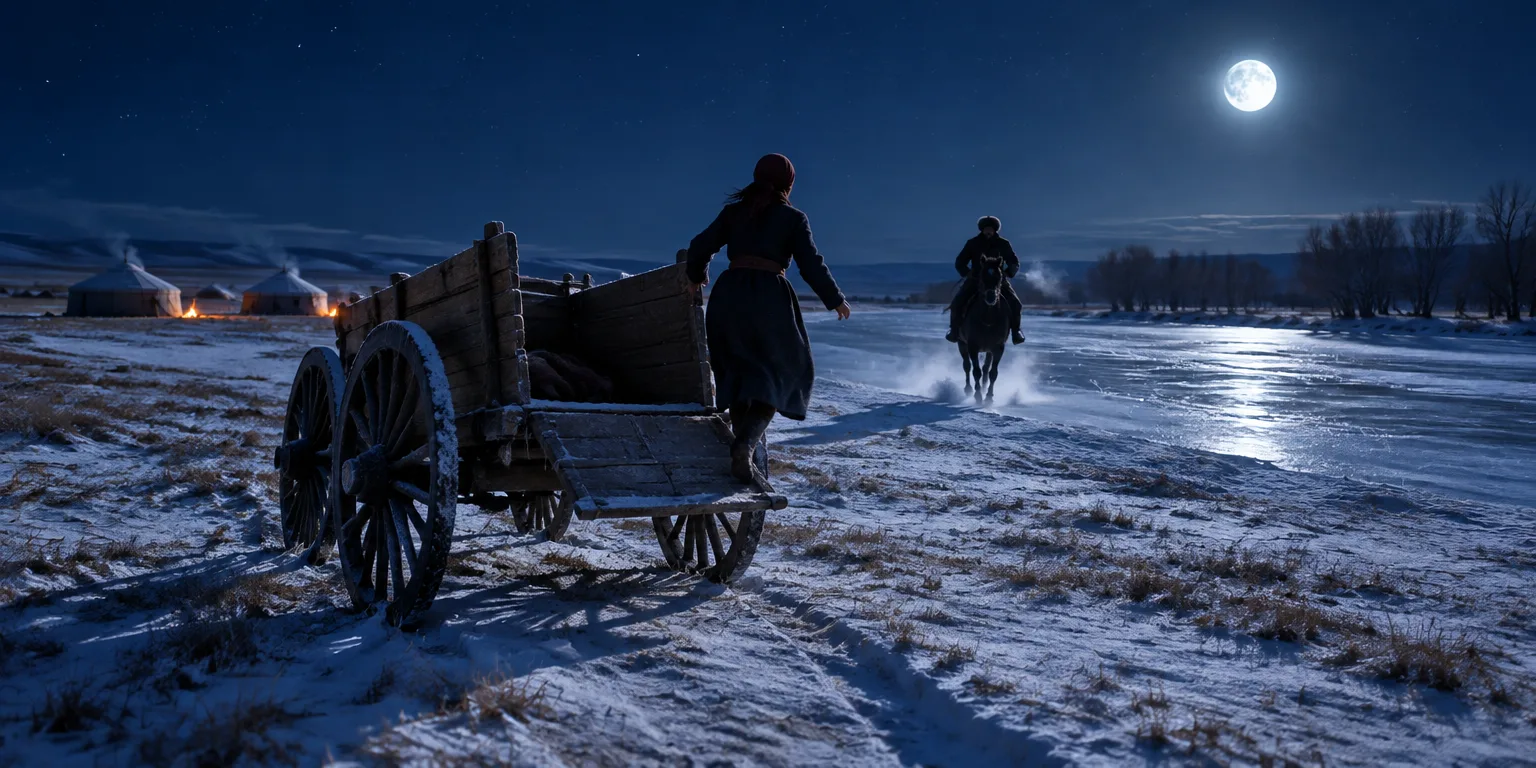
They attacked the Merkit camp at night under a full moon. Warned by hunters racing back to camp, Borte had already fled in a cart, terrified of being kidnapped a second time by men she could not identify. Temujin searched the chaos calling for her, caring little for the fighting. She recognized his voice, jumped from the moving cart, and ran to him. He embraced her and told his men, "This is the goal. This is why we are here. We don't need anything else."
The first child born to Borte after her return was a boy named Jochi. She was already pregnant when they returned to the valley. For the rest of his life, when his own sons taunted Jochi as a Merkit bastard, Temujin defended her fiercely. "You were not there," he told them. "If I say he is my son, he is my son. You come from the same warm womb."
Questions people ask
Who were the Merkits?
The Merkits were a rival tribal people who lived to the north along the Selenge River, which flows into Siberia and Lake Baikal. Like other steppe groups of the time, they raided neighbors for horses, goods, and women, and Temujin had a hereditary grievance because they had once seized women connected to his family.
Why did his mother leave Borte behind?
Hoelun had only so many fast horses, and she knew the attackers were after the new young wife. By leaving Borte and the cart to draw the raiders' attention, she was able to get her own small children safely into the mountains. It saved the family but cost Temujin the person he loved most.
Who was Jamukha?
Jamukha was Temujin's childhood friend, a boy who had sworn a lifelong anda bond with him, a pact closer than ordinary friendship. He was charismatic, aggressive, and a natural leader of men, and he later became both Temujin's closest ally and his greatest rival.
What happened to Borte's child?
The boy was named Jochi, which means visitor or guest. His paternity was questioned for centuries because Borte was pregnant soon after her months in captivity, but Temujin always claimed him as his son, and Jochi grew up to become a major Mongol leader and ancestor of khans in the west.