At an Estonian School Testing AI Tutors, the Student President Says It Won't Stop Shortcuts
Cordelia Violet Paapp says a chatbot built to ask questions instead of giving answers will not keep students from using regular ChatGPT.
 The Journal. · The High Schools Going All-In on AI
Earlier this year, Cordelia Violet Paapp stood up at her high school talent night to perform an original poem about artificial intelligence. She read it in Estonian, and cleared her throat before delivering a list that sounded like a spell.
Cordelia, then a 12th grader and the student body president at Tallinn Pelgulinna State High School, known as PERG, is adamantly opposed to generative AI. In a school taking part in Estonia's AI experiment, she is strongly against it.
Estonia is running a national program called the AI Leap, built with OpenAI and later Google, to put free chatbots in the hands of tens of thousands of high school students. The idea grew from a survey that found 90% of the country's high school students had already been using generative AI for learning. At PERG, Indrek Lillemägi, the principal, says students were going to use AI anyway, and the school does not require anyone to use it.
To protect learning, Estonia built a classroom version that withholds direct answers and instead asks guiding questions about how to approach homework. Agne Kask, an English teacher, asks students to double check its work because it can be outdated or wrong.
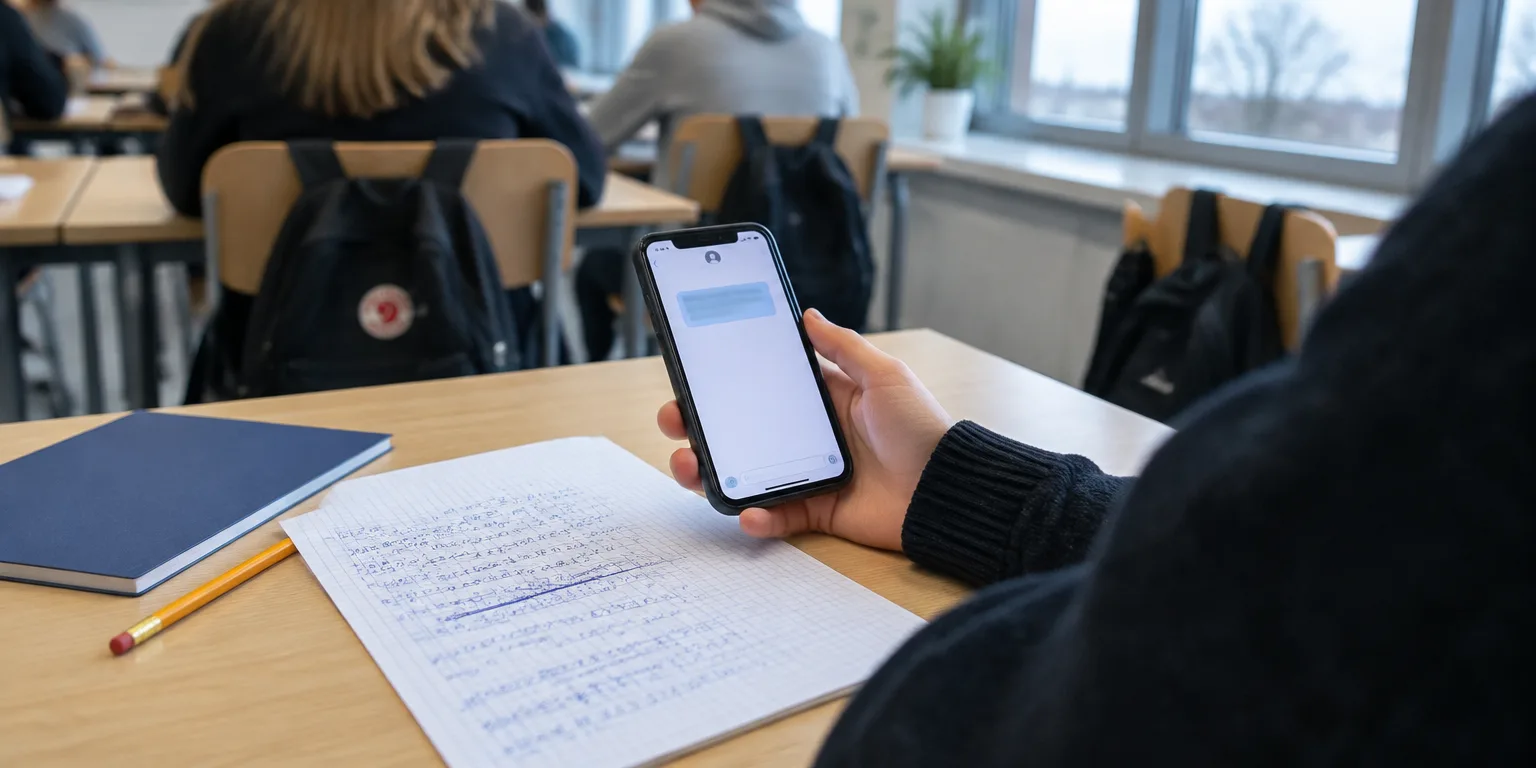
Cordelia says all that careful design misses the point. The technology is new and unstudied, she argues, and neither teachers nor students know how to use it well. Giving students a restrained school chatbot will not stop them from opening regular ChatGPT, she says, because in her words, "humans naturally want to do things that are easy." School already feels to many students like something "mostly meaningless and too hard and too difficult," she said, so if they are handed a shortcut through the annoying parts, they will take it.
She is not alone in her irritation. In Kask's English class, students found the chatbot kept switching into Estonian even when told to stay in B2 English, an intermediate level. A student, Anna, asked how to make porridge and got back, "What experience you have with porridge?" Anna said she had not used it since, using normal ChatGPT instead. Asked if she found the school AI useful, Cordelia answered flatly, "I really didn't. I think it was a waste of my time."
Other students said they feared becoming lazy, or worried about water and electricity used to cool the computer centers that run AI. One said children were taught in third grade that Earth has little drinking water, and called server cooling terrible. At the end of last school year, about 65% of eligible students had activated their accounts, but only a minority use it regularly. The country is now expanding access to 12th graders and vocational students.
Cordelia has since graduated. Her poem lingers on the new Estonian words the AI age has demanded. To Estonian ears, the new words sound harsh and literal, which is why the English version misses the sting. In translation, Cordelia writes, "Like, why must there be a term for water bankruptcy and digital trash, smartsive, AI blunder, brain rot? These are so ugly, and for what? We don't need a way to express yet another woe."
Questions people ask
What is Estonia's AI Leap?
The AI Leap is Estonia's national program to put AI tutors in high schools. It started with free ChatGPT accounts for 10th and 11th graders, built with OpenAI and later Google, plus training and materials for teachers. The goal is to teach students to use AI without letting it do their thinking for them.
How is a Socratic chatbot different from normal ChatGPT?
A Socratic chatbot is a classroom version of ChatGPT that withholds direct answers and instead asks guiding questions. If a student asks how to solve a problem or write an essay, it prompts them about their plan, evidence, or next step. Estonia designed it to preserve effort, the mental work that turns an assignment into learning.
Why does her poem lose something in English?
Estonian is spoken by about 1.1 million people, so new English tech terms often need invented Estonian equivalents. Words like veepankrott for water bankruptcy and ajumada for brain rot sound harsh and literal to native ears. That is why Cordelia says an English translation misses the mournful, ugly music of her poem.