At least 300,000 people dig cobalt in Congo on a given day
About 37% labor in slavery conditions and nearly one in 10 are children, about 30,000 kids, as mining strips forests and poisons water.
 The Joe Rogan Experience · #2556 - Siddharth Kara
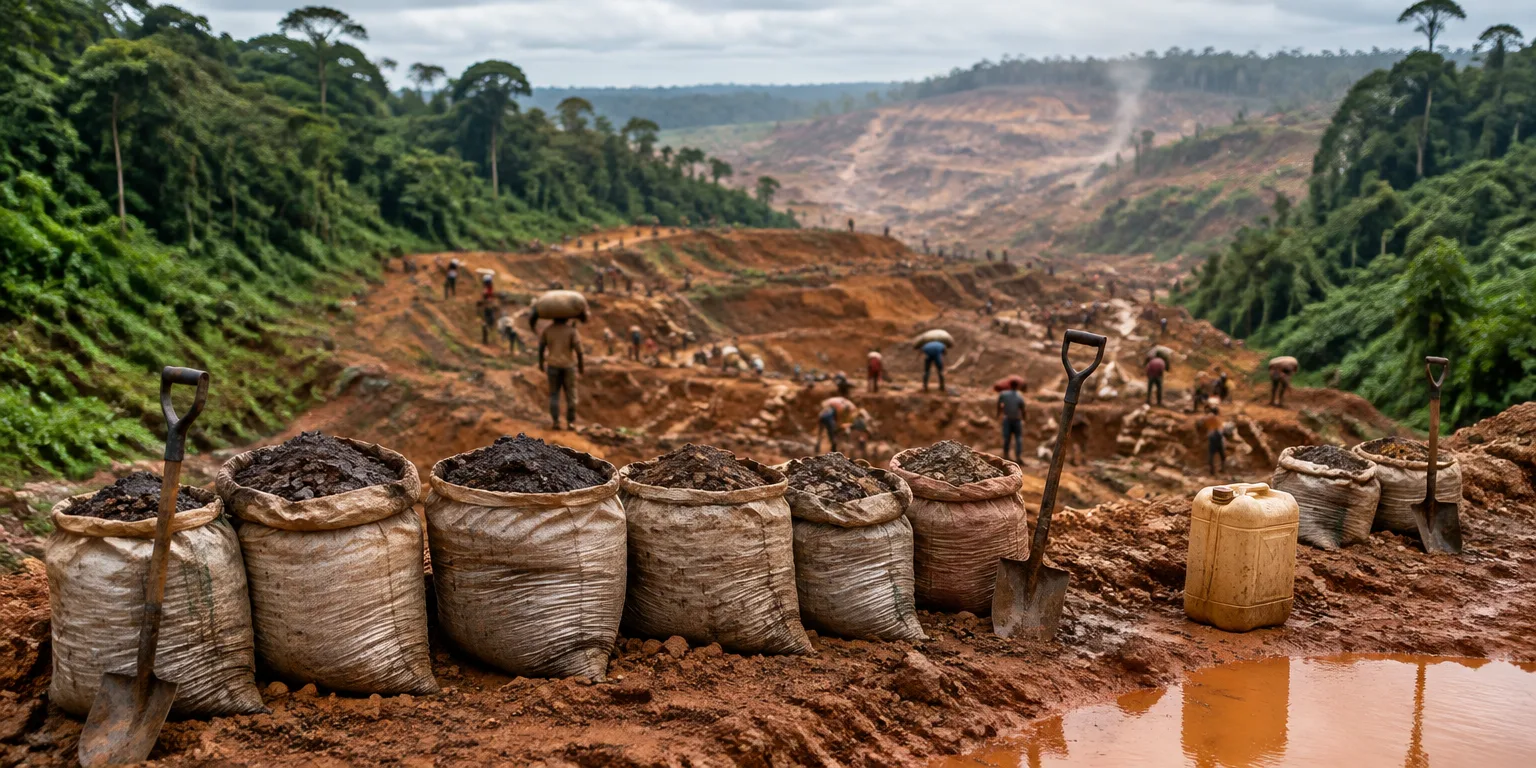
At least 300,000 people in southeastern Congo dig for cobalt on any given day, with bare hands, pickaxes, and shovels.
That estimate comes from Siddharth Kara, a researcher who has documented forced labor there, in a report called Blood Batteries. Of those diggers, about 37% work in conditions he calls "absolute slavery." Nearly one in 10 are children, about 30,000 kids not in school who do dangerous mining by hand.
Timelapse satellite images show 40% to 60% of the forest and grassland in the copper and cobalt belt was gone by 2022, replaced by mining. In Kolwezi, water tests found heavy metals from lead to uranium at 10 to 950 times World Health Organization safety limits.
Children haul 40 to 50 kilogram sacks and develop respiratory distress and cancers, while women face birth defects. In one militia pit north of Kambove, about 15,000 worked, almost all children, and the ore moved through traders into the supply chain for phones, cars, and tablets.
Questions people ask
What is cobalt for, and why does it matter to my phone?
Cobalt is a hard, heat tolerant metal used in the rechargeable lithium ion batteries that power smartphones, laptops, tablets, and many electric cars. It helps batteries store more energy safely and last longer. Demand surged with phones and electric vehicles, which is why so much digging is concentrated in Congo.
Why is so much cobalt in Congo?
Southeastern Congo sits over a copper and cobalt belt with some of the richest deposits in the world, mined since colonial times. The ore there is unusually high grade and close to the surface, so it can be dug by hand as well as by large machines. That geology, plus weak regulation and poverty, has made the region the dominant global source.
What does "absolute slavery" mean here?
Kara does not spell out a legal definition in these passages. He uses absolute slavery for about 37% of the daily diggers he counted. What he describes is men, women, and children digging by hand, about 30,000 children not in school, and children carrying 40 to 50 kilogram sacks in a militia controlled pit.