Austria's Empress Kept Herself Painfully Thin, Then Fled the Palace for Years
Adored as a fashion leader, she spent hours on ankle-length hair, exercised in a gym, and traveled from Corfu to England to stay away from Vienna.
 The Rest Is History · The Habsburg Murder Mystery
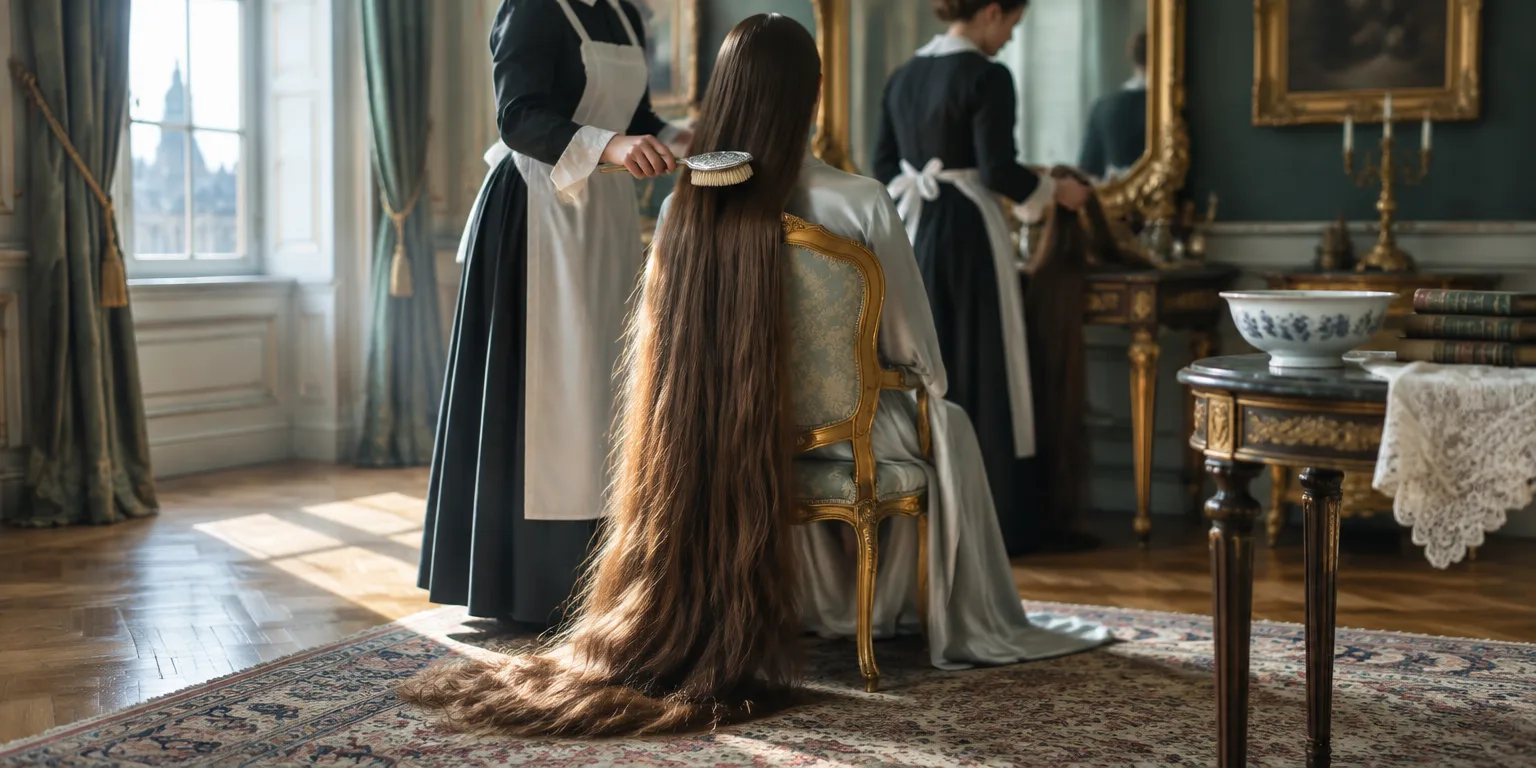
Every morning in the Hofburg, the imperial palace in Vienna, Empress Elisabeth of Austria sat still for two to three hours while maids brushed, combed, and dressed her hair.
It fell to her ankles and was so heavy she said it gave her headaches. As the maids worked, she studied difficult languages, first Hungarian and later ancient Greek.
She turned herself into Central Europe's fashion idol through strict control of her body, then spent years escaping the palace life that worship required.
Sisi, the wife of Emperor Franz Joseph, the ruler of Austria-Hungary, drew a kind of mass adoration that invites comparison with the fame of Princess Diana. She was celebrated as a fashion leader and romantic heroine.
She was unusually tall and very thin, with a 16 inch waist held by vicelike corsets. She never weighed more than 110 pounds, and if the scale moved higher she would try to stop eating. She was one of the first women in European history to exercise regularly in a gym, and she was intensely repelled by body fat in other women.
She raised her children to share that dread. On one visit to London to call on Queen Victoria, the queen of Britain, her young daughter had, according to accounts of the visit, never encountered a heavy woman. When she saw Queen Victoria, the girl wet herself from terror.
Biographers still argue over whether Sisi was anorexic or bulimic. She sometimes ate enormous meals and yet stayed thin, and she would not eat meat. On one account, she had beef steaks squeezed for their juice and took the blood with thin soup. Her corsetry was so extreme it looked almost fetishistic, a way of punishing herself. Her listlessness and blank moods may point to depression.
That mood may also explain her recklessness in the hunting field. She was a brilliant rider, but she rode so hard that people who watched her hunt said she would one day fall and break her neck.
Her other escape was distance. When her son Rudolph was two, Sisi told Franz Joseph she must go to Madeira at once for her health. Doctors found nothing wrong with her, but she went anyway and spent the whole winter there. That trip set the pattern for the next decades.
She returned briefly to Vienna, then left for Corfu, where she adored the island and built a palace called the Achilleion. She stayed for weeks, then months. She went often to England to go fox hunting in Northamptonshire, and to Ireland to hunt with the local aristocracy. Sometimes she went to Monte Carlo to gamble.
While she was gone, Franz Joseph had quiet affairs with discreet, middle class women who could be relied on to keep silent. The most famous was Katharina Schratt, an actress at the Court Theater. Sisi had arranged that relationship herself, commissioning Schratt's portrait for her husband and then introducing them.
Schratt was jolly and a good listener. She baked the emperor cakes, cooked goulash for him, and told him backstage gossip. Sisi encouraged the affair and sometimes spent time with the two of them. Sisi seems to have felt secure because the cheerful actress who cooked and chatted posed no real threat to her own place.
Questions people ask
Where are Madeira, Corfu, and Monte Carlo, and why did aristocrats go there?
Madeira is a Portuguese island in the Atlantic long promoted as a mild winter refuge for people with lung complaints and low spirits. Corfu is a Greek island in the Ionian Sea where Sisi built the Achilleion, named for Achilles, the Greek hero she admired. Monte Carlo is the casino district of Monaco, already famous by the late 1800s for roulette and high society gambling.
Who was Queen Victoria when Sisi's daughter met her?
Queen Victoria reigned over Britain from 1837 to 1901 and was famously short and stout in later life. She was Franz Joseph's fellow monarch and, through marriage ties, part of the extended family network of European royalty. A meeting between her and an Austrian archduchess would have been a formal royal courtesy call.
Did Sisi have an eating disorder?
Many biographers think she had disordered eating, possibly along with depression, but the question is still disputed. The pattern of severe restriction, occasional large meals, meat avoidance, and very low weight points in that direction. A firm modern diagnosis is not possible from historical accounts alone.