Baby Crocodiles Start Life as Prey
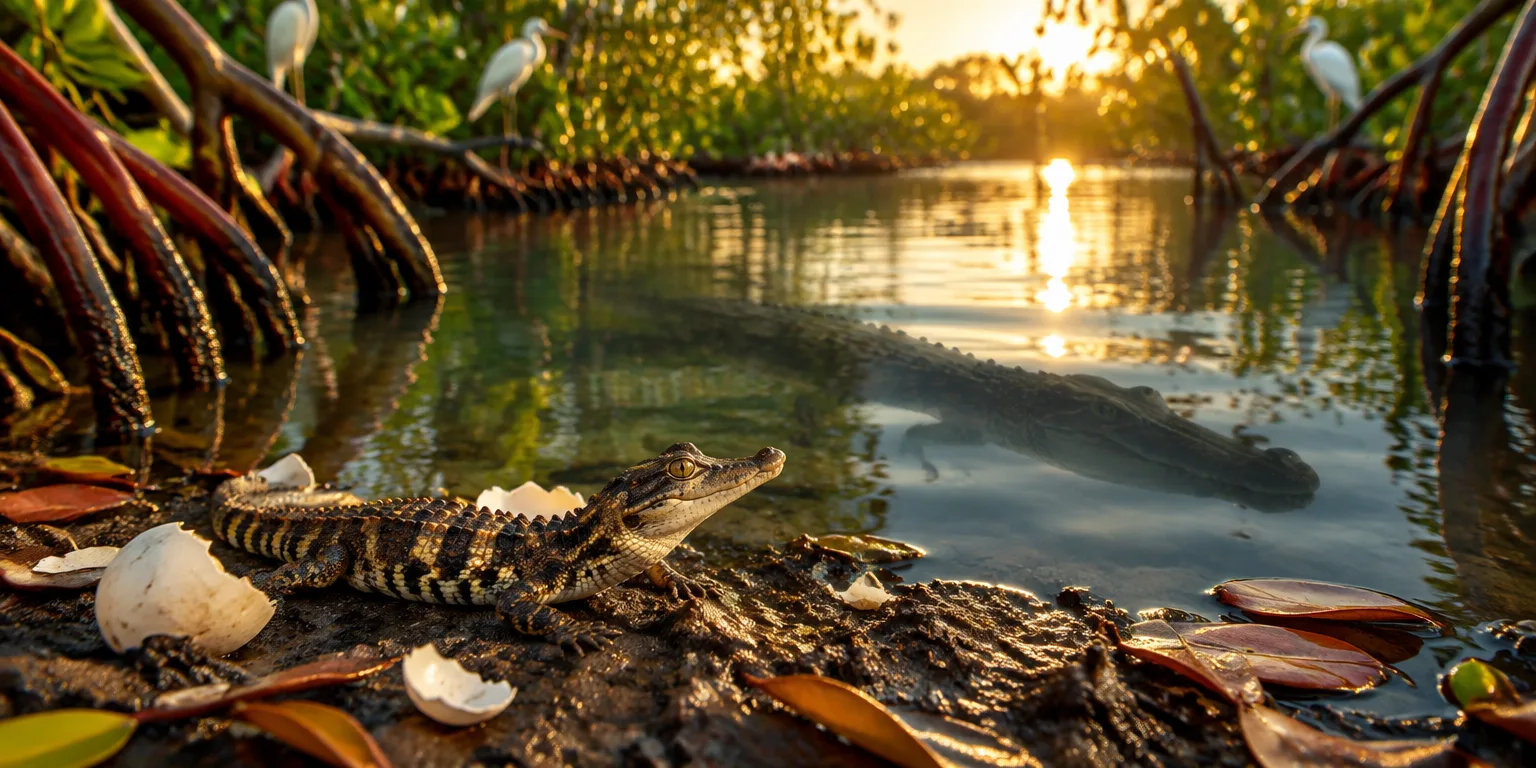
A female can lay up to 50 eggs, but only a tiny fraction live to adulthood.
 PBS Terra · Why Crocodiles Are Thriving in the Shadow of A Nuclear Plant
An adult American crocodile is a top predator. A baby one sits at the very bottom.
A female lays 20 to 50 eggs in a nest she digs, covers, and then guards for about three months until they hatch, said Mike Lloret, a biologist who monitors crocodiles in South Florida. When the tiny hatchlings emerge, very few will live to become adults.
Nearly every predator in the water and air eats them, including birds, fish, turtles, and other crocodiles. As Lloret put it, "Crocodiles are actually on the menu for other crocodiles."
It is a brutal start. To become a top predator, a young crocodile first has to survive being prey.
Questions people ask
Do mother crocodiles protect their babies after they hatch?
Yes, for a short time. Female American crocodiles guard the nest during incubation and respond to the chirping calls hatchlings make before emerging. They may help open the nest and stay near the young in the water for several weeks, but the hatchlings still face heavy predation.
When does a young crocodile stop being easy prey?
Safety comes with size. Hatchlings grow quickly in their first few years, and once they reach a couple of feet long, birds, small fish, and turtles can no longer easily take them. Large crocodiles, alligators, and people remain the main threats to bigger juveniles and adults.
Why would a crocodile eat another crocodile?
Large crocodiles are opportunistic feeders and will eat almost any meat they can catch, including smaller crocodiles. This cannibalism is common in crowded nursery areas where big and tiny animals share the same water. It also helps regulate the population when many hatchlings compete for food and space.