Bad milk was blamed for killing a quarter of babies in 1800s New York and Boston
Cows chained beside breweries gave thin, sickly milk that dealers watered down and whitened with chalk, and later railroad milk carried its own bacteria and tuberculosis.
 Gastropod · Plant Milk Proliferation: Oat, Soy, Almond, and More, But Which Is Best?
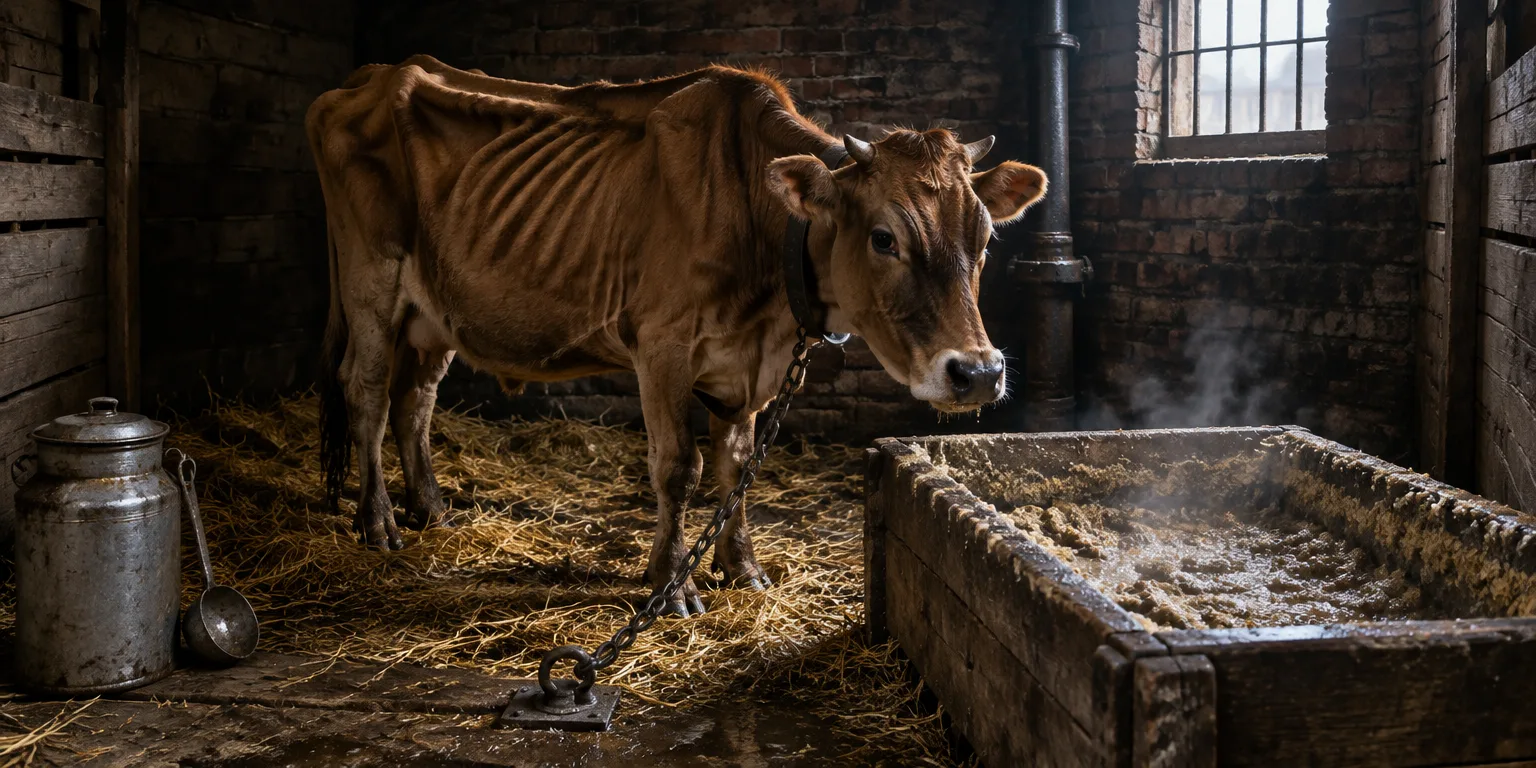
The cows never moved. Chained in one spot in a shed beside a brewery in New York or Boston, they ate nothing but leftover slop from brewing, a gruel that left them sickly, and their milk was sickly too.
By the mid-1800s, doctors and other authority figures were telling mothers that cow's milk was almost preferable to breast milk, something babies should be drinking. Cities were growing fast, which set off a boom in cows kept in cities to meet the demand, and many families followed the advice to feed babies cow's milk.
Mark Kurlansky, author of the history Milk: A 10,000 Year Food Fracas, estimates that roughly half of babies died in those cities at the time and that bad milk was blamed for "a third to a half of" those deaths. By his estimate, that meant about a quarter of all babies died because of bad milk.
Much of the killer milk was known as swill milk, named for the brewery waste the city cows were fed. The owners watered the thin milk down to stretch it further, using untreated city water full of bacteria and viruses. Then they stirred in chalk to make the watery mixture look thick and creamy again. Babies drank bacteria, dirty water, and chalk, and many became sick and died.
When railroads arrived, the filthy city dairies were largely replaced by milk hauled by rail from rural farms. That should have helped, but there was almost no refrigeration, so germs already in the cans could multiply during the long ride to town. Country milk could kill babies, too.
There was another danger that no one could see. Many cows had tuberculosis, and people could catch it by drinking milk from an infected cow. There was no cure for tuberculosis until after World War II.
Questions people ask
Why were cows being fed brewery waste in the first place?
Brewers had huge amounts of wet leftover grain, and dairy owners wanted cheap feed in the city, close to customers. Building a dairy next to a brewery solved both problems, even though the all-slop diet left cows malnourished and sick.
When did cow's milk stop being so dangerous?
Three changes came together: heating milk to kill germs, a process called pasteurization, routine refrigeration from farm to store, and testing cows and culling herds infected with tuberculosis. Together they made commercial milk far safer by the early 1900s.
Can you still get tuberculosis from milk today?
In the United States today, almost all milk sold in stores is pasteurized, which kills the tuberculosis bacteria along with other germs. The main risk now comes from drinking raw, unpasteurized milk, which health officials warn can still carry serious infections.