Barcelona Did Not Recognize Its Architect After a Tram Hit Him
After giving his final years to the Sagrada Familia, Gaudi was not recognized after a street accident, and his funeral stopped the city that had passed him by.
 Real Engineering · Why Sagrada Familia Took 144 Years to Complete
On June 7, 1926, an old man walking to confession, as he did every day, was struck by a tram in Barcelona. He lay in the street in ragged clothes. People who passed him did not know who he was.
He was Antoni Gaudi, 73, the architect of the Sagrada Familia. Twelve years earlier, at 62, he had moved into the unfinished church to devote his last years to the design. His obsession with the work consumed him. He let his appearance go and lived as a recluse, spending his days in prayer and watching over the building site.
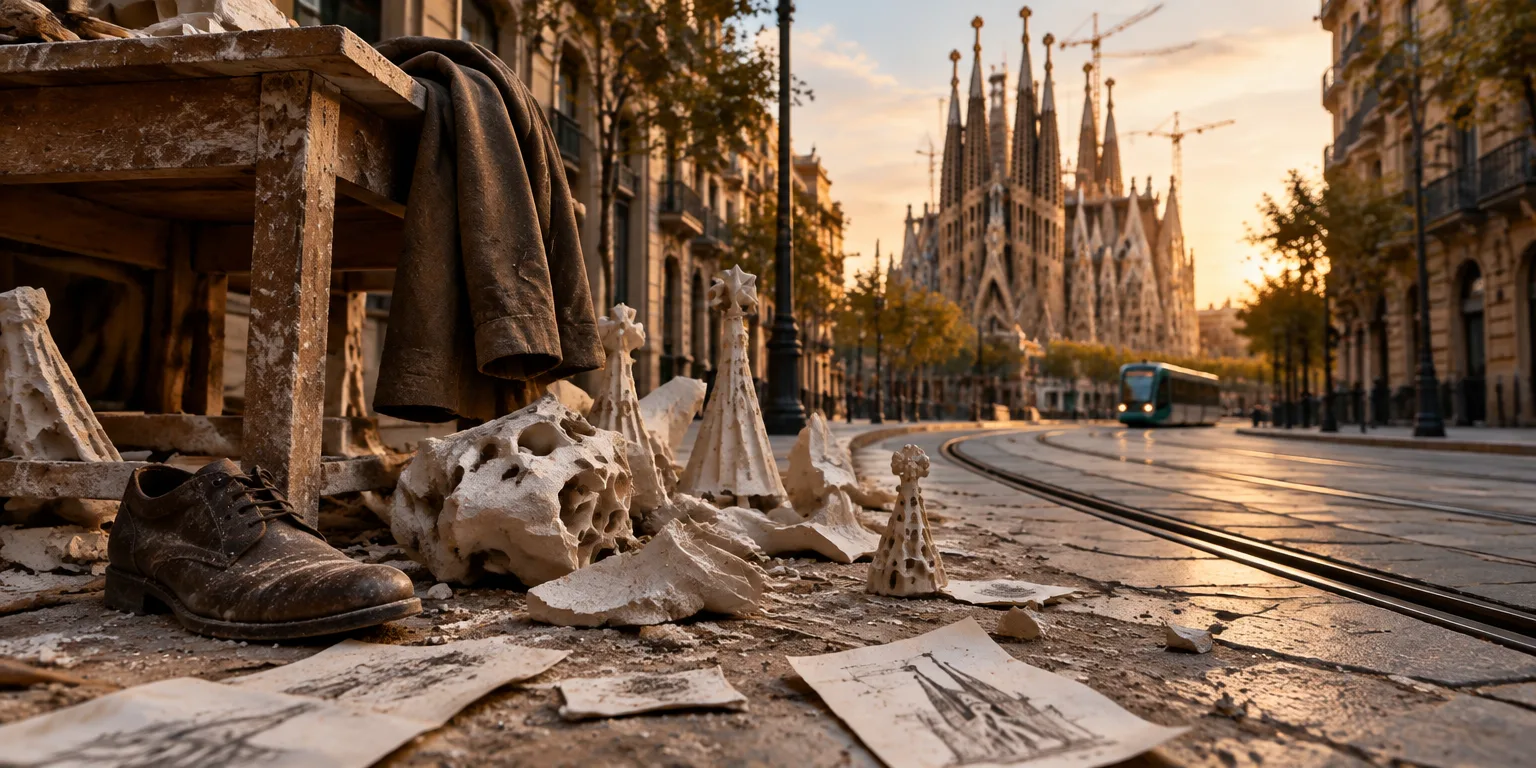
He had stopped producing the flat drawings that other builders could readily use. He was shaping plaster models in three dimensions instead, intended as the ultimate guide for builders who followed.
After the tram hit him, hours passed before he was brought to a hospital, where he received only basic care. The ragged stranger was not identified as the celebrated architect. By the time he was recognized, treatment came too late.
He died two days later, on June 10, 1926. The city that had passed him in the street then stopped for him. Residents turned out in such numbers that Barcelona streets closed as they escorted his coffin to burial in the crypt beneath his unfinished church.
With the mastermind gone, completing the church became far harder. Ten years later, in summer 1936, anarchist mobs broke into the basilica and smashed the plaster models he had made during his ten years of seclusion. What had already been a hard completion became a puzzle that would require nearly a century of reverse engineering to solve.
Questions people ask
What does the Sagrada Familia look like today?
It is a huge Roman Catholic basilica in Barcelona, known for its tall, organic spires and light-filled interior. After 144 years of work, the cross was placed on its central tower in June 2026, making it, at 172 meters, the tallest church in the world.
Was Gaudi always a recluse?
No. For most of his career he ran a successful practice and was well known in Catalonia. The reclusive, unkempt final period came only after he moved into the church site in his 60s to devote himself to the project.
What did builders do after the models were smashed?
They spent the next two decades slowly cataloguing the broken pieces, sketches, and clues to his vision. That painstaking detective work continued for decades, turning completion into a nearly century-long reverse-engineering project.