Base Scrapped Its Next Battery to Build Its Own
Its hardware chief warned the outsourced Gen 2 would probably break, so the startup absorbed the pain and started over in Texas.
 Not Boring by Packy McCormick · Base Power Company: Chapter 3
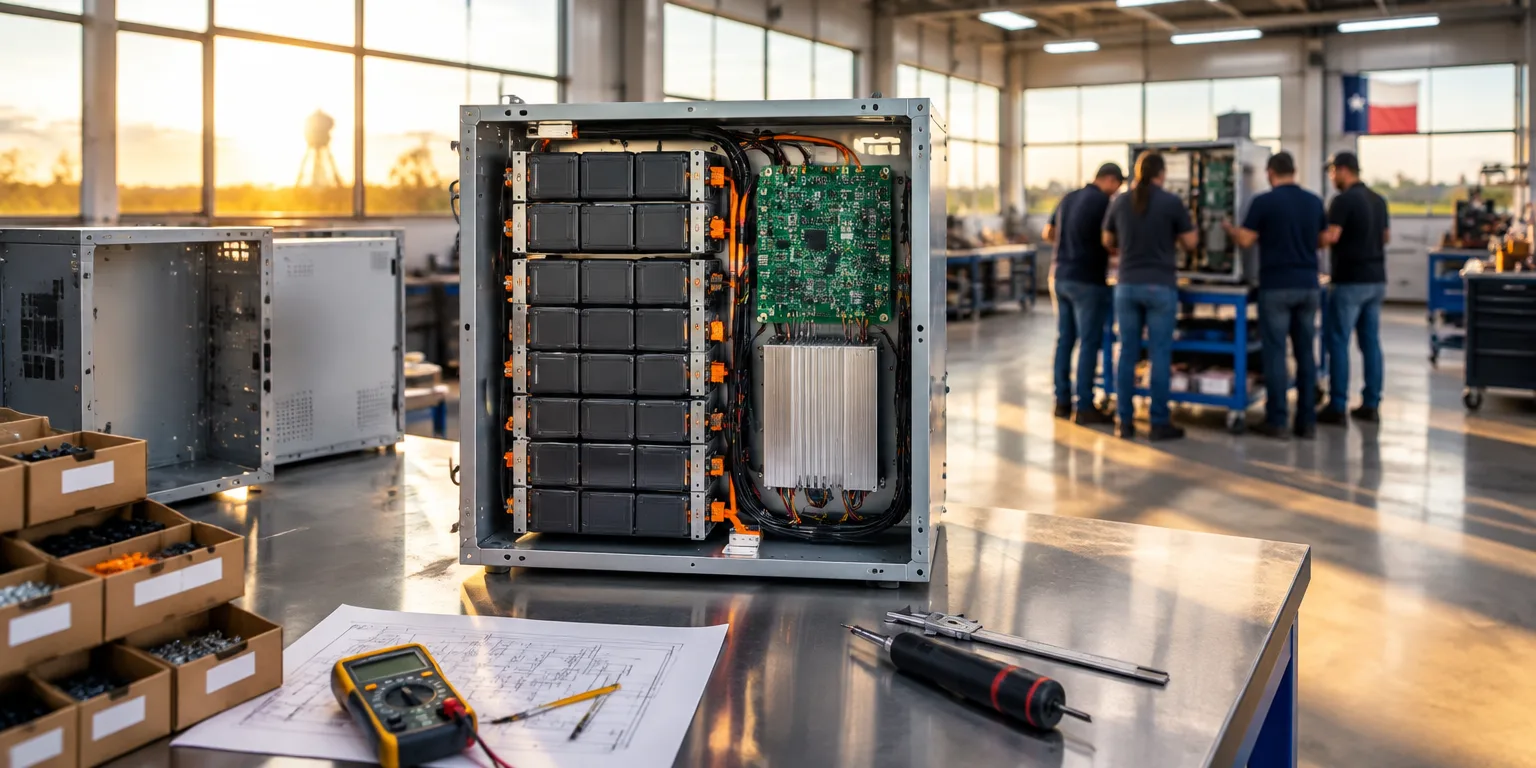
Dino Sasaridis had barely unpacked when he told Base Power Company to kill its next product. Sasaridis, Base’s head of hardware, had spent 13 years at Tesla, including leading the mechanical design work for its Powerwall 3 home battery. He joined Base in May 2024 to build Gen 3, the battery Base really wanted: designed by Base, and built by Base in Texas.
At the time, Base was walking before it ran. Its Gen 1 battery, already going on homes, was mostly an off-the-shelf system. Gen 2, due later that year, was to be designed to Base’s requirements but built by outside firms, with separate suppliers handling the battery and the inverters, the boxes that turn stored power into power a house can use. Only then would Base learn to manufacture.
Sasaridis thought that middle step was a mistake. He looked at the supplier contracts, including $15 million in cancellation penalties, and said the suppliers did not care about Base’s success as much as Base did. More importantly, he argued, if Base did not own the technology, it could not fix the product when it broke. After studying the Gen 2 design, mechanically and electrically, he concluded it probably would break, and was in many ways more complicated than Gen 1. It would also teach Base nothing new.
This was the bet the young Texas energy startup made: give up the supplier-built plan and build its own battery from scratch.
He explored canceling Gen 2 soon after arriving, but held off for several practical constraints, among them that the $15 million exit fee would have consumed a large share of Base’s funds. So he tried to improve Gen 2 as much as possible. But he kept returning to about 80% confidence that Base would move faster without it. He took what he called a crazy idea to Zach Dell, Base’s chief executive. Dell said it was big, and needed to think about it. Two or three days later, they both nervously laughed it off.
The idea would not die. Sasaridis mentioned it in passing to Jared Greene, another Base leader, adding quickly never mind, that’s crazy. Greene answered, “Oh my God, you’re right. We need to cancel Gen 2.” Within a week, the conversation reached a leadership meeting in April 2025, just as new U.S. tariffs made domestic manufacturing more attractive. The decision was to act quickly and accept the pain.
On May 1, Dell told investors that Base had canceled Gen 2 and would speed up work on Gen 3, a cheaper system designed and manufactured by Base in Texas. “We had dozens of people immediately stop working on it and start focusing on Gen 3,” Sasaridis said. The weekly meetings tracking “the day-by-day slip of one inverter supplier versus the other” “just turned off,” Sasaridis said.
With everyone freed up, Base held a big architecture week. It flew its power electronics team in from San Carlos, arranged desks in a ring, and rushed to sketch a new concept. When the leadership team reviewed it, the feeling was relief. “We all felt like we’d dodged a bullet,” Sasaridis said. “And then we went and made it.”
Questions people ask
What do battery and inverter partners actually do?
A battery partner typically makes the cells and packs that store electricity, while inverter partners make the electronics that convert that stored power into the kind of electricity a house can use. Base planned to use one of the first and two of the second, which meant coordinating three outside designs.
Why would canceling a battery cost $15 million?
When a startup orders custom work, suppliers reserve factory time and buy materials, so the contract charges a fee if the buyer walks away. For Base, that fee was $15 million at first, which would have eaten a big chunk of the money it had raised.
What does it mean to own the technology stack?
Owning the stack means controlling the hardware design, firmware, and software, so engineers can diagnose a failure and ship a fix themselves. If suppliers own those layers, Base would have to ask permission, wait in line, and pay for changes.