Bats Find Their Way by Shouting in Sounds We Cannot Hear
A Harvard student's hunch and a physicist's ultrasound detector exposed a hidden world of sound.
 Aeon · Worm munch matters
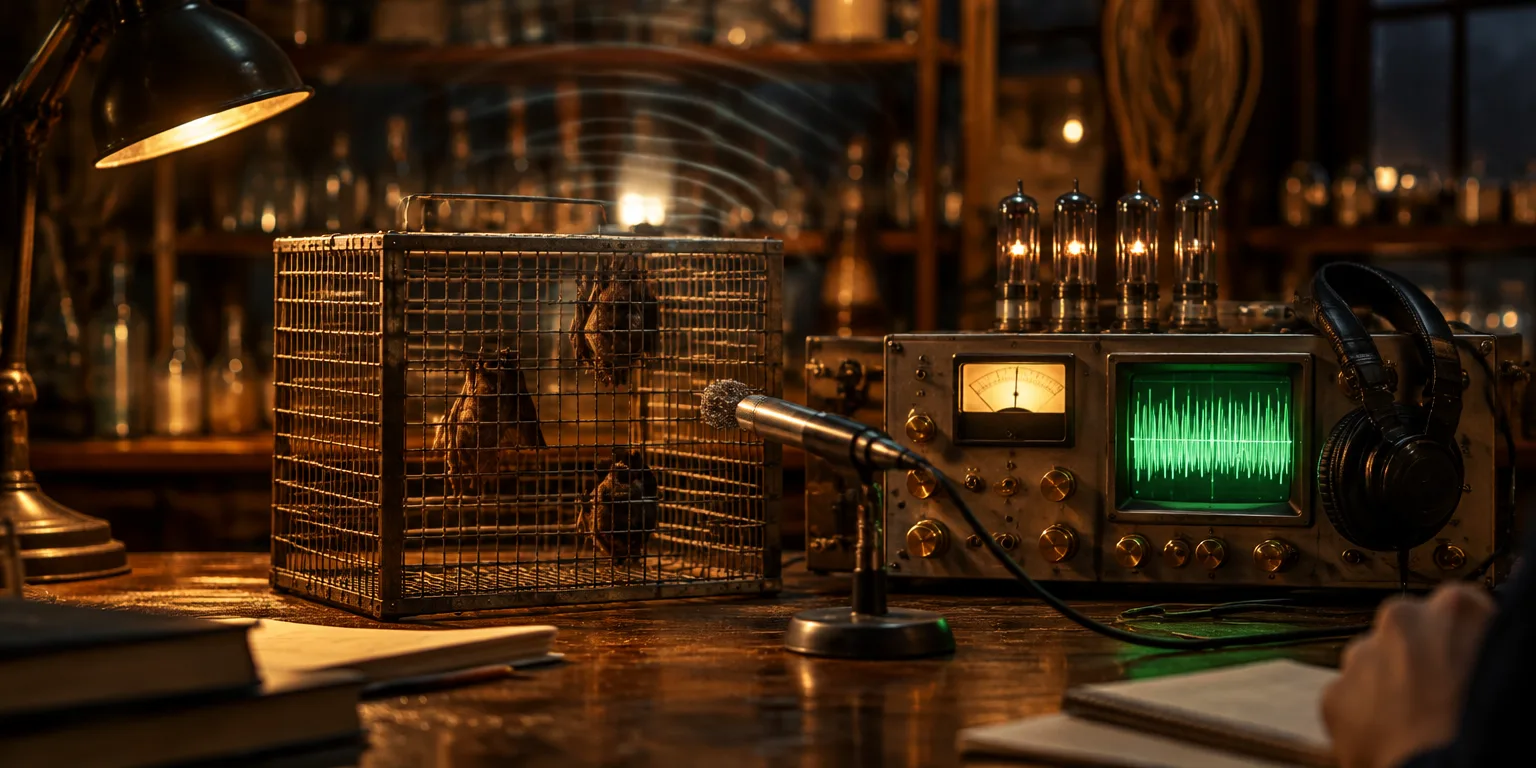
The bats arrived in a cage, carried into a physics lab by a college student who was sure they were making sounds no one could hear.
The student was Donald Griffin, then an undergraduate at Harvard. The lab belonged to George W. Pierce, an American physicist who had built a way to detect ultrasound, sounds pitched too high for human ears, using special crystals and an amplifier. Pierce had made the device to study the high calls of birds and crickets.
Griffin had a different hunch. He suspected that bats guided themselves in the dark by sound. That idea was hard to test, because most bats fly at night, are tiny, and move quickly. They call mostly outside human hearing. That has helped keep them effectively out of sight to people. Bats have also, at times, been associated with evil and feared.
When Griffin brought his bats to Pierce's lab, the detector picked up a cacophony of ultrasonic sound from the bats. The bats had been shouting all along.
What followed turned that noise into an explanation of how bats fly. Further work by Griffin and others showed that bats listen for the echoes that bounce back from their own ultrasonic calls. From those returning echoes, they build a sonic map of what is around them, and use it to steer during rapid flight. Griffin called the system echolocation.
The bats' sound world had gone unnoticed by scientists until the detector revealed it.
Griffin started with a cage of bats brought to Pierce's lab. He ended with a name for how bats use echoes to find their way: echolocation.
Questions people ask
Do bats shout all the time they are flying?
Many insect-eating bats produce calls almost continuously while flying in the dark, often tens of calls per second, and speed up into a rapid buzz when closing in on prey. Fruit bats that rely more on eyesight and smell generally do not echolocate, except for a few cave-dwelling species that use tongue clicks. The pattern depends on the species and whether it is cruising, hunting, or landing.
How loud are bat calls?
Up close, many bat calls are extremely loud, often over 100 decibels and sometimes above 130 decibels, which would be painful if humans could hear them at full pitch. They sound faint or silent to us mainly because they are ultrasonic and fade very quickly in air. The loudness helps the faint returning echo still carry useful information.
Can people hear echolocation with a detector?
Yes. A bat detector picks up ultrasound and shifts it down into human hearing range, turning it into clicks, buzzes, and warbles through a speaker or headphones. Different species often have distinctive call shapes and pitches, so experienced listeners can identify many bats by sound alone. That is the direct descendant of the crystal and amplifier system Pierce built.