Beaten Bloody on the Senate Floor, He Went Right Back to Fighting Slavery
Charles Sumner survived the 1856 caning and pushed even harder for emancipation; his ideas reappeared in a 1954 ruling and the 1964 Civil Rights Act.
 Experimental History · Incentives are for losers
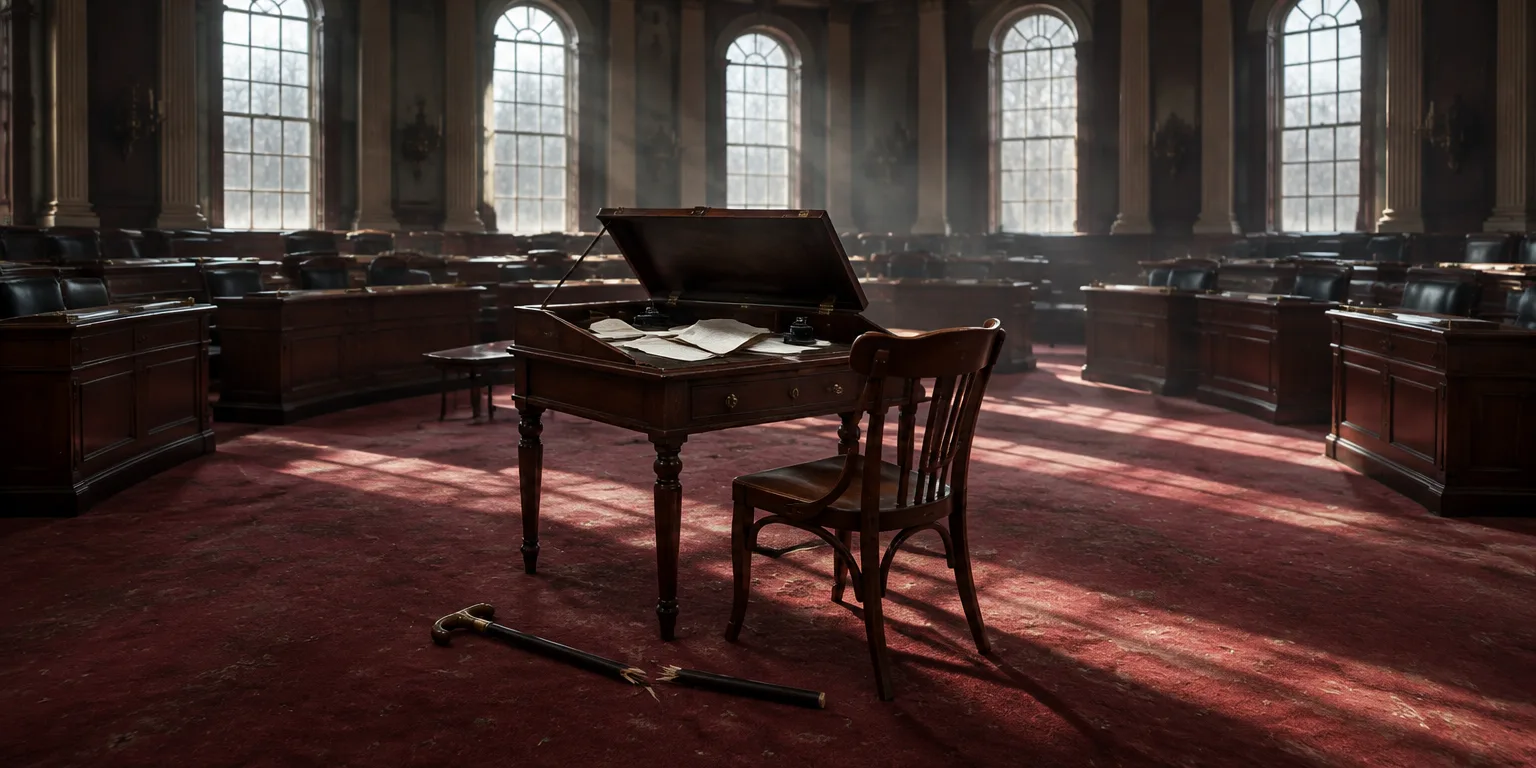
Preston Brooks, a congressman from the South, walked up to Charles Sumner while the senator from Massachusetts was seated at his desk in the chamber. He accused Sumner of libel, then struck him over and over with a cane until the cane broke.
Sumner, caught by surprise and tangled in his desk, could not get away. He nearly died there in a puddle of his own blood.
The attack matters because of what Sumner did next. He recovered and pushed even harder against slavery, urging President Abraham Lincoln toward emancipation and writing legal arguments that were an early version of what the Supreme Court and Congress adopted a century later.
Sumner had grown up poor in Boston, living near a large Black community. During a visit to France in the 1830s, he was stunned to watch Black and white pupils learning side by side as peers at the Sorbonne in Paris.
He wrote in his diary, "It must be then that the distance between free blacks and whites among us is derived from education, and does not exist in the nature of things." He later became the era's bluntest white campaigner to end slavery, taking stances even his friends called extreme: freeing every enslaved person immediately, then securing Black voting rights and racially integrated schools.
The beating came within days of one of his speeches attacking slavery. In 1861, after he recovered, Sumner pushed Lincoln to end slavery in the seceded South. Newspapers in his home state of Massachusetts called him "a candidate for the insane asylum." Two years later, Lincoln issued the Emancipation Proclamation.
Sumner kept writing bills, arguments, and amendments. Many were defeated or weakened, but they were an early version of arguments the Supreme Court adopted in Brown v. Board of Education in 1954 and Congress adopted in the Civil Rights Act of 1964. His test for a leader was simple: "The first is backbone, the second is backbone and the third is backbone."
Questions people ask
What happened to Preston Brooks after the attack?
Brooks resigned after the House failed to expel him, and voters in South Carolina promptly returned him to office. He died suddenly in January 1857, less than a year after the attack, and was celebrated by many white Southerners as a hero.
How long did it take Sumner to recover?
Sumner was absent from the Senate for about three years while he recovered from his head and spine injuries. Massachusetts voters kept reelecting him and left his seat symbolically vacant, and he returned to full Senate service in 1859.
What was Brown v. Board of Education?
Brown v. Board of Education was the 1954 Supreme Court decision that declared segregated public schools unconstitutional. It adopted the kind of argument for full racial equality in education that Sumner had made in the 1840s and 1850s.