Beavers build a dam without ever stopping the stream
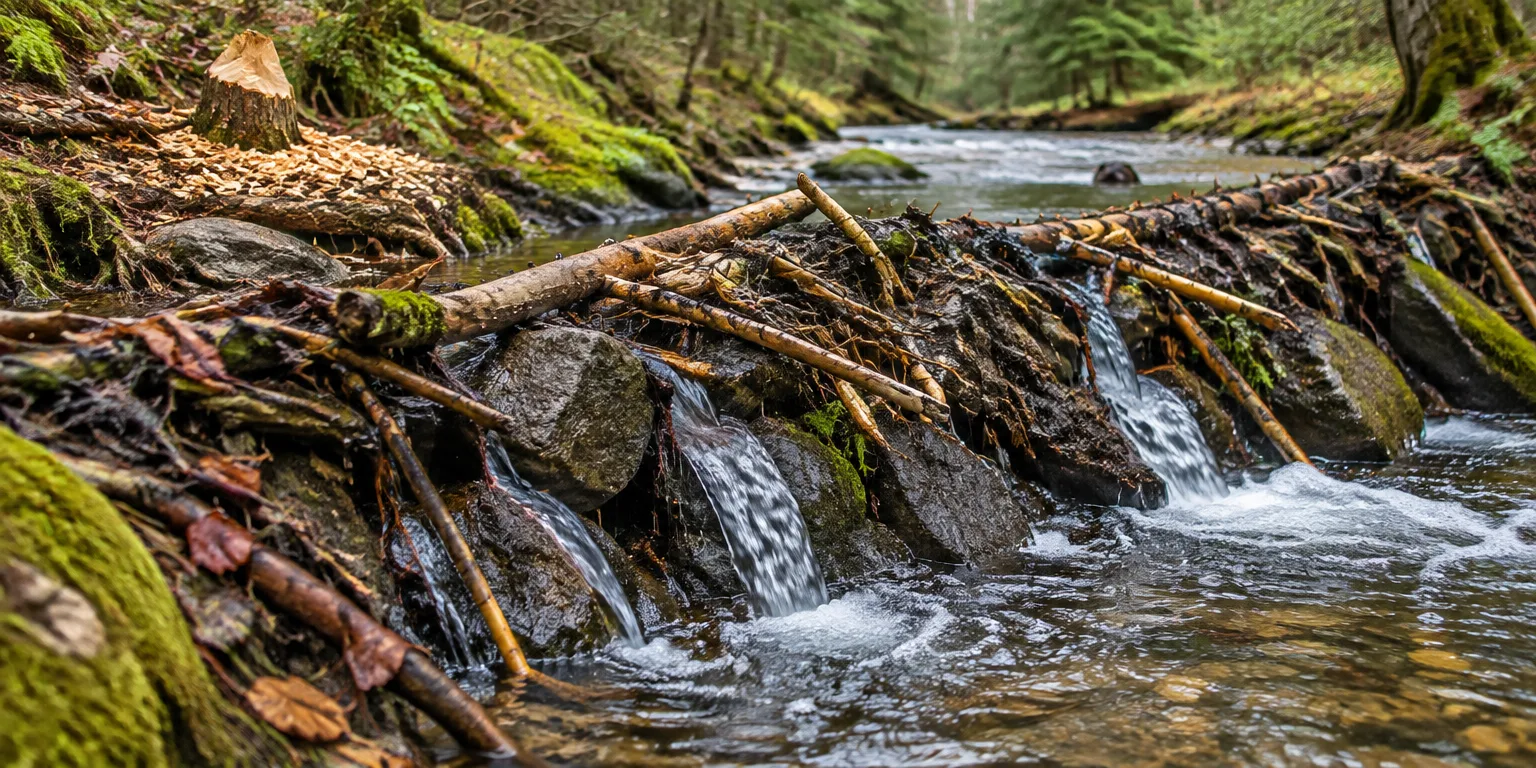
Beavers build a dam in a running creek and fix leaks as they hear them.
 Practical Engineering · Are Beavers Actually Good at Dams?
Beavers do all their dam work inside a running creek, testing and patching as they go. That live repair keeps up with small leaks but leaves the dam exposed when a real flood arrives, says Grady, a civil engineer.
Human dam builders start by moving the river. They wall off the site and send the flow around it through ditches or tunnels, so they can work in the dry. Beavers have no such detour.
Their trick is to never try to block the creek all at once. They start with heavy rocks and logs that can sit in moving water, then weave branches through them and finally pack mud to raise the pond. Because water still slips through at first, the half built frame stays up long enough to finish.
The upkeep follows the same try and see habit. The dam is checked by the act of building it, and any fresh trickle the beavers hear gets quickly plugged with more mud and sticks. Instead of adding extra strength up front, beavers rely on steady upkeep.
That pays off for everyday seepage, but not for a flood. A strong flow can loosen the mud seal, cut around the ends, or rise over the top, and then so much water overwhelms the dam that the whole thing can wash out.
Questions people ask
How do beavers get all those branches?
Yes. Beavers fell trees with their large, continually growing front teeth, then drag and float the limbs into place. They also eat the bark and tender inner wood, so the dam material doubles as a food cache.
How big can a beaver dam get?
They can be hundreds of feet long, though most are much smaller. The longest known beaver dam, in Wood Buffalo National Park in Canada, stretches more than half a mile and was first spotted in satellite images.
How do human engineers divert a river to build a dam?
Usually with cofferdams, which are temporary watertight walls that enclose the work area, plus ditches or tunnels that route the river around it. Once the permanent dam is finished, the river is allowed back over or through its spillways.