Beavers Build Human-Style Dams With Sticks and Mud
Rodents with no blueprints use a sturdy shell for weight and a muddy core to stop water, just like people do.
 Practical Engineering · Are Beavers Actually Good at Dams?
Beavers, the chunky rodents that reshape streams across North America and Eurasia, are what biologists call a keystone species, meaning their presence shapes the whole ecosystem around them. They can live almost anywhere for a simple reason: if a habitat does not suit them, they fix it until it does.
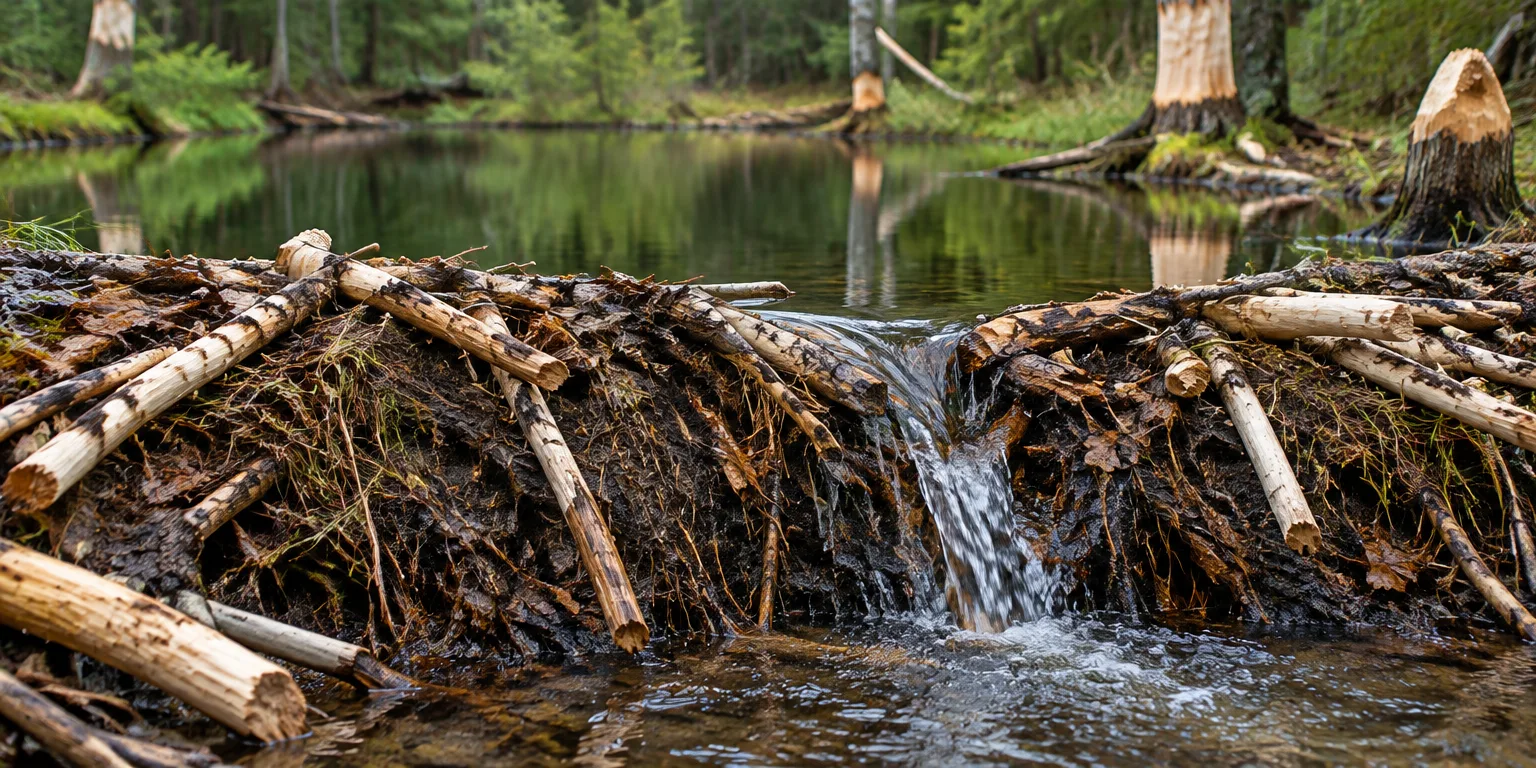
Their fix is strikingly familiar. A beaver dam usually starts with a few branches or rocks to anchor it in place. Then the beavers pile up interlocking sticks and logs. The branches lock together through friction, forming a stable mass with no cement needed. Finally, they pack soft material like wet soil and vegetation onto the side facing the incoming current to make the pile more and more watertight.
That is exactly how people build the most common dam in the world, the embankment dam, which is simply a reservoir wall made by piling and compacting soil and rock. Engineers use loose soil, often dug up nearby, for the bulk of the structure, called the shell. Its job is mainly to add weight, so it is okay if water seeps through. For waterproofing, they add a core, a tighter inner zone built from dense, water-blocking material, that holds the reservoir back.
In beaver construction, the branch pile is the shell and the mud and leaves are the core. Some human dams even put that waterproof layer on the upstream face, exactly where beavers put it, although most put it in the center where it is better protected from erosion. Grady, a civil engineer, calls the match a convergent evolution of professional practice, saying similar pressures over cost and materials "made embankments the crabs of the dam world," a design that nature and people invented independently.
Questions people ask
Why put the mud on the upstream side?
Water pressure does part of the work. When the seal is on the upstream face, the weight of the pond pushes the mud and leaves into the gaps between branches, which helps plug leaks. A seal on the downstream side would tend to be pushed off the dam by that same pressure.
Do all beavers build dams?
No. Many do, but some live in deep lakes, large rivers, or ponds where the water is already deep and still enough for shelter. Dams are a tool for creating that kind of safe water when it does not already exist.
How do beavers cut trees without tools?
They use their teeth, which grow continuously and have a hard, orange enamel front that stays sharp as it wears. They gnaw around a trunk until it falls, then cut the limbs into carryable sticks and drag or float them to the dam site.