Being Afraid of the World and Panicking Inside the Body Use Different Brain Circuits
A patient with no amygdalae felt no fear of snakes or haunted houses, yet she panicked when carbon dioxide made her feel she was suffocating.
 Huberman Lab · Neuroscience of Emotions & Tools for Improving Emotion Regulation | Dr. Ralph Adolphs
There is a woman known to science as SM who lost the amygdalae on both sides of her brain, two almond shaped structures deep in the temporal lobes. Ralph Adolphs, a Caltech professor who studies emotion and began his career studying her in the early 1990s, says she could not recognize fear in facial expressions.
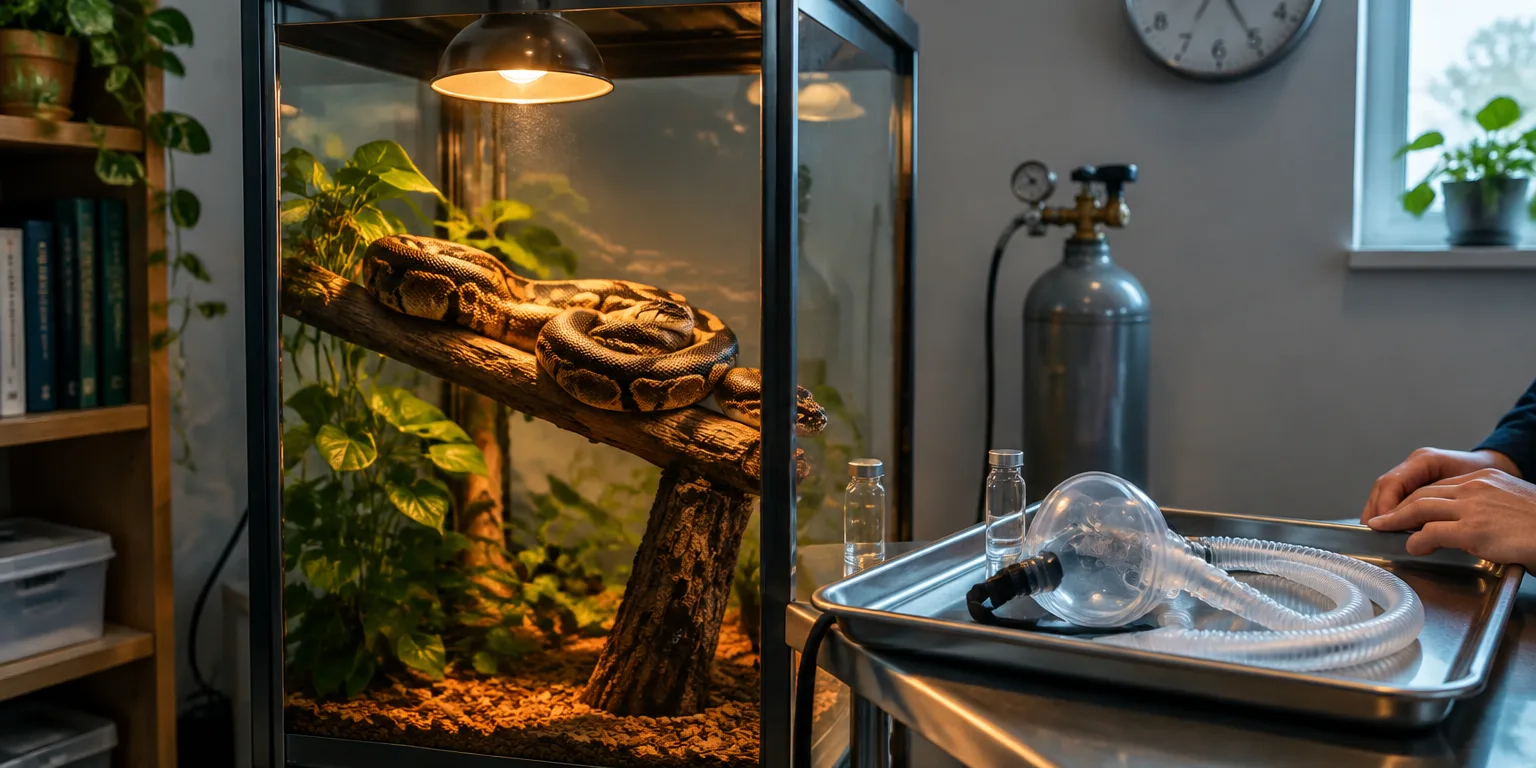
The deficit went beyond faces. Years later, researcher Justin Feinstein took SM to haunted houses, to an exotic pet store with snakes and spiders, and showed her horror movies. She poked at the monsters, wanted to touch things, and reported no conscious fear.
She was not emptied of all emotion. Adolphs says she could still show autonomic arousal, stress, and anxiety under some conditions. The proof came with a mask that delivered carbon dioxide.
Breathing that gas changes the acidity of the blood, which the brain reads as suffocation. About half of people have a panic attack from it. SM and two or three other patients with similar lesions, tested with Feinstein and researcher Renee Hurlemann from Germany, had full blown panic when they inhaled it. That suffocation alarm, Adolphs says, seems to depend not on the amygdala but on circuits lower down in the brainstem.
The lesson is that what we call fear is really at least two jobs. One system watches the outside world for threats like a predator, a snake, or a haunted house actor. Another monitors the inside of the body for threats like a failing heart or suffocation. The amygdala is important for the first, but Adolphs cautions that it is not simply a center for fear. It sits inside a larger network, with room for individual differences.
Questions people ask
What exactly are the amygdalae?
The amygdalae are a pair of small, almond shaped groups of neurons deep in the brain's temporal lobes. They help link what you see and hear to defensive responses, and they talk with sensory areas, the hypothalamus, and the brainstem. Damage on both sides is extremely rare, which is why SM has been studied so closely.
Why does breathing carbon dioxide cause panic?
Rising carbon dioxide lowers blood pH, and specialized sensors in the brainstem and blood vessels detect that shift. The brain interprets it as possible suffocation and triggers air hunger, a racing heart, and an urge to escape. In sensitive people, that false suffocation signal snowballs into panic.
Does this mean fear and panic should be treated differently?
Partly, yes. Therapies for phobias often focus on external cues and learning, while panic treatments often focus on tolerating internal sensations like breathlessness and heart pounding. Knowing the circuits differ helps explain why someone can be calm in danger but overwhelmed by a bodily alarm, and vice versa.