Big SUVs protect their drivers by putting everyone else at greater risk
Hitting higher on the body makes crashes more lethal, giving drivers another reason to size up.
 PolyMatter · Why the Average New Car Costs $50,000
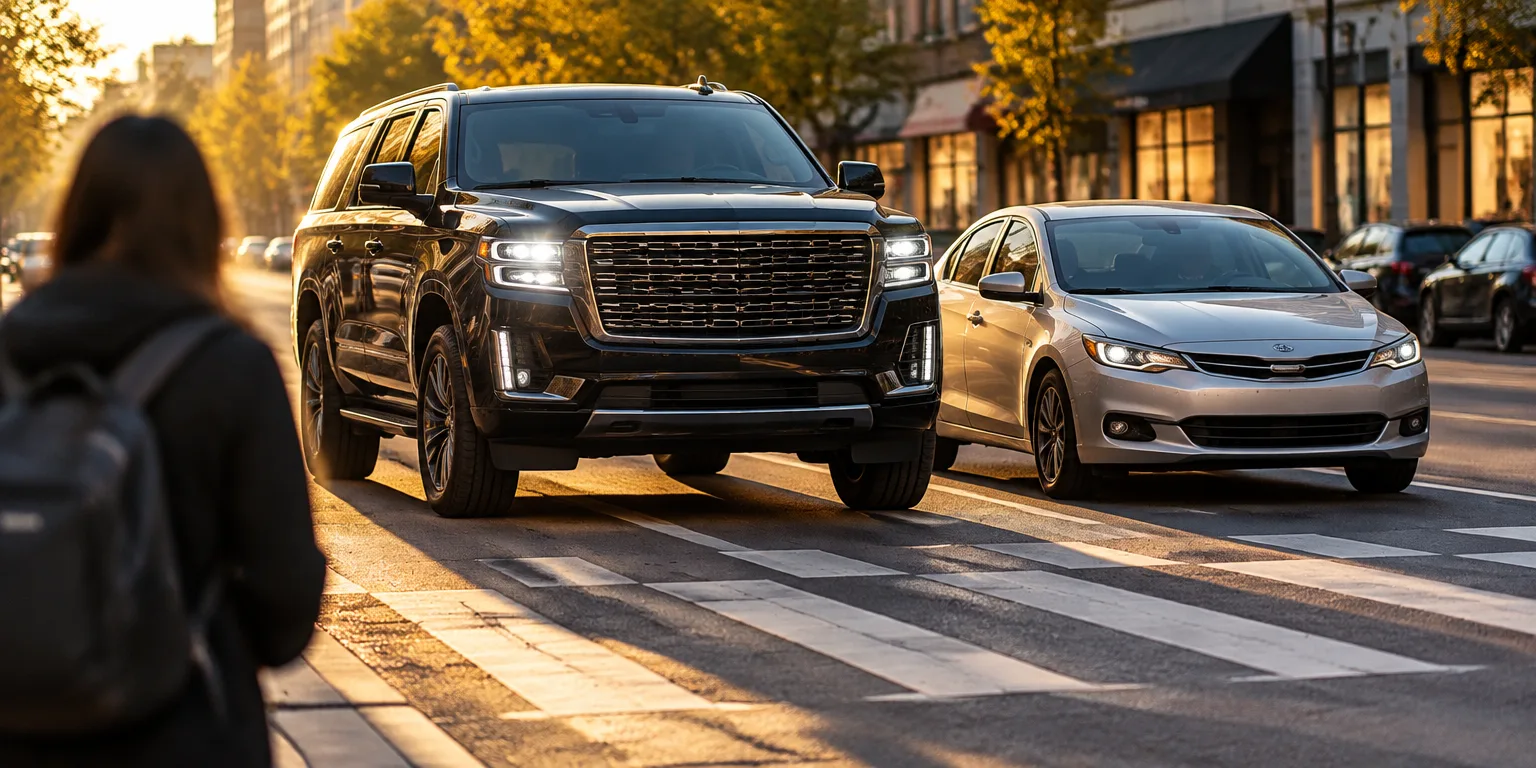
The danger is a matter of height.
A regular car that hits a pedestrian will likely strike the person in the legs. A pickup or large SUV, with its tall, raised grille, hits higher, in the head or torso. That difference in the point of impact increases the odds that the crash is fatal. Taller, larger vehicles are generally more dangerous to people outside them.
The same mismatch applies when two vehicles collide. Crashes involving a truck or SUV are more than twice as deadly for drivers in the other vehicle. The extra mass and height that threaten a walker or a sedan driver work in the opposite way for the people inside the big vehicle, who are usually safer.
That split creates a self-perpetuating cycle. As more trucks and SUVs join the road, anyone walking, biking, or driving a smaller car faces more risk. The rational response to that added risk is to buy a bigger, taller vehicle too.
It is a safety arms race. Each purchase makes sense for its owner, and makes the road a little more dangerous for everyone else, which gives the next buyer another reason to size up. The vehicles have not just become more common, they have also grown larger, bulkier, and pricier, so each round of the race raises the stakes.
Questions people ask
Why is a bigger vehicle safer for the person inside it?
In a crash between two vehicles, the heavier one pushes the lighter one backward, so its occupants feel less force. Sitting higher also helps in a head-on impact, because the frame and bulk of a truck or SUV can ride over the lower front of a car and intrude into its cabin.
Are more pedestrians actually being killed?
Yes. Pedestrian deaths in the United States have risen sharply over the past decade, topping 7,000 in recent years, even as cars gained automatic braking and other safety features. Researchers point to taller front ends, heavier bodies, and poorer visibility, along with faster roads and nighttime driving, as major contributors.
Does going big protect you in every kind of crash?
Not always. Large SUVs and pickups have longer stopping distances, wider blind spots, and a higher center of gravity that historically raised rollover risk, though stability control has reduced that danger. They protect well in a two-car crash, but they can be harder to maneuver out of trouble in the first place.