Biodiversity Is Humanity's Insurance Policy for an Uncertain Future
Because people are threads in the same living net as reefs and forests, losing too many strands threatens our own survival.
 TED-Ed · Why is biodiversity so important? - Kim Preshoff
Biodiversity matters because people are threads in the same living net as reefs and forests. Educator Kim Preshoff describes ecosystem, species, and genetic variety as strands of one weave, with humans woven in rather than standing apart.
One strand is the genetic variety within a single species, the inherited differences among individuals that help a population adjust to change. She says kinds of life with little such variety, because they are isolated or reduced to small populations, face greater danger from a shifting climate, illness, or broken up habitat. When a weakened kind of living thing vanishes, the living network loosens in that spot and sections fall apart.
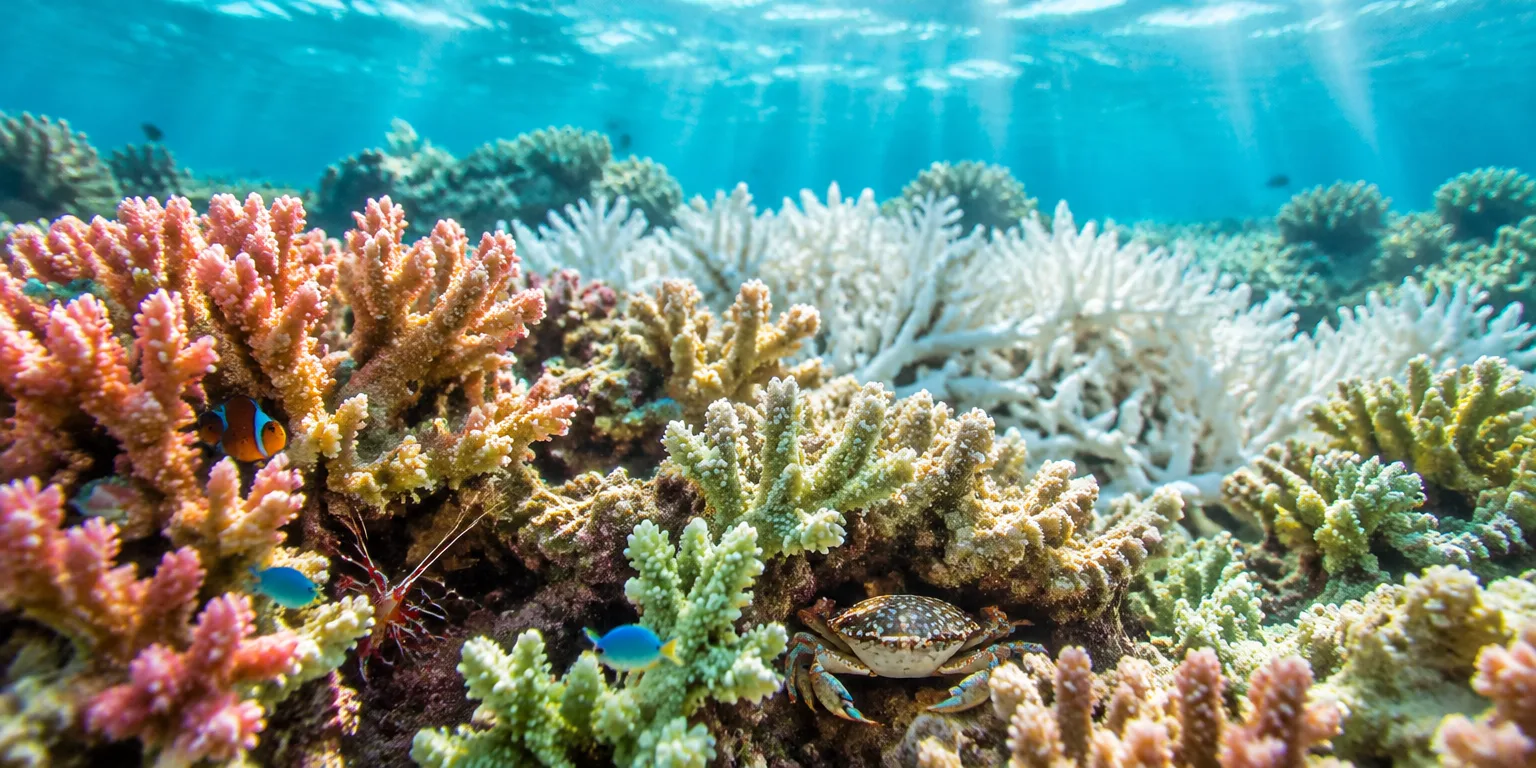
Her clearest example is coral, a builder of reefs and a keystone organism, meaning a living thing whose survival matters for many others. Coral offers tiny sheltered places to live, hide, and reproduce for thousands of kinds of fish, crustaceans, and mollusks, and lives in close mutual reliance with fungi and bacteria.
That dependence is also the danger. Harmful fishing methods, contamination, and ocean acidification, the shift in seawater chemistry from carbon the ocean absorbs, can weaken coral or kill it altogether. Lose that central builder, and those dependents lose their support as well, putting the whole living structure of the reef at risk.
A vast forest, by contrast, might absorb the loss of one kind of living thing and recover. Preshoff warns, "When just a few strands are lost, our own well-being is threatened." Intact ecosystems help people withstand unexpected change. In her closing words, "What the future brings is unpredictable, but biodiversity can give us an insurance policy, Earth's own safety net to safeguard our survival."
Questions people ask
What exactly is a keystone species?
A keystone species is one that many other organisms depend on, so its removal can reshape the whole community. Sea otters, which control sea urchins that would otherwise overgraze kelp forests, and wolves, which affect deer and vegetation in places like Yellowstone, are classic land-based examples.
Why does genetic diversity help a species survive change?
Genetic diversity means the range of inherited differences among individuals of the same species. A population with many variants is more likely to include some individuals that can resist a new disease, tolerate heat, or thrive after habitat changes, and those survivors can rebuild the population.
How does ocean acidification harm coral?
The oceans absorb a large share of the carbon dioxide humans release, which changes seawater chemistry and lowers pH. That more acidic water makes it harder for corals and shellfish to build and maintain their calcium carbonate skeletons and shells, leaving reefs weaker and slower to recover.