Bite marks cannot identify anyone because skin stretches
The same teeth left 89 different marks, and researchers found no reliable way to trace any mark back to its source.
 Veritasium · We've Been Using The Wrong Science In Court For 50 years
A bite mark looks like a clue. It is actually a smear.
The idea made intuitive sense. Dentists can identify a dead person from dental records, which match teeth to teeth. Starting in the 1950s, investigators applied the same logic in reverse in thousands of cases: match a bruise on a victim to the teeth of a suspect.
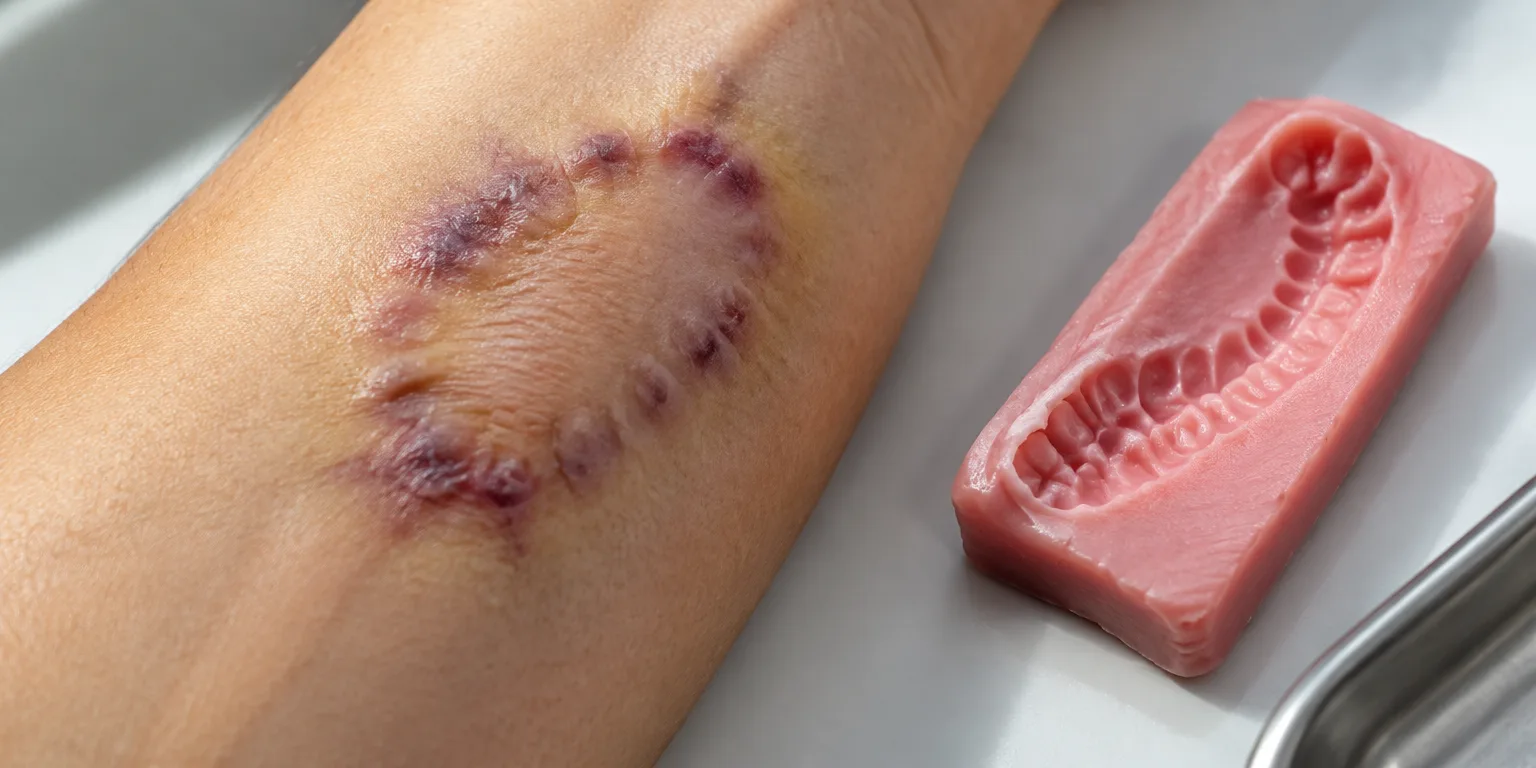
It does not work because skin is a terrible recording surface. Unlike plaster or wax, which hold an impression, skin is soft, stretchy, and squishy. It dimples under pressure, shifts as the body moves, and then rebounds. By the time a bruise is photographed and measured, its shape no longer reflects the exact width, spacing, or alignment of the teeth that made it.
Forensic dentist Mary Bush was among the researchers who tested that transfer. In a study at the University at Buffalo, scientists used one set of model teeth to bite cadavers 89 times, and made controlled bites from the same teeth in wax. Out of all 89 bites in skin, not one matched the measurements from the wax or from the original teeth.
The mismatch got worse. When researchers compared those skin bites to a library of 411 different sets of model teeth, the set that had actually made each bite was not even the best fit. After twelve separate experiments, the team concluded that bites do not copy onto skin with any consistency.
Yet courts in many countries still admit this type of testimony. Bush said, "while the scientific method is happy to discard an old and disproven theory, the justice system prefers consistency in a historical precedent." Teeth can name the dead, but skin cannot name the biter.
Questions people ask
If dental records are reliable, why aren't bite marks?
Dental records compare hard structures to hard structures, usually X-rays of teeth and jaws taken after death to records taken at a dentist's office. Both show stable shapes like fillings, missing teeth, and root angles. A bite mark compares hard teeth to living skin, which stretches, swells, and heals.
What exactly happens to skin when it is bitten?
Skin is elastic and anchored unevenly to muscle and fat, so it compresses in one direction and bulges in another when bitten. Blood then spreads under the surface as bruising, which blurs edges and changes size over hours and days. Posture and movement can distort the mark further before it is photographed.
Are bite marks still allowed in court?
No national ban exists in the United States, and admissibility is decided court by court under general rules for expert evidence. Some state courts and expert groups have restricted or discouraged its use, but it remains permitted in many places worldwide. That patchwork is why challenges often focus on one case at a time.