Border Cameras Can Photograph You From Two Miles Away and Track You Across Camera Views
Paired with radar and infrared, a line of networked cameras can follow a person or vehicle from one view to the next.
 The Headlines · The A.I.-Powered Cameras Watching Border Towns, and a Midterms Attack Ad Causes Outrage
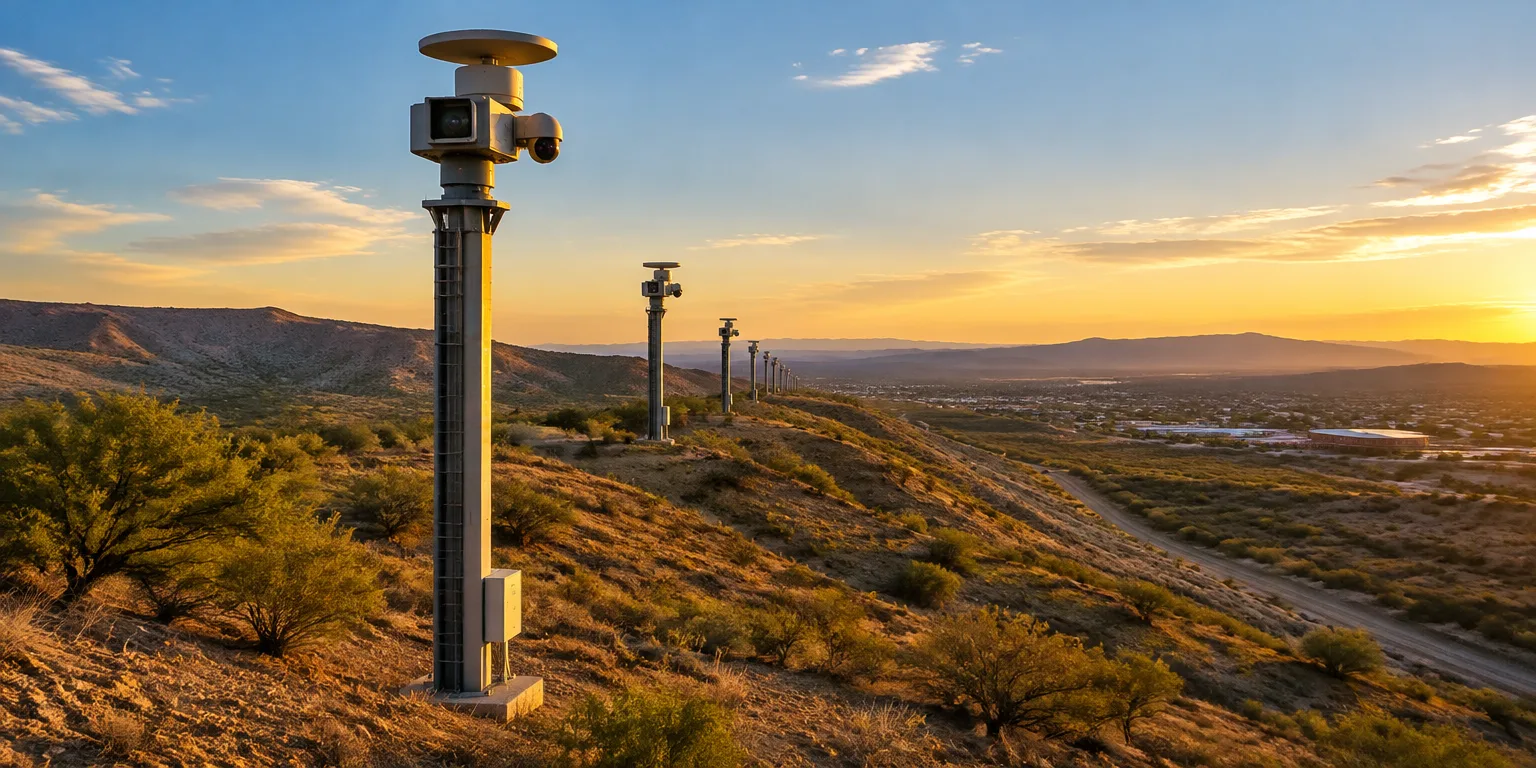
More than a million people in Mexico and the United States live within sight of a growing federal surveillance system. From California to Texas, the government has put up hundreds of cameras on tall towers overlooking schools, homes, parks, and beaches.
Each camera can take sharp pictures from as far as two miles off. The towers also carry motion detecting radar, infrared capability, and artificial intelligence programs that follow cars and individuals.
What matters is the row of towers working together as a network. Bora Erden, a Times reporter on a team that analyzed tower locations and mapped what the cameras can see, explains that once someone is picked up in one camera, that person can be tracked across different camera views as the person keeps moving.
That means leaving the view of one camera does not mean leaving the system. The cameras sit in a line, so the network can keep following the same person or vehicle from one camera view to the next.
Questions people ask
Do the towers work at night?
Yes. Infrared sensors detect heat rather than visible light, so people, vehicles, and animals stand out at night or in dust and smoke. That is why border cameras can keep watching after dark, when visible-light cameras alone would lose the image.
Who watches the video?
The towers are part of U.S. border enforcement, and Customs and Border Protection has called them essential to border security. In practice, agents can use the live feeds and tracks to decide where to send officers on the ground.
Can the system identify exactly who I am?
Tracking is not the same as identifying. The source material describes AI that follows people and vehicles across camera views, not a system that names them from a face. Identification would generally require a separate database match or an encounter with officers.