Border Residents Often Mistake Surveillance Towers for Cell Towers
The towers can record sharp pictures from two miles off and follow people from camera to camera.
 The Headlines · The A.I.-Powered Cameras Watching Border Towns, and a Midterms Attack Ad Causes Outrage
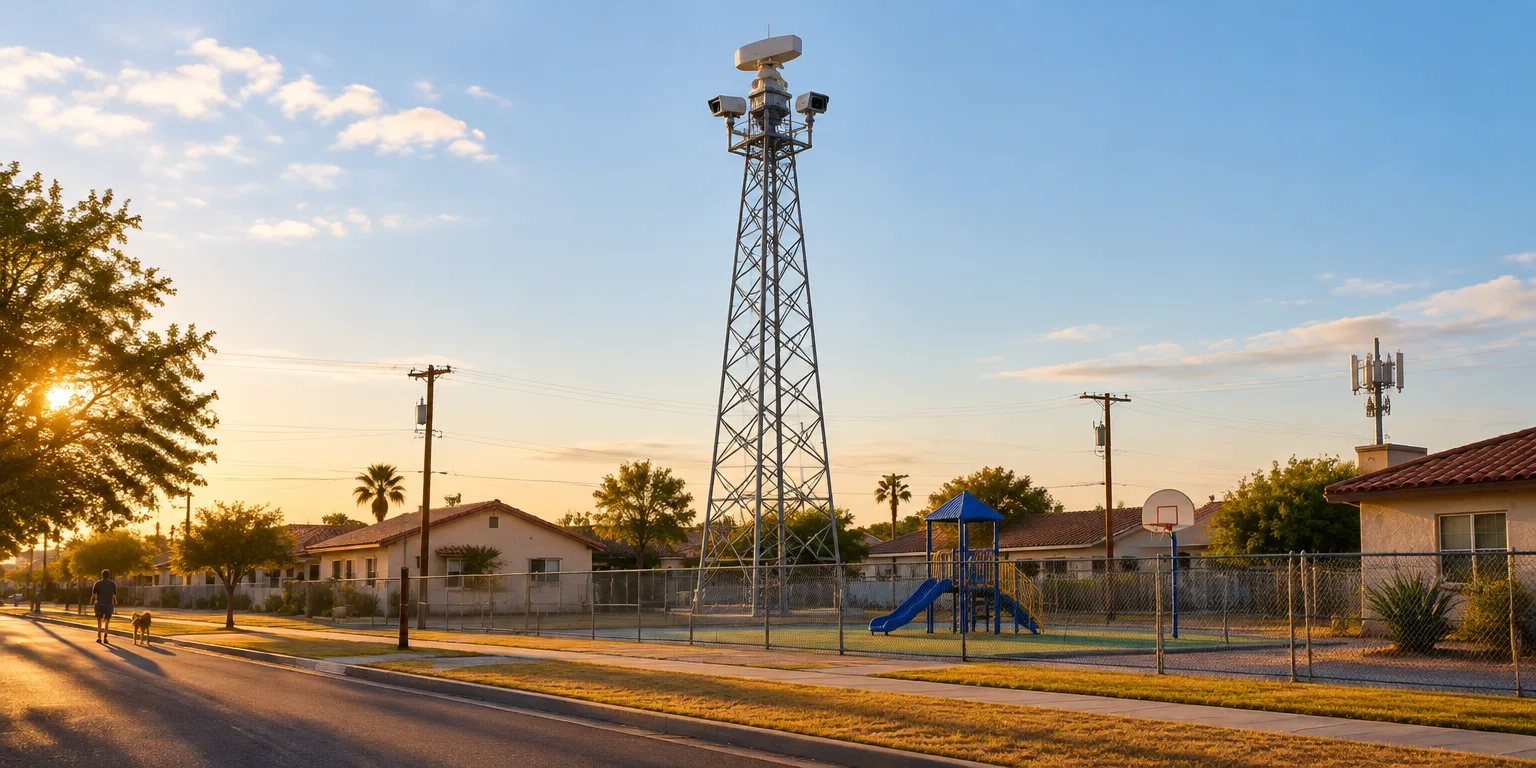
Stretching from Southern California to South Texas, tall towers overlook schools, homes, parks, and beaches. Many nearby residents take them for cell towers or other communication equipment.
When Bora Erden, a reporter with a team of Times journalists who mapped the tower locations to understand what the cameras can see, went to the border with colleagues to ask residents about the towers, he found that many had no idea what they were looking at.
The towers are part of a federal surveillance network. They carry cameras that can record sharp pictures from as far as two miles off, along with motion-detecting radar, infrared sensors, and AI programs that can follow cars and pedestrians. More than a million residents on both sides of the border live where the system can see them.
Erden said some residents told the reporters they did not want the government watching them or putting towers near their houses. Others were ambivalent, describing Border Patrol agents and border infrastructure as simply how life looks along the border. But, he said, the vast majority were unaware of what the towers were.
People who noticed the towers often took them for cell towers or other communication equipment, he said, not Department of Homeland Security towers.
The cameras sit in a row, so an operator can pick up a person in one camera and follow that person from camera to camera as they move.
Federal officials offered no details on how well the towers have worked at intercepting migrants or drug runners, though Customs and Border Protection called them essential to border security. Funding has been secured for 1,500 more towers on the southern border, by the northern border, in Puerto Rico, and along coasts elsewhere around the country.
Questions people ask
Can these cameras see inside my house?
No. They use powerful zoom, infrared heat detection at night, and radar for motion, and can record sharp pictures from as far as two miles off in the open. Like ordinary cameras, they cannot see through walls or roofs, though they can watch yards, streets, parks, and other outdoor areas.
Who runs the towers?
U.S. Customs and Border Protection runs the towers and calls them essential to border security. The agency did not tell reporters how many migrants or smugglers the towers helped catch, so the reporters could not assess results.
Could a tower like this appear where I live, far from Mexico?
Yes, if current plans hold. Funding has been secured for 1,500 towers, not only on the southern border but by the northern border, in Puerto Rico, and along coasts elsewhere around the country, which would bring many more homes into view.